Original article: Irán ignora presiones de Israel y EE.UU.: nombran líder supremo a Mojtaba Khamenei, hijo del ayatolá asesinado
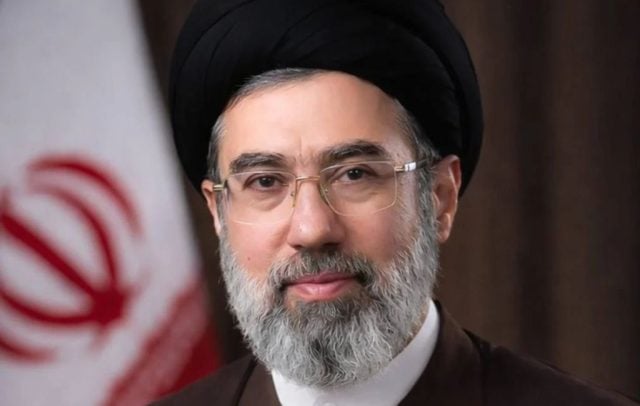
In a bold move that openly challenges escalating military tensions and pressures from Israel and the United States, Iran’s Assembly of Experts has appointed Sayyed Mojtaba Khamenei as the new Leader of the Revolution and the Islamic Republic, following the assassination of his father, Ayatollah Seyyed Ali Khamenei.
The official statement released by the clerical body indicated that the election was made «after careful and thorough consideration» and was conducted in strict accordance with Article 108 of the Islamic Republic’s Constitution.
The clerical assembly, composed of scholars and high-ranking figures, noted that the appointment of Ayatollah Mojtaba Khamenei is based on «the overwhelming vote of his representatives,» suggesting a unanimous or near-unanimous backing for the son of the leader who was killed during a joint operation carried out by Washington and Tel Aviv against the Islamic nation.
Furthermore, the statement explores the theological justification for this measure, emphasizing «the recognition of the high rank of the Islamic Jurist’s Authority and the significance of leadership within the Islamic Republic’s system,» as reported by Al Mayadeen.
In a clear call for national unity, the Assembly of Experts urged the Iranian people—»especially the elites and intellectuals from seminaries and universities»—to «ratify the leadership and maintain cohesion around the axis of jurisprudence.»
The body underscored that this crucial election was conducted «in fulfilling their religious duty and with full awareness of the responsibility before God Almighty» and expressed their appreciation for the members of the provisional council anticipated under Article 111 of the Constitution.
A Challenge Amid Bombardment and Foreign Threats
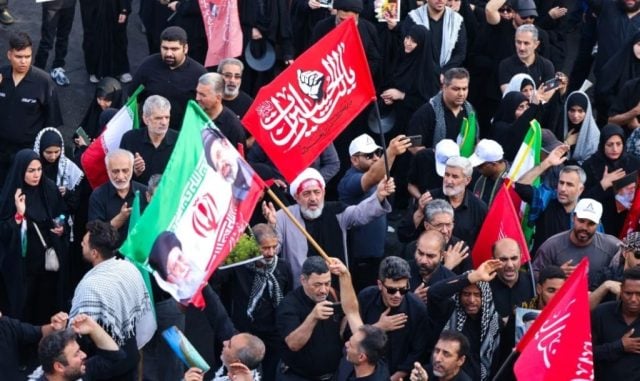
In the text, the clerical body stated that after the martyrdom of Ayatollah Sayyed Ali Khamenei, «there was no hesitation in proceeding with the election of the new leader despite wartime circumstances, direct threats, and bombardments of the Assembly of Experts’ offices.»
The entity detailed the steps taken amid the conflict, affirming that, in accordance with its constitutional and regulatory duties, it adopted the necessary measures and preparations to convene an extraordinary session. The ultimate objective was clear: to «proclaim the new leader of the Islamic system» without delay.
In closing the statement, the Assembly vehemently condemned «the U.S. and Israeli aggression against Iran» and expressed condolences not only for the martyrdom of Sayyed Ali Khamenei but also for the other lives lost in recent attacks, making a special mention of «the female students from the school in Minab.»
Who is the new Supreme Leader, Ayatollah Seyyed Mojtaba Khamenei?
With this appointment, the world’s gaze turns to Seyyed Mojtaba Khamenei, an Iranian cleric and religious scholar born in 1969 in the holy city of Mashhad. As the second son of Ayatollah Seyyed Ali Khamenei, he has an extensive religious and academic background, developed over decades in the country’s most prestigious study centers, particularly in Tehran and Qom.
Additionally, he has been involved in teaching, academic research, and institutional work within the clerical establishment of the country.
The new leader began his studies at the Tehran seminary, specifically at the school founded by Ayatollah Ahmad Mojtahedi Tehrani, where he completed his basic religious education.
During the Iran-Iraq war, he joined the Persian volunteer forces and spent some time on the battlefield.
After the conflict ended, Mojtaba Khamenei moved to the religious center of Qom, considered one of the world’s epicenters for Shia scholarship. It was there that he honed his knowledge over the years, dedicating himself to studying advanced jurisprudence and principles of Islamic law under various prominent clerics.
According to records, he spent more than 17 years attending advanced courses in Islamic jurisprudence and theology, a period of academic immersion that solidified him as a person of profound religious knowledge.
Alongside his years of study, Ayatollah Seyyed Mojtaba Khamenei began teaching religious subjects in seminaries in Tehran and later in Qom itself. His teaching career reached a higher level when he started delivering advanced courses on jurisprudence and principles, known as dars-e kharej. These courses, representing the highest level of education in the seminaries, eventually attracted hundreds of students.
According to the Mehr news agency, his academic work has focused on Islamic jurisprudence, legal principles, and hadith studies, which are fundamental areas for the theological interpretation that guides the State.
Beyond the classrooms and texts, Mojtaba Khamenei has demonstrated an ability for institutional organization, supporting the creation of educational and research centers focused on Islamic jurisprudence and training in seminaries. These institutions, it is noted, aim to combine religious studies with social engagement.
On a personal level, in 1997, he married Zahra Haddad Adel, the daughter of prominent Iranian politician Gholam Ali Haddad Adel, a marriage that strengthened his ties with the country’s political elite.
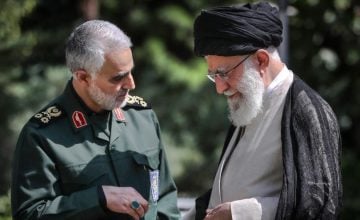
Throughout his career, he has maintained close relationships with senior clerics, scholars, and political figures, weaving a network of alliances that are now crucial for governance. Particularly significant is his connection with major figures of the so-called Iranian «Axis of Resistance,» including Sayyed Hassan Nasrallah, Secretary-General of Hezbollah, and General Qassem Soleimani, who was assassinated by the United States in 2020.
Obtén tu Pasaporte y apoya a El Ciudadano
Elimina la publicidad, accede a contenido exclusivo y sé parte de la comunidad.
Cancela en cualquier momento · Sin permanencia