Original article: Diputado Giordano presentó proyecto para reforzar seguridad en transporte de combustibles y sustancias inflamables
Legislator Giordano Proposes Enhanced Safety Regulations for Transportation of Fuel and Flammable Substances
Representative Andrés Giordano (Broad Front) introduced a legislative bill aimed at amending Law 18.290 on Traffic, with the goal of establishing a special road safety regime for the land transportation of hazardous combustible or flammable substances in bulk, such as liquefied petroleum gas and similar derivatives.
The initiative arose in response to public concern generated by the severe accident that occurred on February 19, 2026, in Renca, when a truck transporting liquefied gas overturned at the intersection of Route 5 Norte and General Velásquez, causing a massive explosion and fire that impacted numerous vehicles and resulted in 13 fatalities and 17 injuries.
In this context, the legislator explained that the project aims to address the regulatory gaps highlighted by such incidents, which can have catastrophic consequences in densely populated urban areas, as was the case in Renca.
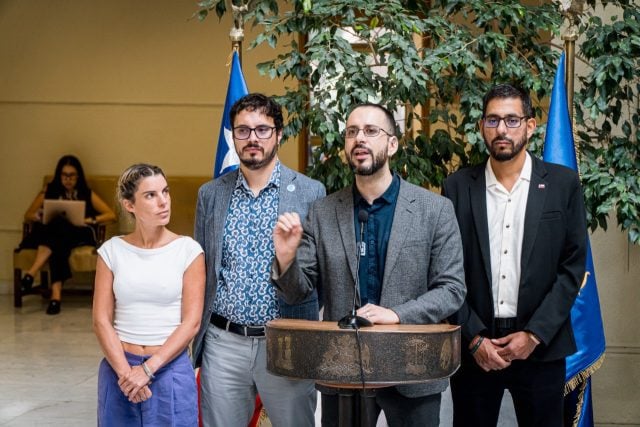
«This accident not only illustrated the dangers posed by these exceptional situations, but also exposed a regulatory void. That’s why the lawmakers present here have proposed a legislative initiative to address this tragic situation,» Giordano stated during a press briefing at the Congress.
The parliamentarian clarified that the project aims to implement a set of measures designed to reduce the risk and severity of these accidents.
«First of all, speed limiters for all vehicles carrying dangerous cargo will be mandatory. This means they will not be allowed to travel — and it is the employer’s responsibility — faster than 80 kilometers per hour,» Giordano explained.
Additionally, the bill makes exceptions for densely populated urban areas, where these vehicles will only be permitted to operate between 10 PM and 6 AM, thereby reducing potential impacts on the population and protecting the lives of workers, he added.
Consequently, the special maximum speed for vehicles transporting these substances would be set at 80 km/h, along with mandatory installation of electronic speed limiters, and the integration of tracking and geolocation systems for route, speed, and timing oversight.
The initiative also imposes restrictions on circulation in urban areas, allowing these vehicles to operate only between 10 PM and 6 AM, except for justified exceptions like emergencies or essential supplies.
Furthermore, the project introduces explicit responsibilities for transportation companies, vehicle owners, loaders, and the driver’s employers, ensuring that compliance with safety regulations does not rest solely on the driver.
Germán Tello, brother of Paulette Tello, one of the accident victims, praised the initiative: «After reading the proposal, I found it quite commendable as it includes regulations that, if implemented earlier, might have prevented the tragedy in Renca from occurring.»
«I lost my sister Paulette and my brother-in-law Nicolás. They were going to work just like any other day, a normal morning. Unfortunately, they encountered that tragedy. If you think about it, someone likely raised the question: how can trucks transport dangerous products?» Germán Tello stated.
«For example, that day there was no traffic on that highway, whereas a neighbor saw traffic daily. If there had been traffic, maybe the truck wouldn’t have crashed at that speed. Regardless, it’s a matter of concern: driving next to these large trucks seems normal, but it shouldn’t be,» Tello concluded.
Regarding penalties, Representative Giordano indicated that the proposal includes aggravating factors in cases of non-compliance, which may involve higher fines, vehicle immobilization, and suspension of the driver’s license when mandatory control systems are manipulated or evaded, he reported.
El Ciudadano
Obtén tu Pasaporte y apoya a El Ciudadano
Elimina la publicidad, accede a contenido exclusivo y sé parte de la comunidad.
Cancela en cualquier momento · Sin permanencia