Original article: El arquitecto chileno Smiljan Radić gana el Pritzker 2026, el mayor premio de la arquitectura
Chilean architect Smiljan Radić Clarke has been awarded the 2026 Pritzker Architecture Prize, a prestigious honor recognized globally as the pinnacle of achievement in the field of architecture.
The 60-year-old architect receives this accolade following Alejandro Aravena’s win in 2016, reinforcing Chile’s reputation as a focal point in the global architectural landscape.
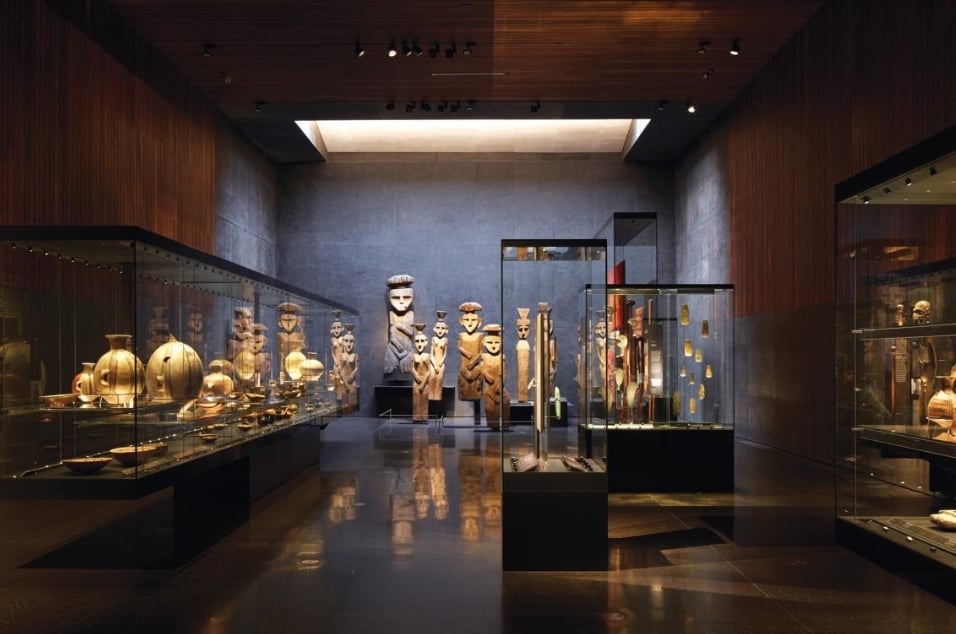
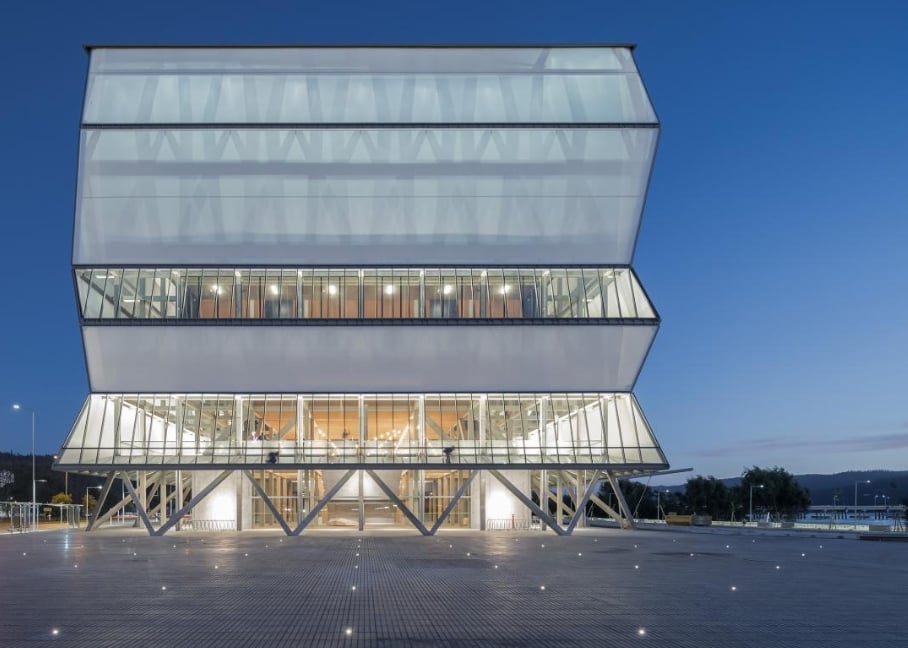
The prize, which includes a $100,000 award and a bronze medal, acknowledges Radić for his body of work that explores architecture through material experimentation, spatial perception, and a dedicated commitment to landscape and context. These characteristics are evident in some of his most renowned projects in Chile, including the Regional Theater of Biobío, the renovation of the Chilean Museum of Pre-Columbian Art in Santiago, the Civic Center of Concepción, and the NAVE center in Santiago.
“Radić rejects repetitive architectural language; instead, he approaches each project as a singular inquiry based on fundamental principles, informed by a discontinuous history. Context, use, and anthropological awareness take precedence. The site is understood not merely in physical terms but as a convergence of history, social practice, and political circumstances,” stated the Pritzker jury.
The jury also noted that throughout his work, “specific strategies for each site recur in various forms, allowing each building to emerge from its particular conditions rather than adhering to a characteristic formula.”
“Buildings may be partially buried in the ground rather than placed upon it, as seen in Restaurante Mestizo (Santiago, Chile, 2006), oriented to shield from prevailing winds or intense light, like Casa Pite (Papudo, Chile, 2005), or configured through adaptive reuse instead of replacement, as evidenced in Chile Before Chile, the expansion of the Museum of Pre-Columbian Art in Chile (Santiago, Chile, 2013),” they emphasized.
The award highlighted the discipline evident in Radić’s architectural approach. “His work often appears austere or elemental, but this impression belies precise engineering and construction. Materials such as concrete, stone, wood, and glass are deployed in a deliberate relationship to shape weight, light, sound, and enclosure,” they underlined.
According to Alejandro Aravena, jury president and Pritzker Prize winner in 2016, “in each work, Smiljan Radić is capable of responding with radical originality, revealing what is not readily apparent.”
“He returns to the most irreducible fundamentals of architecture while simultaneously exploring boundaries that remain unaddressed. Developed in a context of relentless circumstances, from the ends of the earth, with a studio formed by only a few collaborators, he is capable of taking us to the most intimate core of the built environment and the human condition,” he commented.

Uncertainty, Material Experimentation, and Cultural Memory
The 2026 jury’s remarks provide insight into the rationale behind this selection: “Through a body of work situated at the crossroads of uncertainty, material experimentation, and cultural memory, Smiljan Radić prioritizes fragility over any unjustified claims to certainty. His buildings appear provisional, unstable, or deliberately unfinished—almost on the verge of disappearing; yet, they offer a structured, optimistic, and subtly cheerful refuge that embraces vulnerability as an intrinsic condition of lived experience.”
“Describing the qualities of his architectural work in words is inherently challenging, as he works with dimensions of experience that are immediately palpable but elude verbalization, such as the perception of time itself: immediately recognizable, yet conceptually elusive. His buildings are not conceived merely as visual artifacts; rather, they demand tangible presence,” they added.
Radić: “Architecture Sits Between Large, Massive, and Enduring Forms”
Following the recognition, Radić stated, “architecture sits between large, massive, and enduring forms—structures that remain under the sun for centuries, awaiting our visit—and smaller, fragile constructions—ephemeral like the life of a fly, often without a clear purpose under conventional light. In this tension of disparate times, we strive to create experiences that convey an emotional presence, encouraging people to pause and reconsider a world that often passes them by with indifference.”
With these words, the architect summarized decades of a career that has consistently challenged conventional categories.

A Unique Language, Detached from Trends
From the Pritzker, it was noted that Radić rejects repetitive architectural language and instead approaches each project as a singular inquiry, grounded in fundamental principles and informed by a discontinuous history.
“Context, use, and anthropological awareness take precedence. The site is understood not only in physical terms but also as a convergence of history, social practice, and political circumstances,” they stated.
They also emphasized that his works are characterized by a quiet emotional intelligence, inspired by empathy toward human experience and calibrated to shape how architecture is perceived over time.
“His buildings convey a sense of protection, are inward-focused, and attentive to human fragility,” they affirmed.

Smiljan Radić’s Career Journey
Smiljan Radić was born in Santiago on June 21, 1965. He is the son of Smiljan Radic Piraíno and Cora Clarke Ramírez.
He studied at the San Ignacio El Bosque School, graduating in 1982. In 1989, he earned his architecture degree from the School of Architecture at the Pontifical Catholic University of Chile.
Afterward, he pursued studies in Aesthetics at the IUAV University of Venice, Italy, from 1990 to 1992. In 1994, he won the international Platía Eleftería competition in Heraklion, Crete, and partnered with Nicolas Skutelis and Flavio Zanon for its development and construction.
In 2000, he won the competition for the Civic Neighborhood of Concepción in Chile, which earned him the award for Best Young Architect from the Colegio de Arquitectos de Chile the following year.
In 2007, he was a visiting professor at the University of Texas and is currently working in his studio in Santiago, Chile.
In 2011, in partnership with Gabriela Medrano and Eduardo Castillo, he won the design competition for the Regional Theater of Biobío in Concepción, which opened in 2018.
In 2017, he founded the Fragile Architecture Foundation, located in his studio in Santiago, to support experimental architecture.
Radić’s work has received numerous international awards, including the Best Architect Under 35 Award from the Colegio de Arquitectos de Chile (Chile, 2001), the Architectural Record Design Vanguard Award (United States, 2008), the Oris Award (Croatia, 2015), the Arnold W. Brunner Memorial Award from the American Academy of Arts and Letters (United States, 2018), and the Grand Prize at the Pan American Architecture Biennial in Quito (Ecuador, 2022). He is an honorary member of the American Institute of Architects and the Croatian Academy of Sciences and Arts, since 2009 and 2020, respectively.
Moreover, his work has been showcased in international exhibitions, including Global Ends at Galerie Ma (Tokyo, Japan, 2010); Un Ruido Naranjo at the Contemporary Art Museum (Hiroshima, Japan, 2012); The Wardrobe and the Mattress at the Hermès Gallery in Tokyo, alongside Marcela Correa (Tokyo, Japan, 2013); Bus Stop for Krumbach at Kunsthaus Bregenz (Bregenz, Austria, 2013); Smiljan Radić: BESTIARY at the TOTO Ma Gallery (Tokyo, Japan, 2016); The House for the Right Angle Poem at Endless House: Intersections of Art and Architecture at the Museum of Modern Art (New York, United States, 2015-2016); and Guatero Bubble at the XXII Biennial of Architecture and Urbanism of Chile (Santiago, Chile, 2023).
Currently, Radić continues to live and work in Santiago, Chile, maintaining an intentionally intimate practice in which architecture remains personal, attentive, and deeply felt.
Obtén tu Pasaporte y apoya a El Ciudadano
Elimina la publicidad, accede a contenido exclusivo y sé parte de la comunidad.
Cancela en cualquier momento · Sin permanencia
Artículos Relacionados

(VIDEO) Alicia Lira Awarded the 2026 National Human Rights Prize: A Voice for Memory and Justice
Hace 2 meses