Original article: Ley 157: La contrarreforma agraria en Bolivia
By Sara Valentina Enriquez Moldez
Unlike D.S 5503, which aimed to restore neoliberalism through its extensive 121 articles, Law 157 is succinct with its 5 articles; however, it is no less cunning in its approach.
The dependency theory teaches us that in peripheral countries, capitalism does not produce autonomous development but rather chronic underdevelopment. Dependency is not a stage but a structural condition rooted in the super-exploitation of labor and value transfer to core nations.
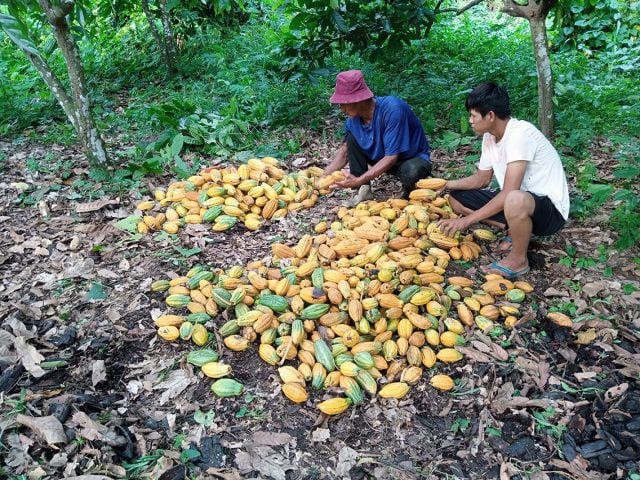
In Bolivia, this logic is particularly evident in agriculture, where peasants and indigenous communities serve as pools of cheap labor, while modern large estates dedicated to soy production and cattle ranching connect directly with transnational capital.
With this brief introduction and positioning within the global system, we can now dissect the articles of this law.
Articles 1 and 2 pertain to the purpose and national scope of the law, referencing the conversion of small titled properties to medium-sized properties. The fact that this conversion occurs without altering the size or productive function of the property is a mere legal fiction.
The struggle for land has rendered small property a relative conquest, as it at least made the structural differences and contradictions between peasants and agribusiness explicit. This relative conquest is now stripped of its substance. The state states essentially, «You can stop being small if you declare it,» and «You can change your status merely by declaring it,» but the material conditions of exploitation do not change.
The media, on the other hand, promotes an ideology of agrarian entrepreneurship that obscures the dependency and structural contradictions by dissolving the category of small producer. Eliminating the category of «small producer» represents a narrative victory for the ruling classes, as it blurs the lines between the oppressed and oppressors, which only makes oppression less visible. Just because it is no longer mentioned does not mean it ceases to exist.
Article 3 establishes a maximum period of 10 business days for INRA to carry out the property conversion. This means there is no time to verify whether the medium property meets the Economic and Social Function (ESF), which in practice is measured by bourgeois criteria such as profitability, employment levels, integration into export chains, and so forth. The expedited process primarily benefits those looking to speculate on changing classifications to access credits, tax exemptions, or partnerships with agribusiness.
Article 4.I proclaims «Without more formalities,» emphasizing the ease of this property conversion. The sworn declaration as the sole requirement for conversion is an act of faith, but dependent capitalism has never operated on good faith; rather, it relies on economic coercion. After 10 years, when the ESF is verified (as stipulated in subsection III), many will have lost their land for failing to meet the required productivity.
Point II of the same article presents the fee waiver as a short-term benefit. The small producer converting to medium size implicitly assumes they must behave like a capitalist, adopting the logic of bourgeoisie without being or resembling one; that means hiring labor, investing in machinery, and producing for the global market. However, without real access to credit or technology, they will incur debts with intermediaries or partner with transnational companies that will eventually take their land.
Nevertheless, the most alarming issue is not merely the loss of land, which is indeed significant, but that this law seeks to dismantle the peasantry as a class both objectively and subjectively, aiming to eliminate their identity and self-perception in the world.
I mentioned earlier that point III of the penultimate article poses a great danger due to that 10-year verification period. As I noted at the beginning, we are a dependent and peripheral country, and in a dependent economy, the cycles of debt and land concentration are shorter, lasting between 5 to a maximum of 7 years. By the end of 10 years, most of those converted will have been dispossessed by agribusiness or have migrated to the cities.
The verification of the ESF after 10 years will be an administrative ritual to legitimize the transfer of land into the hands of capital. In other words, it exemplifies the continuity of accumulation by dispossession emphasized by David Harvey, but in a Bolivian version of the equation, the state leads small property owners to self-exclude from their protection by selling them a fiction.
Finally, article 5 addresses the definitive cadastre update. The keyword here is «Definitive» as it precludes any future reversibility. There is no opportunity to revert to small property, even if the producer fails. There will be no one to claim against. Here, the land transitions into an asset that changes classification but not the real exploiter. Gradually, INRA becomes the notary of capital.
This law could be categorized as a guarantor of intensified super-exploitation, pressuring small producers to transform into medium-sized ones, demanding they produce extraordinary surplus value without the means to achieve it. How does this manifest in their daily lives? They will work longer hours and debt their families. The rate of exploitation increases without the capital investing a single cent. The definition of super-exploitation, a critical concept in Marxist dependency theory, has never been more relevant.
It is well known that the soy agribusiness in Bolivia, in addition to being controlled by landholding families (like Marinkovic and company), is primarily dominated by transnational corporations (Cargill, ADM, Bunge). These surnames are merely local operators, grotesque tentacles of transnational capital.
This law opens a legal pathway for them, perfectly framed within bourgeois liberal democracy, to siphon off peasant lands. They simply purchase the debt of the small producer transformed into a medium-sized one, impose unequal conditions for partnership, or simply rent the land until the ESF fails and INRA auction it off. Thus, in just a few years, Bolivia’s remaining sovereignty is lost.
Law 157, or the instrument of agrarian counter-reform, however one chooses to label it, is not an error or a slip; it is a completely foreseeable policy of the neoliberal state, conveniently dependent (for them) to facilitate the concentration of land by transnational agribusiness, dismantling peasant smallholding as a foundation of resistance, fulfillment, and social reproduction.
And as capitalism cannot endure true will, it commodifies everything, including this. The state will assert that the conversion was done «voluntarily,» as if that absolves them of the consequences of their actions.
Thus, capital fears the soul that chooses but knows how to disguise the cage of choice. Therefore, when the land belongs to others, the state will raise the conversion paper as if it were a sacred offering: «There was no violence, it was their choice,” and the soul that once chose or did not choose will retreat to its winter quarters, once again.
Sara Valentina Enriquez Moldez
Cover Photo: Cipca.org
Obtén tu Pasaporte y apoya a El Ciudadano
Elimina la publicidad, accede a contenido exclusivo y sé parte de la comunidad.
Cancela en cualquier momento · Sin permanencia