Original article: Recuperar ingresos golpeados por las bencinas: CUT presiona al Gobierno por salario mínimo
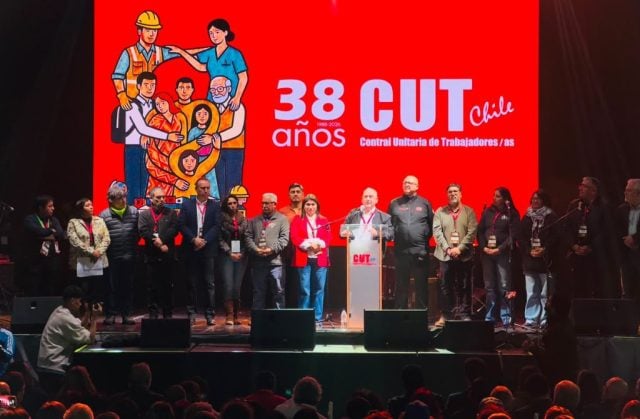
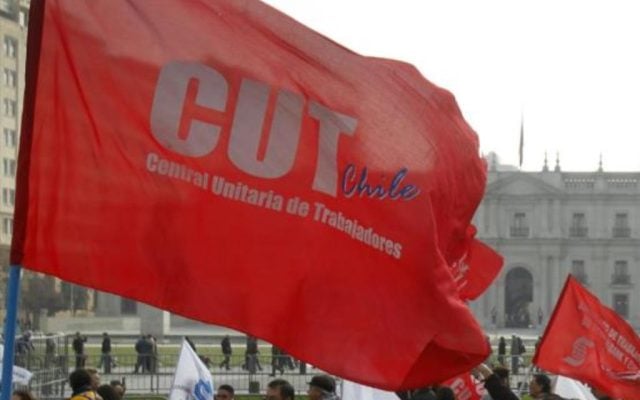
Amid growing discontent over the historical rise in fuel prices and the decline in purchasing power, the Chilean Workers’ Central Union (CUT) has ramped up its advocacy for the government to urgently initiate negotiations on the minimum wage for 2026.
Following a meeting with lawmakers from the Labor Committees of the Senate and Chamber of Deputies, the multi-union organization warned that the elimination of the MEPCO (Fuel Price Stabilization Mechanism) has escalated gasoline prices, increasing costs across the entire production chain. This has hit sectors such as transportation, food, pharmaceuticals, basic services, and essential goods, directly impacting family budgets.
The meeting, led by CUT President José Manuel Díaz, focused on demanding the Ministry of Labor to formalize the requested meeting from the Central to start discussions on readjusting the minimum wage ahead of 2026. The union emphasized that the new amount should be enacted by May 1 at the latest.
This initiative aims to compel President José Antonio Kast’s government to promptly arrange an effective social dialogue, allowing for an agreement to be reached by that date.
CUT Responds to the Labor Minister
Recently, Labor Minister Tomás Rau linked a potential salary readjustment to a perspective of containment to avoid affecting growth and employment.
«Just as there have been significant increases in the minimum wage, sometimes it is necessary to contain those increases as well,» the State Secretary stated in an interview with La Tercera, where he also suggested that under the Kast administration, it is not feasible to «continue raising labor costs beyond productivity levels.»
These comments provoked a strong response from the CUT, with José Manuel Díaz asserting that the union disagrees with this approach, as the priority should be the sustained loss of purchasing power among workers.
«We do not share the government’s view, nor specifically that of the Ministry of Labor when it expresses concern for employment and growth by constraining the minimum wage. Our focus is on workers and their earnings and the loss of purchasing power that is currently affecting the entire salary chain,» Díaz stated.
Salary Adjustment to Help Families Recover Purchasing Power
In this context, the CUT President reiterated that the adjustment cannot be limited to the Consumer Price Index (CPI) but must also include effective compensation for the impact of rising fuel costs on the overall cost of living.
«Negotiating and readjusting the minimum wage is an opportunity for the government to restore citizens’ purchasing power that has been diminished by rising gasoline prices and the overall increase in living costs,» Díaz emphasized.

Parliamentary Support and Criticism of the Government for «Double Punishment» to Families
Deputy Gael Yeomans who participated in the meeting supported CUT’s stance and condemned the lack of democratic dialogue.
«If the Ministry of Labor does not engage with CUT, the leading workers’ organization in the country, it is breaking a tradition of essential democratic dialogue for defining such a sensitive issue as the minimum wage,» she stated, as quoted in a press release.
Additionally, Deputy Luis Cuello warned of a «double punishment» to working families by the government.
«Today families are penalized by rising fuel costs and at the same time, there is an attempt to limit the minimum wage readjustment only to the CPI. This practically means a reduction in real wages,» he asserted.
Senator Daniel Núñez, meanwhile, urged the executive branch for urgency and suggested that it is not acceptable to postpone a meeting with workers «while the cost of living continues to rise.»
In his view, the minimum wage for Chilean workers «must not fall below the poverty line.”
The Central emphasized that discussions should not follow a logic of fiscal containment or pro-business interests, but should address the real needs of workers. Therefore, it reiterated its demand for a swift gathering of the Ministry of Labor to establish a serious negotiation table, with effective social dialogue, to ensure that by May 1 a readjustment in line with the country’s urgent social situation is promulgated.
Obtén tu Pasaporte y apoya a El Ciudadano
Elimina la publicidad, accede a contenido exclusivo y sé parte de la comunidad.
Cancela en cualquier momento · Sin permanencia