Original article: La Humanidad, la Luna y Artemis II
By Juan Magaña, Director and Academic at Astronomy U. Central Región de Coquimbo
Humanity has once again claimed its place in the Solar System. We are embarking on a titanic endeavor: the reconquest of our natural satellite, the Moon.
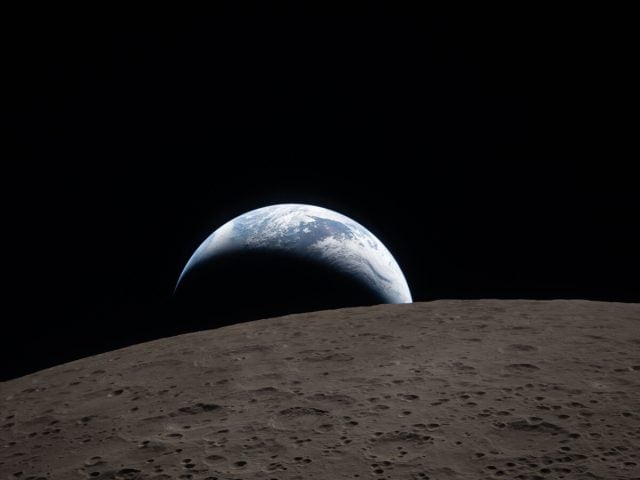
What was once a space race between two military powers after World War II is now the starting point of a new era where humanity will once again feel its technological greatness, while simultaneously recognizing its smallness. Looking back, we see our home as that «pale blue dot» (in the words of Carl Sagan); our Earth immersed in an infinite, dark, and cold universe.
On April 1, 2026, the Artemis II mission crew launched from Kennedy Space Center, featuring four astronauts, including Christina Koch, the first woman to embark on a lunar mission, with the goal of approaching the Moon.
After 53 years, the human presence in the lunar neighborhood marks the end of nostalgia and the beginning of a new campaign for exploration and gradual installation of permanent lunar bases. These future settlements will serve as waypoints for deep space exploration, particularly focusing on human arrival on Mars.
This NASA mission, along with China’s Chang’e missions for lunar soil exploration, represents an unprecedented milestone for understanding the formation of our solar system and for designing strategies for conquering deep space.
Artemis II aimed to test new rocket technologies and survival systems that will, in the medium term, translate into technological transfers for everyday life on Earth.
In this context, it is crucial to emphasize that we must think not only about new future human homes but also about the care of the only known planet that harbors organic life.
Currently, life on Earth is undergoing various changes that threaten human existence as we know it, due to climate change caused by our own actions, the proliferation of armed conflicts, and a predatory global economic system that exploits natural resources recklessly. Therefore, we must view the future Artemis missions not only as a technological achievement but as the beginning of an unyielding quest for humanity’s survival in the Universe.
The new lunar conquest teaches us that the true feat is not simply reaching the vicinity of the Solar System but becoming aware of how we protect our fragile home. Space is no longer just «the final frontier» (as the series Star Trek told us), but a reminder that our future depends on the collective responsibility we take to safeguard this small pale blue dot.
The universe may be infinite, but our planet is small, and its environment is hostile to our human fragility.
Juan Magaña
Obtén tu Pasaporte y apoya a El Ciudadano
Elimina la publicidad, accede a contenido exclusivo y sé parte de la comunidad.
Cancela en cualquier momento · Sin permanencia