Original article: Privación de libertad sin pertinencia cultural: el suplicio espiritual del lonko Ñrripil en la cárcel de Temuco
The Case of Lonko Guillermo Ñirripil Cheuquepan
Despite a 2014 ruling by the Inter-American Court of Human Rights, Chile continues practices that force traditional authorities into foreign religious spaces, undermining their identity and connection to their territory.

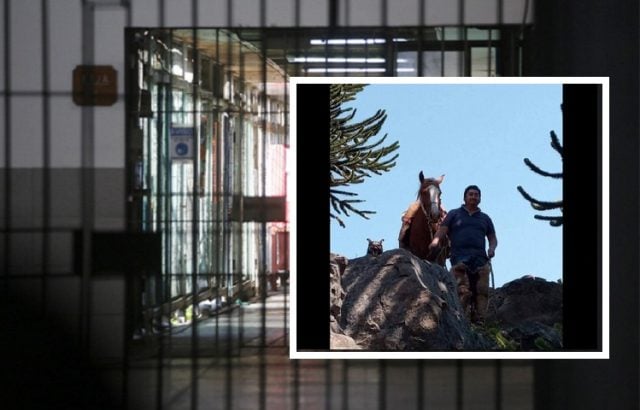
The imprisonment of Lonko Guillermo Ñirripil Cheuquepan has transcended mere restriction of movement to become a systematic violation of his cultural and spiritual identity.
See also / «It’s Not Extortion, It’s a Conflicted Word»: The Encapsulated Account of the Incarcerated Lonko Reveals the Fabrication Behind His Conviction
Various human rights organizations have documented how incarcerated Mapuche individuals are systematically denied permission to hold their traditional ceremonies, such as rituals in their lof (territory). Furthermore, it has been noted that there are no adequate spaces within prisons for receiving Mapuche spiritual leaders (machis and lonkos).
This situation represents a blatant violation of international standards requiring the State to guarantee a culturally relevant and differentiated approach for incarcerated Indigenous peoples.
Related / Judicial Impartiality in Araucanía? Prosecutor Identified in «Huracán» and «Hermosilla» Cases Leads Persecution Against Mapuche Authority
The case of Lonko Ñirripil is not an isolated incident, but part of a structural issue that was already condemned by the Inter-American Court of Human Rights (IACHR) in the Norín Catrimán et al. vs. Chile ruling (2014), also known as the “Lonkos” case.
In that ruling, the international court established that the Chilean state engaged in discrimination and violated due process against Mapuche authorities. However, over a decade later, practices within prisons continue to reproduce that discriminatory pattern. Although Gendarmería de Chile has human rights manuals, it has yet to implement binding regulations that ensure respect for Indigenous worldviews, imposing a homogenous and Westernized regime in practice.
Also related / Convicted, Imprisoned, and Again Tried: Judicial Persecution Against Lonko Guillermo Ñirripil Cheuquepan
A recurrent issue reported by family members, traditional authorities, and the defense is the exclusive availability of non-Indigenous chapels for visits or religious activities. While this might appear neutral from a formal standpoint, for a Mapuche traditional authority such as Lonko, confinement in a space alien to his spirituality—with no possibility to connect with land, water, and natural elements—creates a suffering that exceeds the inherent punishment.
The IACHR has been clear in its Advisory Opinion OC-29/22, demanding that States effectively respect the cultural identity of incarcerated Indigenous individuals, which includes the right to maintain their connection to their territory and to practice their ceremonies in dignified conditions.
The denial by Gendarmería to allow Lonko to conduct cultural ceremonies in his territory, such as the llellipun, and to provide adequate spaces for machis to perform their healing tasks, not only affects the Lonko individually but also creates collateral damage to the entire Mapuche prison community.
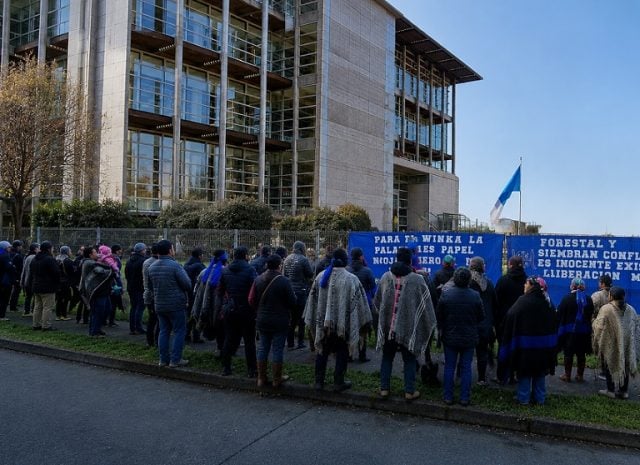
Spokespersons from the communities of Lautaro, Perquenco, and Curacautín have reported that the imprisonment of a spiritual authority weakens the social fabric and transmission of ancestral knowledge. «The imprisonment of a traditional authority, particularly when carried out far from their community and without cultural relevance, impacts not only the individual but the entire people.”
In light of this situation, various organizations are urging human rights bodies and the Chilean State to take urgent measures to guarantee the cultural rights of Lonko Guillermo Ñirripil by relocating him to a penitentiary facility with adequate conditions, which would allow direct contact with the land and nature, or, alternatively, providing necessary spaces and logistics for him to practice his spirituality. Until this happens, the State will continue to incur ongoing violations of Articles 3, 5, 12, and 34 of the UN Declaration on the Rights of Indigenous Peoples and Article 5 of the American Convention on Human Rights.
Obtén tu Pasaporte y apoya a El Ciudadano
Elimina la publicidad, accede a contenido exclusivo y sé parte de la comunidad.
Cancela en cualquier momento · Sin permanencia