Original article: A 55 años de la nacionalización del cobre: Así se gestó la histórica medida para Chile y que hoy exige ser defendida
55 Years Since Copper Nationalization:
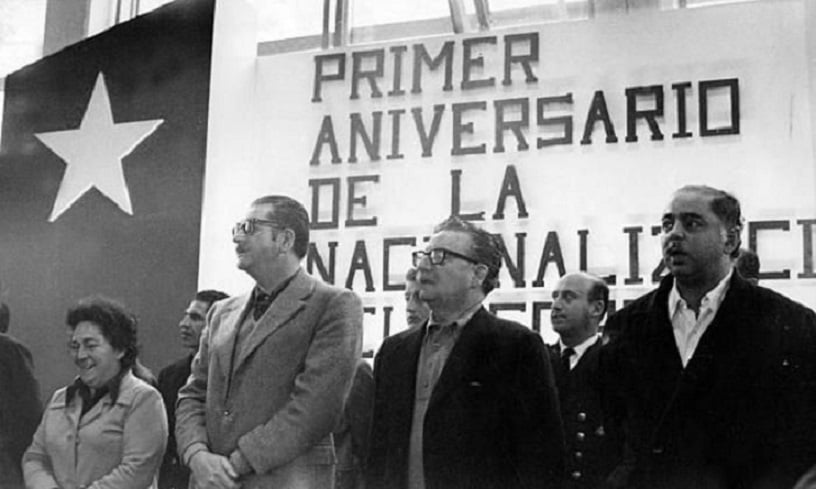
Since the early 20th century, Chile’s major copper deposits—El Teniente (Kennecott Copper) and Chuquicamata (Anaconda Copper)—were exploited by American companies that almost exclusively benefited from the mineral’s profits. In the 1950s, criticism began to surface regarding the low contributions of these companies to the national economy. In 1961, Senator Salvador Allende, alongside six socialist senators, introduced a comprehensive nationalization proposal for copper.
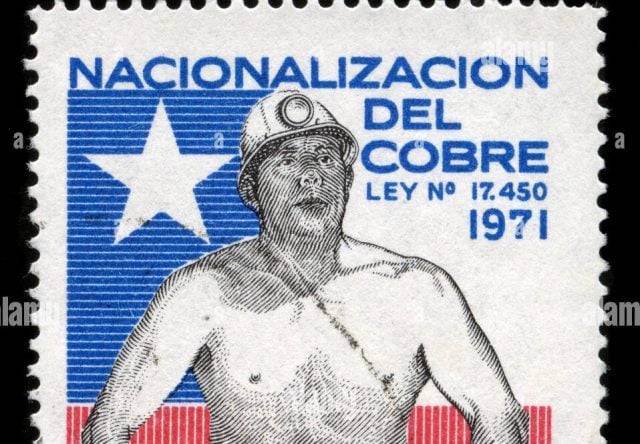
Under President Eduardo Frei Montalva’s government, the «Chilenization of copper» initiated in 1964 enabled the state to control 51% of ownership in major mining operations, leading to a «negotiated nationalization.» Following Salvador Allende’s election, the National Congress received Law No. 17,450 on September 21, 1970, which amended the 1925 Constitution to declare that «the State has absolute, exclusive, inalienable, and imprescriptible ownership of all mines.»
The Day of Unanimous Approval
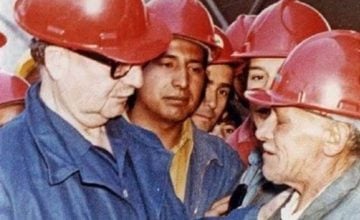
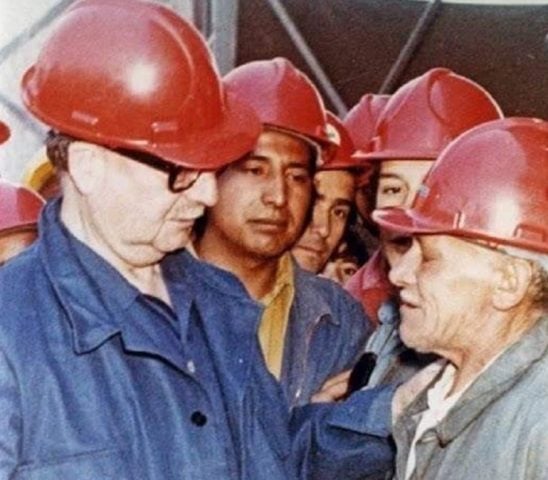
On July 11, 1971, the Full Congress unanimously approved, with very few modifications, the constitutional reform that nationalized large-scale copper mining, regarded as «the greatest political and economic triumph achieved by the Chilean workers’ and popular movements in the 20th century.» On that same day, President Allende held a gathering with miners at El Teniente, stating that the nationalization of copper represented «the second national independence.»
With the nationalization, the mines of Chuquicamata, Andina, Salvador, El Teniente, and Exótica became state property. In 1971, the Copper Corporation of Chile was created, which divided in 1976 into Codelco (National Copper Corporation of Chile, as a productive company) and Cochilco (Chilean Copper Commission, as a technical body). From 1971 to 2023, Codelco contributed $158 billion to the State, accounting for 8% of the central government’s revenue during this period.
The Voice of Workers Today
The National Confederation of Copper Workers stated in a release: «TODAY, July 11, we commemorate and embrace a dream fulfilled 55 years ago when President Salvador Allende championed the Nationalization of Copper, achieving even unanimous approval in Congress. This established what is known as the Salary of Chile for financing public and social policies, which was ultimately eliminated by the dictatorship, instituting the neoliberal system that allowed for the denationalization of this mining resource that not only supports a country but has sustained millions of Chilean families. Therefore, we advocate for the Recovery and Renationalization of Copper for Chile.»
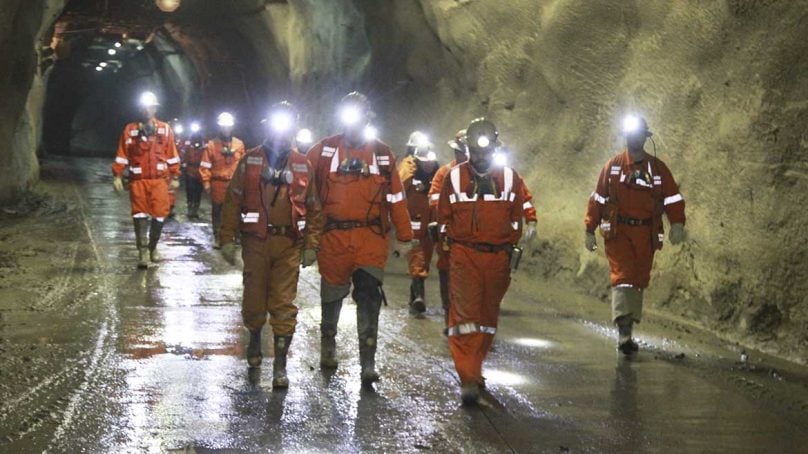
Union leaders warn that, despite Codelco remaining a state enterprise, much of the national copper production is now in the hands of large transnational corporations like BHP, Anglo American, Glencore, and Freeport-McMoRan. Moreover, currently around 80% of those working for Codelco are contracted workers, and in the broader mining sector, subcontracting encompasses approximately 75% of the workforce.
Unfinished Business
The Confederation insists on the renationalization of large mining and the end of subcontracting: «Renationalize copper, end subcontracting, and place mining under worker control.» For workers, state ownership is insufficient if the company continues to enforce capitalist exploitative relationships through outsourcing, lower wages, and heightened precariousness. 55 years after the nationalization, the country’s primary wealth is again primarily under the control of significant private capital.
The struggle for copper is not merely a debate over natural resources but a class struggle regarding who controls the nation’s primary wealth. Workers recall that the nationalization of 1971 was achieved through the mobilization of the working class, and the tragedy that occurred at El Teniente in 2025, where six contracted workers lost their lives, underscores that the subcontracting model remains a pressing issue. «Only a planned economy controlled by workers and communities can safeguard lives, natural resources, and ecosystems.»
See also / CTC Seminar: Commemoration of National Dignity. Masterclass by Orlando Caputo (CTC)
Obtén tu Pasaporte y apoya a El Ciudadano
Elimina la publicidad, accede a contenido exclusivo y sé parte de la comunidad.
Cancela en cualquier momento · Sin permanencia