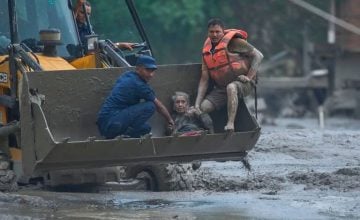
The «Super Niño» phenomenon —a severe warming of the Central Pacific affecting global weather patterns— struck the central-southern region of Chile hard last week, with the potential to cause significant impacts across various regions again shortly. This highlights the urgent need for the country to prepare for increasingly frequent and intense extreme weather events as a consequence of climate change.
WWF Chile emphasized the importance of enhancing the preparedness and adaptation of communities and territories to build greater resilience against such phenomena while continuing efforts in emission reduction and decarbonization.
In recent years, Chile has faced a series of extreme events showcasing growing climate variability: prolonged droughts; large-scale forest fires, such as the 2017 fire that devastated over 570,000 hectares from Coquimbo to Los Lagos; heatwaves; flooding; and particularly intense frontal systems.
The scientific community has warned that these episodes reflect a pattern consistent with climate change, where extremes become more frequent and severe.
«What we are witnessing is not an isolated phenomenon, but part of a trend that science has been documenting for decades,» stated Uri Colodro, Climate Change and Cities Coordinator at WWF Chile.
«We know that a warmer planet favors such events, potentially making them more intense with greater impacts. Chile is one of the most vulnerable countries to the climate crisis, and therefore we need to accelerate adaptation actions while decisively advancing in decarbonization,» Colodro added.
For the environmentalist, this transition «not only reduces future risks but also represents a significant opportunity for development, innovation, competitiveness, and economic growth for our country.»
Territorial Planning
The international organization WWF added that alongside urgent short-term measures to address emergencies, Chile must confront the structural causes of its high climate vulnerability, which is marked by a lack of territorial planning that particularly exposes more fragile communities.
«This requires effective and coordinated local governance that fosters responsible zoning, as well as improvements in early warning systems and the incorporation of resilience into all territorial planning instruments,» stated the NGO.
They warned that it is «critical» at the communal and regional levels to advance in Climate Action Plans and their implementation, where currently less than one-third of municipalities have these tools in place.
«In the same vein, it is key to recognize and develop Nature-Based Solutions that help conserve biodiversity and protect essential ecosystem services for life and human well-being,» noted WWF.
«The interaction between extreme phenomena reinforces this urgency: for example, the loss of vegetation cover after forest fires intensifies erosion and runoff, creating conditions favorable for mass removals,» highlighted Uri Colodro.
The environmentalist recalled that studies show that reforesting riverbanks can reduce urban flooding by up to 20% by slowing water flow.
«Forests and wetlands, therefore, are strategic allies in adaptation, and accelerating the restoration of native forest is a task that cannot be postponed,» he stressed.
Finally, regarding mitigation, Colodro underscored that climate action should not be viewed solely as an environmental response but as a development policy.
«The expansion of renewable energy, electrification, energy efficiency, and protecting strategic ecosystems reduces emissions, strengthens territorial resilience, and decreases economic losses associated with extreme events. At the same time, they present an opportunity to invigorate the economy in a country like Chile, which remains dependent on imported fossil fuels over which it has no control, thus increasing its energy vulnerability,» Colodro concluded.
We will continue to provide updates.
Obtén tu Pasaporte y apoya a El Ciudadano
Elimina la publicidad, accede a contenido exclusivo y sé parte de la comunidad.
Cancela en cualquier momento · Sin permanencia