Original article: El temporal no cae parejo: sistema frontal desnuda precariedad habitacional, cortes de luz y desigualdad territorial en Chile
This is more than just rain. It involves rivers threatening makeshift camps where families should never have lived. It’s about roofs being hastily repaired during an emergency. It’s the local market that cannot set up, the workers unable to reach their jobs, and homes left without electricity for hours or even days as the storm intensifies.
The storm system in Chile has brought the emergency back to the forefront of public discussion, exposing a deep-seated inequality that predates the rainfall. This issue arises from the way cities are constructed, territories are neglected, and thousands of families are forced into hazardous living conditions.
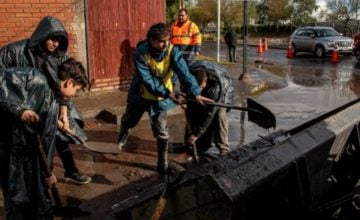
As of Thursday, the government reported three fatalities linked to the storm: a worker clearing debris in Negrete, a 65-year-old man who fell from his roof in Temuco, and another victim in Cerro Navia due to an electrical discharge.
Storm System in Chile: When Living in Danger is Not a Choice
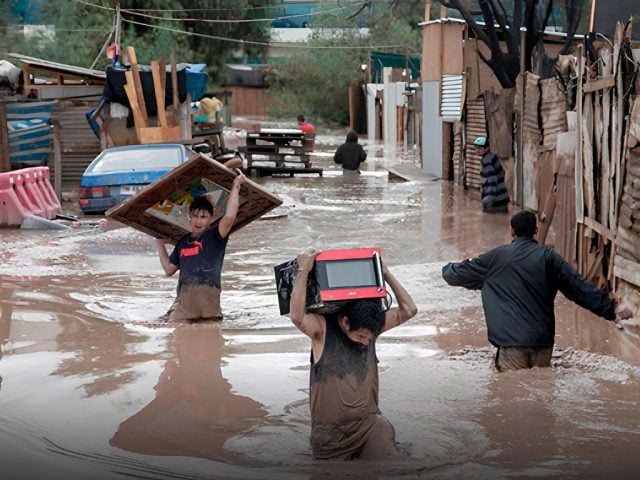
One of the critical points of the emergency occurred in Talagante, where over 1,500 individuals were evacuated from the Ribera del Río camp due to rising river levels. Regional authorities urged residents to leave the riverbed as the danger could escalate overnight.
This scene encapsulates an underlying tension: evacuating may save lives, but it also underscores the fact that thousands of families live in places where the government only appears in emergencies. The issue can’t be solved solely by relocating people from dangerous areas; it’s also essential to ask why they ended up living there in the first place, without safe and permanent housing alternatives.
A similar situation is unfolding in Quilpué, where Senapred has ordered evacuations from sectors of Población Argentina due to flood risks. This area had already been affected by the megafire in 2024 and now faces threats of landslides, illustrating how disasters compound upon communities that have yet to recover.
🔴 #SENAPREDInforma
¡ATENCIÓN! Por peligro de aluvión #SENAPRED solicita evacuar sector Población Argentina en la comuna de #Quilpué, Región de Valparaíso.
Para reforzar la evacuación en terreno por parte de los organismos técnicos, #SENAPRED activó mensajería #SAE.
RECUERDA… pic.twitter.com/NAKWSkA8Ao— SENAPRED (@Senapred) July 16, 2026
In the Maule region, Senapred has declared a Yellow Alert for Cauquenes and Parral due to rising water levels in the Perquilauquén River, following reports from the General Directorate of Waters that detected yellow threshold values.
Storm System in Chile: Power Outages and Pressure on Basic Services
Insecurity also emerged in basic services. By 9 PM on Thursday, the Superintendence of Electricity and Fuels reported 496,734 customers without power nationwide, with La Araucanía being the most affected region. Earlier in the day, the number had peaked at 658,000 customers without supply.
The image is familiar: it only takes a strong storm for thousands of homes to lose power, particularly in regions where electrical infrastructure is fragile. This is more than just an inconvenience. For elderly individuals, families with children, those dependent on electricity for medical needs, or people working from home, a prolonged outage can quickly escalate into an emergency.
Work, Commutes, and Informal Economy: The Chile That Cannot Work Remotely
The storm impacts different workers in varied ways. The Directorate of Labor reminded employers that they cannot dismiss or withhold wages from workers unable to reach their jobs due to road closures or transport issues resulting from the adverse weather.
This warning highlights a clear reality: not all of Chile can work remotely or wait out the rain from home. Some must traverse flooded areas, use irregular public transport, or venture out to avoid losing their day’s wages.
Local markets also raised concerns. The National Confederation of Local Markets warned that the storm system could disrupt the supply of fresh food and compromise the safety of vendors and consumers, especially in areas where infrastructure is inadequate to withstand extreme weather events. The organization noted that there are nearly 1,500 markets and over 400,000 jobs tied to this activity.
The Rain Passes, Inequality Remains
Experts caution that intense rainfall saturates soils, decreases their resilience, and increases the risk of landslides, especially in gullies, slopes, and areas where vegetation loss exacerbates the threat.
Thus, the storm system in Chile cannot be viewed merely as a series of millimeters of precipitation, flooded streets, or power outages. It is also a social snapshot. It reveals who lives on the riverbanks, who depends on a market for food or work, who has to go out regardless of the weather, and which territories await comprehensive solutions.
The climate emergency demands prevention, timely evacuations, and rapid response. However, if public policy remains reactionary, the next storm will find the same communities in the same precarious situations: bearing the brunt of a crisis that did not begin with the rain.
Obtén tu Pasaporte y apoya a El Ciudadano
Elimina la publicidad, accede a contenido exclusivo y sé parte de la comunidad.
Cancela en cualquier momento · Sin permanencia