Original article: Comunidades y organizaciones de Atacama recurren al 1er Tribunal Ambiental para frenar el megaproyecto Copiaport-E
Atacama Communities and Organizations Challenge Copiaport-E Megaproject in First Environmental Court
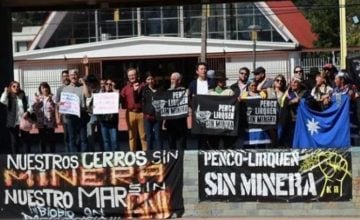
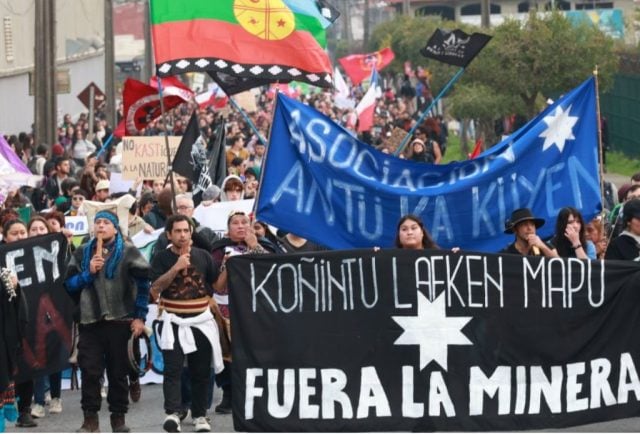
Social organizations, artisanal fishermen, and residents of Atacama filed a petition on July 17 before the First Environmental Court to reverse the approval of the Copiaport-E port megaproject.
This legal action questions the resolution issued by the Committee of Ministers that upheld the Environmental Qualification Resolution for the initiative.
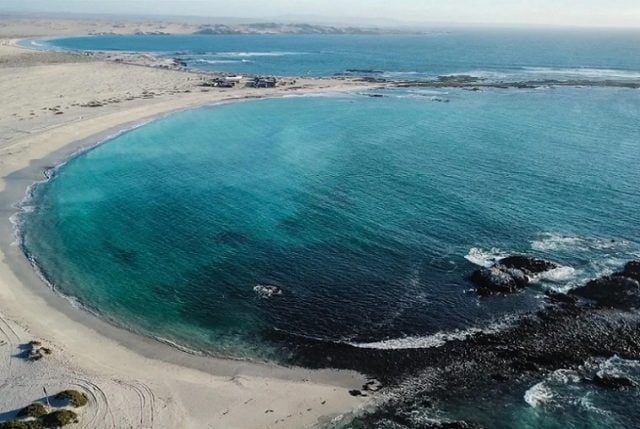
The project plans to establish an industrial port in the Punta Cachos and Bahía Chasco area, between the municipalities of Copiapó and Caldera.
With an estimated investment of $450 million, it has been promoted as a platform for exporting minerals and other cargo. For local communities, however, it represents yet another extractive encroachment on ecologically sensitive land where coastal ecosystems and artisanal fishing depend on the sea.
After more than six years of environmental evaluation, this will be the first time a court reviews the substantive arguments presented by the communities. The process has been marked by public comments, technical reports, and administrative complaints, which, according to the organizations, were not adequately addressed by authorities.
Breach of Citizen Participation
The petition claims that the Committee of Ministers’ resolution violated citizens’ right to participate by dismissing submitted observations during the evaluation without adequately analyzing their merits.
Valentina Gatica, a lawyer with the Latin American Observatory of Environmental Conflicts (OLCA), explained that the controversy extends beyond the outcome of the evaluation to how the authorities handled the citizens’ complaints.
«The legal grounds of the petition mainly, but not exclusively, relate to the lack of consideration for the timely citizen observations presented. This has resulted in a poor assessment of the community’s concerns regarding this megaproject,» she stated.
The action challenges the collective dismissal of observations without addressing their specific merits, the application of inconsistent criteria that do not align with current jurisprudence, and the failure to respond to certain complaints.
Among the issues the court will need to review are the impacts on marine flora and fauna, archaeological heritage, artisanal fishing, and the coastal landscape, as well as the absence of comprehensive Indigenous consultation.
A Unique Ecosystem Under Threat
Bahía Chasco contains the largest seagrass meadow known in Chile and the last documented natural aggregation site for green turtles (Chelonia mydas) on the continental territory. It also hosts extensive kelp forests, protected seabirds, and an ecosystem that supports the feeding and reproduction of various species.
Carol Medrano, director of Qarapara, an organization dedicated to marine turtle research and conservation, warned that the components of this ecosystem cannot be evaluated in isolation: «If that balance is disrupted by a port megaproject, we cannot be certain that this turtle population can sustain itself over time,» she asserted.
Although the significance of Bahía Chasco has been documented in scientific research and recognized by public conservation initiatives, organizations argue that this information was insufficiently considered during the environmental assessment.
Medrano pointed out that this case illustrates the contradiction between Chile’s environmental commitments and State decisions: «When it comes time to make decisions, often that protection remains only on paper.»
A Conflict Beyond the Construction of a Port
The defense of Bahía Chasco did not begin with Copiaport-E. Over the past two decades, the same coastal area has faced initiatives such as the Castilla thermoelectric plant and the Andes LNG liquefied natural gas terminal.
Though these were distinct projects, both were challenged due to their location in an area vital for biodiversity conservation.
Giuliano López, a member of the Environmental Defense Collective of Atacama (CODEMAA), stated that there is a persistent logic of sacrificing this region for the installation of industrial projects.
«The State itself defined this area as ecologically important. It promoted studies, supported the sustainable management of kelp meadows, and recognized the environmental value of this ecosystem. However, when it comes time to decide on major investments, it acts as if all that knowledge does not exist,» he criticized.
For the organizations, the conflict also reveals a lack of territorial planning to protect ecosystems before the arrival of new megaprojects. In practice, it is the communities that must repeatedly demonstrate why these spaces should not be intervened.
Political Context
The judicial review occurs within a new political landscape. Although Copiaport-E received its environmental approval during the previous administration, the current government ratified that decision through the Committee of Ministers.
Thus, the litigation will unfold alongside President José Antonio Kast’s agenda to expedite large investments and reduce regulatory demands, while concerns persist about the transparency of the project’s ownership structure and financial origins, as documented by the Latin American Observatory of Environmental Conflicts, OLCA.
«Communities defend ecosystems vital for life and adaptation to the climate crisis. However, the State continues to facilitate the expansion of an extractive model that concentrates benefits among major economic interests and shifts environmental and social costs onto local territories. This case will signal the type of environmental governance Chile wants to construct,» stated Lucio Cuenca, director of OLCA.
The First Environmental Court’s decision could set a precedent regarding applicable standards for megaprojects and the effective scope of citizen participation. For the organizations, what is at stake is not merely the construction of a port, but the future of the coastal edge of Atacama and the communities’ right to decide regarding their territories.
We will continue to provide updates.
Obtén tu Pasaporte y apoya a El Ciudadano
Elimina la publicidad, accede a contenido exclusivo y sé parte de la comunidad.
Cancela en cualquier momento · Sin permanencia