Original article: «Escucha su corazón»: Erra el Cardenal Chomalí al alinearse con este proyecto
By Fernando Astudillo Becerra
A controversial new bill called «Listen to Your Heart,» introduced by far-right factions, has once again put abortion at the forefront of public discourse. The legislation mandates that before a woman can undergo a legal abortion—permitted under three specific circumstances—healthcare professionals must inform her about the «embryonic or fetal heartbeat» and offer her the opportunity to hear it.
This unusual offer is effectively a coercive measure; if a woman declines to listen, the healthcare provider is obliged to refuse the procedure. Such a requirement turns a decision that should be made with personal reflection into a mechanism of institutional sanction and violence.
Christian morality teaches that every human being possesses intrinsic dignity and free will, both of which deserve respect. Each individual is sacred, having been created in the image and likeness of God. To legally impose an emotionally charged stimulus during a time of deep vulnerability only inflicts additional suffering, rather than offering genuine compassion or education—it is akin to psychological torture.
Contemporary discussions about voluntary abortion continuously challenge Christian moral perspectives with complex bioethical and pastoral dilemmas. A devout Christian may find it difficult to support abortion itself, yet there are compelling reasons to advocate for:
- The decriminalization of abortion (which is not synonymous with supporting abortion).
- The state’s responsibility to treat this issue as a public health matter, ensuring no woman is forced to face unsafe or clandestine procedures that endanger her life.
- The necessity for society as a whole to promote and implement comprehensive sexual education, free from taboos, especially for children, adolescents, and young adults.
This demand becomes even more critical when considering the endorsement of such a bill by an ecclesiastical authority like Monsignor Fernando Chomalí, who publicly expressed his approval on social media.
However, its potential approval conflicts with the Church’s social doctrine. An authentically evangelical and community-oriented stance should prioritize urging the state to adopt comprehensive public policy: robust, stigma-free sexual education and effective social and economic support networks for vulnerable motherhood.
This notion aligns with what Pope Francis expressed regarding the common good:
«The notion of the common good also encompasses future generations. International economic crises have harshly revealed the harmful effects of neglecting a common destiny, from which those who follow us cannot be excluded. Sustainable development can no longer be discussed without intergenerational solidarity. When we reflect on the state we leave the planet for future generations, we enter a different logic, one of the gratuitous gift we receive and share. If the earth is a gift, we can no longer think only from a utilitarian perspective of efficiency and productivity for individual benefit. We are not speaking of an optional attitude, but rather a fundamental issue of justice, as the land we have also belongs to those who will come after us» (Laudato si, 159).
While it is understandable, and consistent with the official discourse of the Catholic Church, for a pastor to advocate for the acknowledgment of the biological and spiritual reality of the embryo, supporting a coercive legal mechanism that violates women’s human rights and can be seen as a form of psychological torture introduces a significant contradiction with evangelical practice and the defense of human rights.
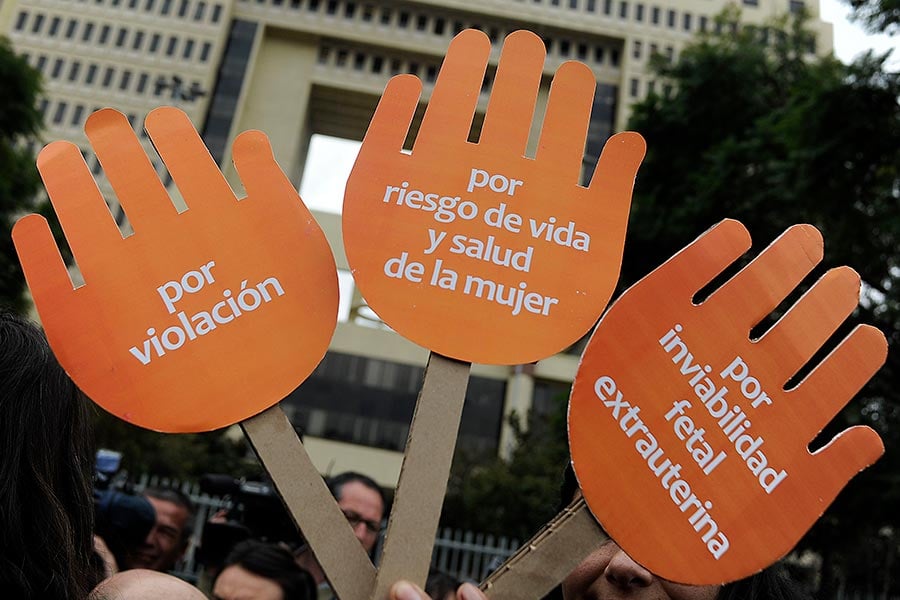
The Cardinal’s position aligns the hierarchical Church with the more extreme, punitive, and fascist sectors of the political spectrum, overlooking the human drama underlying the three abortion circumstances (maternal risk, fetal inviability, and rape).
In cases of rape, particularly, the imposition of listening to a heartbeat or facing the denial of medical care, without needing to be an expert in the field, could be seen as a form of secondary victimization—grossly diverging from the evangelical mercy that Pope Francis has persistently urged the Church to center its ministry around: «The Church must be a place of gratuitous mercy, where everyone can feel welcomed, loved, forgiven, and encouraged to live according to the good life of the Gospel» (Evangelii Gaudium, 114).
Monsignor Chomalí appears to subordinate the centrality of the individual and their internal discernment to legal formalism. This validation of a punitive legal mechanism constitutes an illegitimate psychological pressure, contradicting the principles of free will and respect for women’s dignity.
From our perspective, an authentic Christian approach should demand the state decriminalize abortion—a stance we reiterate is not pro-abortion—alongside comprehensive public health policies, stigma-free sexual education, and significant economic and psychological support for motherhood.
Defending life from conception cannot be divorced from the moral and evangelical means employed to promote it. The «Listen to Your Heart» initiative and the support from ecclesiastical leadership for its punitive design reveal a troubling shift toward normalizing trauma.
A genuine Christianity aligned with Jesus’ message must reject the exploitation of suffering and commit to a culture of love, justice, and support—not coercion, whether legal or otherwise.
Fernando Astudillo Becerra
Obtén tu Pasaporte y apoya a El Ciudadano
Elimina la publicidad, accede a contenido exclusivo y sé parte de la comunidad.
Cancela en cualquier momento · Sin permanencia