Original article: Políticas de EE.UU. convierten a México en una «frontera sin salida» para la niñez migrante
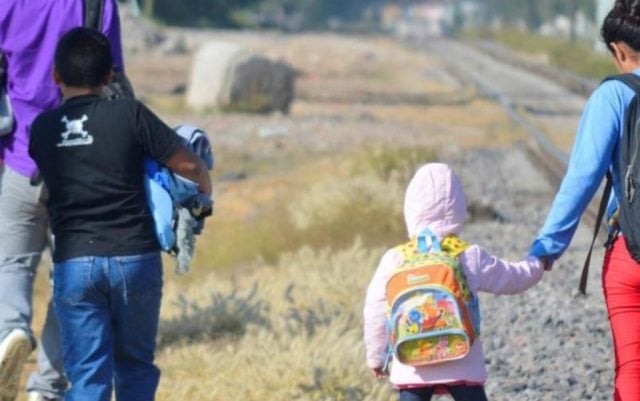
The tightening of policies implemented by the government of the United States (U.S.) since Donald Trump’s return to power in 2025 has transformed Mexican territory into a space of ‘forced waiting’ for migrant children.
Thousands of children and adolescents are caught in a spiral of legal and social uncertainty, where the prolongation of their stay increases their exposure to violence, discrimination, and the systematic denial of fundamental rights. This is the central conclusion of the study «Experiences and Perceptions from the Voices of Children and Adolescents in Mobility Situations in Mexico,« conducted by Plan International.
According to Laura Mora, a researcher at the Human Rights Program of Iberoamericana University, the migration policies enforced by Washington since 2025 have created three critical scenarios: Ciudad Juárez, Mexico City, and Tapachula, where waiting ceases to be a brief period and becomes a structural condition.
She pointed out that on the southern border, specifically in Tapachula, Chiapas, the bureaucratic bottleneck and heightened surveillance have turned the city into an actual ‘no exit’ border, where the slow processes of migration regularization, combined with increasingly strict control measures, leave thousands of families and children stranded for months in overcrowded and precarious conditions, as noted by La Jornada.
Meanwhile, Mexico City has become a space of ‘prolonged stay’ that exceeds the response capacity of local policies. Originally designed to cater to short stays, the aid programs have proven insufficient to meet the socio-economic integration needs of a child population that is no longer just passing through but is settling without being fully welcomed. Access to education, regular food supply, and migration regularization become a maze of obstacles, exacerbated by xenophobic and discriminatory attitudes that deepen the exclusion of children and their families.
The situation in Ciudad Juárez, on the northern border, is perhaps the most desolate, as it has become a space of ‘prolonged waiting and forced immobility’ for those whose entry to the United States was cut short. The cancellation of asylum access pathways, such as the CBP One application, has left thousands of children in legal limbo, camping out in shelters or on the streets.
Mora warned that along the entire migration route, the risks for children accumulate relentlessly: extreme physical exhaustion, hunger, dehydration, untreated illnesses, and a constant threat of theft, extortion, and kidnapping by criminal groups. The testimonies gathered in the study, which include interviews, drawings by children aged 6 to 17, and consultations with authorities and specialized organizations, reveal particularly traumatic experiences during the crossing through the Darién Jungle, where fear, extreme fatigue, and personal losses leave lasting scars.
In light of this situation, Gonzalo Rivera, representative of Plan International Mexico, criticized that humanitarian care models have become outdated and need urgent evolution. Given the current reality showing that children will remain for long periods in Mexican communities, it is imperative to design integration, protection, and support strategies that go beyond the logic of temporary emergency.
Obtén tu Pasaporte y apoya a El Ciudadano
Elimina la publicidad, accede a contenido exclusivo y sé parte de la comunidad.
Cancela en cualquier momento · Sin permanencia