Original article: China consolida su dominio eólico global con megapedidos y tecnología de vanguardia
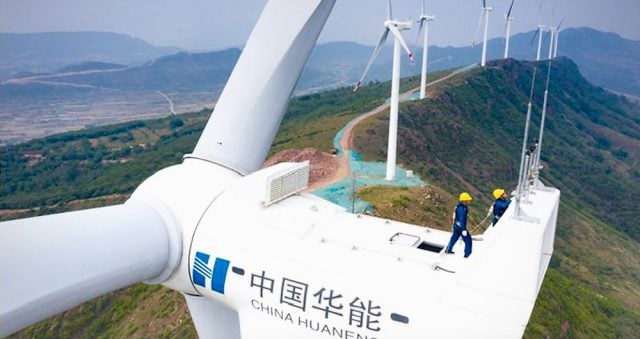
The Center of Gravity in the Global Wind Industry Shifts East. What was once a trickle of exports has transformed into a surge of orders that places Chinese manufacturers at the pinnacle of the international market. Recent data from the first half of 2026 leaves no doubt: foreign markets are no longer a mere diversification avenue but the primary growth engine for a sector that combines industrial scale, innovation, and an aggressive globalization strategy.
Envision’s Quantum Leap: From Innovation to Massive Deployment
Envision Energy has made an exceptional start to the year. In the first half of 2026, the company secured new overseas orders exceeding 4.4 gigawatts (GW), a figure that highlights unprecedented geographical and technical expansion. Its footprint spans three continents, covering North Africa, Southern Europe, and Southeast Asia, markets with highly diverse energy needs but a common thread: the pursuit of competitive, high-efficiency renewable solutions.
The most prominent project in this advancement is located in Vinh Long, Vietnam. Here, Envision has been awarded the contract to supply intelligent offshore wind turbines for a 128 MW nearshore wind farm. The key to its proposal lies in the technology: turbines with large rotor diameters and high capacity, designed to maximize energy capture even in the moderate wind conditions typical of the region. This project is not an isolated development; it is set to become the main cluster of nearshore wind projects in Vietnam and across Southeast Asia, serving as a model for decarbonizing a region experiencing industrial and demographic growth.
Dajin Heavy Industry: The Industrial Backbone of the Wind Power Revolution
While Envision embodies the technology and development of wind farms, Dajin Heavy Industry represents the manufacturing power that sustains the wind revolution. Its international order book has surpassed a symbolic milestone: over 10 billion RMB, and its products, the massive foundations anchoring the turbines to the seabed, are now exported to more than 30 countries and regions.
To meet this demand, Dajin has launched a pioneering facility in Caofeidian (Tangshan). This marks the world’s first indoor manufacturing plant for oversized offshore engineering products, enabling quality control and productivity that is unattainable in outdoor conditions. Its capacity is a tangible expression of the sector’s ambitions: the factory can mass-produce fixed and floating foundations for high-power turbines ranging from 15 MW to 25 MW. This installed capacity not only addresses current demand but also lays the groundwork for the next generation of megawatt-sized offshore turbines, where structural stability is the greatest technical challenge.
An Irreversible Growth Engine
The conclusion drawn from these corporate movements is unmistakable: foreign markets have solidified as the key growth engine for China’s wind industry. This trend can be explained by several factors:
- Maturity and Scale of the Domestic Market: With a globally leading installed capacity, the Chinese market, although still growing, offers a slower pace of expansion compared to other regions starting from scratch.
- Technological and Cost Competitiveness: Chinese companies are no longer competing solely on price. Envision’s award in Vietnam is based on cutting-edge «smart» turbines, while Dajin offers engineering solutions for the world’s most powerful turbines.
- Comprehensive Approach: The Chinese supply chain covers all phases, from manufacturing the tiniest components to designing and constructing installation vessels and the most complex floating foundations.
In a global context marked by climate urgency and the need for energy security, Chinese manufacturers have transitioned from emerging suppliers to indispensable partners. The winds of change have shifted direction, now blowing firmly from China to the rest of the world.
By Bruno Sommer
El Ciudadano
Obtén tu Pasaporte y apoya a El Ciudadano
Elimina la publicidad, accede a contenido exclusivo y sé parte de la comunidad.
Cancela en cualquier momento · Sin permanencia
Artículos Relacionados
Concerns Raised Over Wind Farm Expansion and Rare Earth Mining Projects in Malleco Province
Hace 2 meses