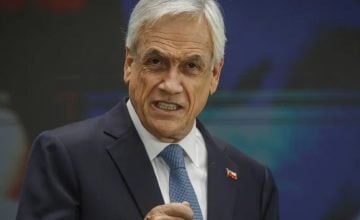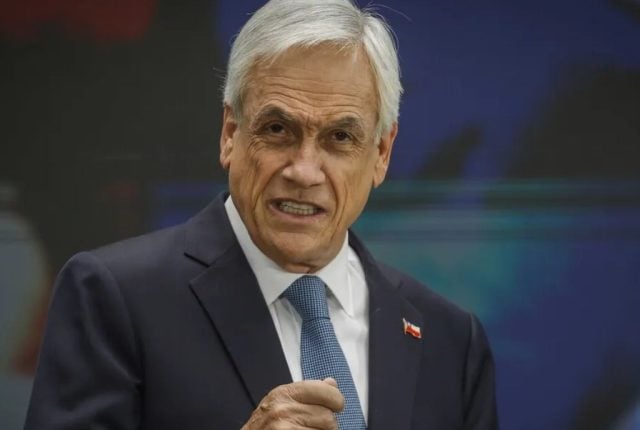
“We are at war against a powerful, relentless enemy that respects nothing and no one, willing to use violence and crime without limits, even if it results in loss of human life,” stated former president Sebastián Piñera during the October 2019 protests. This declaration marked a turning point in Chile’s social uprising, and nearly seven years later, Nobel Prize-winning journalist Mónica González revealed before the Special Commission of the Chamber of Deputies that the former leader acted under an intelligence alert regarding the alleged presence of 600 Cuban and Venezuelan agents in the country, a report that was never documented and deemed false by a senior military source.
González detailed that both the former president and his Defense Minister, Alberto Espina, confirmed they received this information verbally and requested documentation, but never received it. According to González, intelligence sources warned of the supposed entry of these 600 agents from Bolivia to destabilize the government, but neither Piñera nor Espina could obtain a written report supporting this claim. This revelation was part of an investigation led by the president of the CIPER Foundation, who sought to understand why Piñera asserted on October 20, 2019, that the country was at war with a “powerful enemy.”
The origins of this information hint at two narratives that align in content but differ in source. One version claims that it was the then-Director of Army Intelligence, General Guillermo Paiva, who reported in a morning meeting that Venezuelan and Cuban intelligence had orchestrated an insurrectional offensive in Chile. The second narrative suggests that the information came from Bolivian military intelligence, which, according to González, was organizing a coup that would bring Jeanine Áñez to power. The National Intelligence Agency (ANI), led by Luis Masferrer, is said to have managed these details.
However, the journalist questioned the veracity of these reports, citing statements from high-ranking military officials. A senior military source, whose identity was kept confidential, expressed concern over the violation of sovereignty that handing unsupported information to the highest authorities of the country represented.
González also recalled that on October 21, General Javier Iturriaga distanced himself from the presidential warlike rhetoric by asserting, “I am a happy man; I am not at war with anyone,” reinforcing her thesis that the Army knew the information was false.
Piñera Did Not Receive a Written Report
The journalist concluded that this erroneous information not only impacted national sovereignty but also diverted resources and efforts from Carabineros. The police forces may have allocated time and resources to investigate supposed foreign agents without real justification, instead of focusing on public protests. Moreover, González warned that supplying false data to military and police forces could have severe consequences, including inadequate responses and fostering contexts in which organized crime could thrive.
González’s investigation also revealed that former President Piñera personally confirmed to her that he never received the report in writing. The journalist, who maintained a close relationship with the leader since the 1980s, recounted that the former head of state said: “I repeatedly asked Minister Espina to bring me the report, and he asked for it. We were never given a written report,” as documented by CIPER.
For Mónica González, this case highlights the importance of making decisions in crisis situations based on verified information. “In times of crisis, decisions must be made on credible information that ensures national sovereignty and the safety of citizens,” she reflected before the deputies.
The journalist also cautioned about the collateral damage of misinformation: “Let’s not forget something that is never talked about: torture, the murder of innocents and civilians, not only harms the victims but also damages the perpetrators.”
Obtén tu Pasaporte y apoya a El Ciudadano
Elimina la publicidad, accede a contenido exclusivo y sé parte de la comunidad.
Cancela en cualquier momento · Sin permanencia