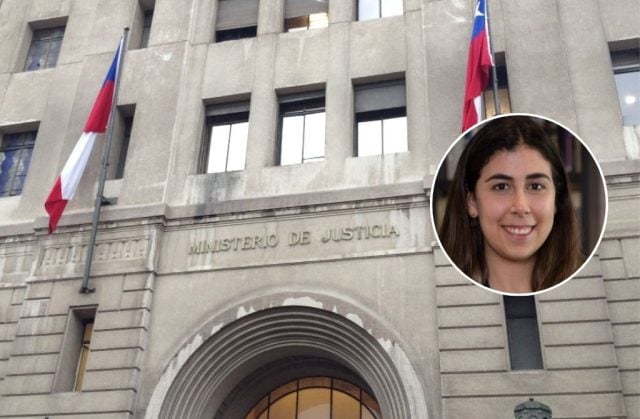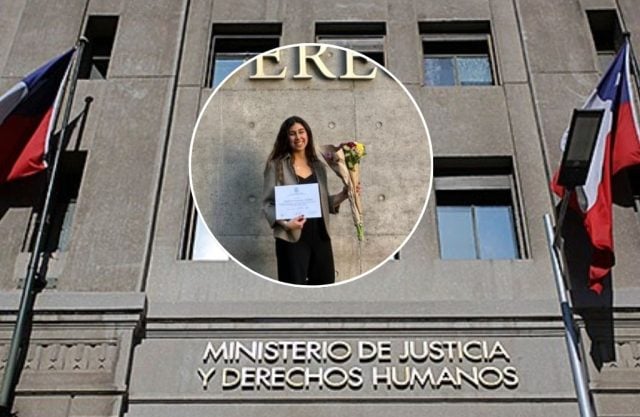
Justice has entrusted Trinidad Zegers Domínguez, who was sworn in as a lawyer just four months ago, with the responsibility of reviving the Civil Procedure Reform, which has been stalled in Congress for more than a decade.
The Minister of Justice, Fernando Rabat, made the appointment of Zegers, who, according to the diario La Segunda, will act as a sort of “manager” of the reform, responsible for coordinating and managing the progress of the legal project aimed at replacing the Civil Procedure Code established in 1903.
The lead figure in the effort to unlock one of the overdue modernizations in the judicial system was sworn in as a lawyer by the Universidad Católica on April 10.
Zegers began her studies in 2019 and held the position of internal vice president of the student center during 2021. After graduating, she joined the Ministry of Justice and Human Rights in April as a consultant, a role she will maintain alongside this new responsibility.
As detailed in her LinkedIn profile, she served as a legal advisor at DLA Piper Chile in 2023, focusing on the regulated markets, energy, and natural resources sectors. Later, she completed her professional practice in the Human Rights Office of the Metropolitan Judicial Assistance Corporation. By September 2025, she joined the litigation and dispute resolution team at SLBZ+ Abogados, Schenke Brancoli, and in April 2026, following the election of José Antonio Kast, she joined the Justice Ministry’s cabinet.
Stalled Reform for Over a Decade
With this background and just four months after becoming a lawyer, Trinidad Zegers was selected by the right-wing administration to lead the push for the project aimed at establishing a new Civil Procedure Code, which was introduced to Congress on March 12, 2012, during Sebastián Piñera’s first term. This initiative emerged from a process that began two years earlier, driven by an inter-ministerial committee and an advisory council.
Nine years later and after numerous attempts across different administrations, the Senate resumed processing the bill in 2021, which, according to the Ministry of Justice and Human Rights, aims to modernize the judicial system and enhance the efficiency of justice processes.
This modernization seeks to address common issues such as contract breaches, medical negligence, unpaid rent debts, collection of communal expenses, unpaid bills, and inheritances or liquidation of marital partnerships, which lead to lengthy procedures that could be resolved through more expedient and oral trials.
In May 2021, the Senate approved the general idea of legislating and updating the civil justice system, through a project that includes the incorporation of digital processing tools and expedited procedures for resolving small debt collections.
Five years after this milestone, Trinidad Zegers, a newly minted lawyer with just four months in the Justice Ministry, now bears the responsibility of coordinating this renewed push from the Executive for the Civil Procedure Reform.
*Featured image: Profile of Trinidad Zegers on LinkedIn.
Obtén tu Pasaporte y apoya a El Ciudadano
Elimina la publicidad, accede a contenido exclusivo y sé parte de la comunidad.
Cancela en cualquier momento · Sin permanencia