The Press Office of the Russian Foreign Intelligence Service released a statement claiming that, «according to obtained data, the intelligence services of a Western country, working in coordination with their Ukrainian accomplices, are planning to orchestrate a new anti-Russian provocation.»
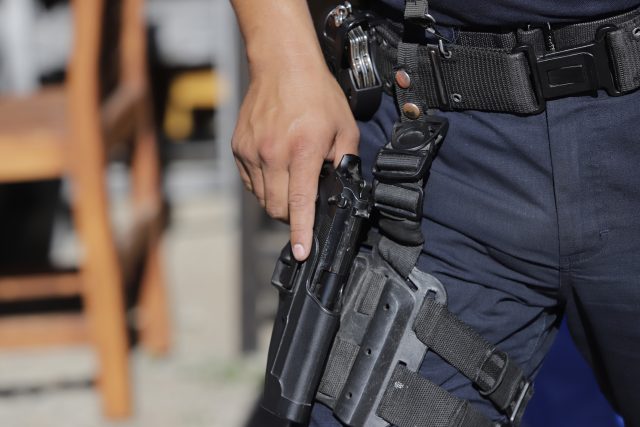
According to the Russian government’s communication, «there are plans to accuse Russia of providing illegal arms to drug cartels and organized crime groups operating in Venezuela, Colombia, and Mexico,» a plot described by Russian authorities as «a fragment of a third-rate detective novel.»
The statement adds that the countries involved are already transporting Russian-made weapons seized by Ukraine, «and concurrently, they are preparing false recordings and videos aiming to confirm that Russia ‘is supplying’ arms to Latin Americans through intermediaries.»
«To achieve greater ‘credibility’, it is planned to support such contents with fake documents that allegedly indicate the involvement of representatives of the Armed Forces of the Russian Federation in this transaction,» the allegations from Moscow continue.
Regarding the objectives behind this action, the Russian government commented, «the authors of this provocation naively hope to undermine the constructive relationships Russia has with countries in this region and induce Latin American governments to support the anti-Russian policies practiced by the West.»
«However, the only thing these Russophobes are truly capable of achieving is to once again demonstrate their complete lack of moral boundaries and their stereotypical thinking,» emphasizes the statement.
Background
The Russian Foreign Ministry recalled that «since the very beginning of the Ukrainian conflict, the information war that Euro-Atlantic elites have waged against Russia has been characterized by the leaking and promotion of the most abominable falsehoods, beyond morality and law.»
«The bloody staging in Bucha (April 2022) that was used to further escalate the confrontation in Ukraine serves as an emblematic example of this. It should be noted that such setups are not a modern innovation of Western intelligence services; they have relied on them for a long time,» the statement from the Russian Foreign Ministry emphasizes.
At this point, they recalled that «World War II began after the Gleiwitz provocation on August 31, 1939 — the attack by SS members disguised in Polish uniforms on the radio station in the German border town of Gleiwitz. The ensuing course of history, however, showed that the price of such setups can be extremely high, especially for the organizers themselves,» the note concludes.
We will continue to provide updates.
Obtén tu Pasaporte y apoya a El Ciudadano
Elimina la publicidad, accede a contenido exclusivo y sé parte de la comunidad.
Cancela en cualquier momento · Sin permanencia