Original article: Fidel Castro: La gloria de los pueblos
By Esteban Silva Cuadra
This article serves as a tribute to Fidel Castro Ruz on the centenary of his birth, summarizing key chapters and reflections from a more extensive work I am writing about his historical, political, and internationalist legacy, along with his connections to the liberation, sovereignty, and social justice struggles of the peoples of Our America, Africa, Asia, and the Global South.
These pages aim not to exhaust his journey but to provide a synthesis of his main themes, interrogating his thought in light of the challenges facing the peoples of the South.
On August 13, 2026, we will commemorate the 100th anniversary of the birth of Fidel Castro Ruz. Nearly a decade after his physical disappearance, his persona is not a relic of the past but a relevant question for today.
Fidel was much more than the leader of the Cuban Revolution; he was a Latin American revolutionary and a global statesman whose life was intertwined with significant struggles for decolonization, social justice, and socialism in the Third World and Global South.
His ideas spanned the 20th century and resonate powerfully into the 21st, challenging us with the contradictions of the present: the militancy of a deadly but crisis-stricken imperialism, the imperialist aggression against Iran, NATO’s conflict with Russia on Ukrainian soil, the genocide perpetrated by Zionism in Palestine, the illegal and colonial occupation of Western Sahara, the enduring colonialism in Puerto Rico, the global climate crisis, and Trump’s tariff wars and trade agreements favoring large multinational corporations, as well as the neoliberal and fascist offensives in Latin America, the Caribbean, and the world.
Remembering Fidel does not mean freezing him in a mythical image, but rather interrogating his legacy vis-à-vis our realities. His friendship with Salvador Allende illustrates his capacity to understand different paths to socialism, respecting the Chilean way without imposing his own.
This dialogue, founded on principles rather than interests, is key to his moral authority, based on a genuine «bulletproof vest» made of ethics and principles, which accounted for his continental influence, even over leaders who did not fully share his views.
Three concepts run through and give meaning to Fidel’s entire trajectory: internationalism as a borderless solidarity practice, anti-imperialism as a direct confrontation against the dominance of great powers over peoples, and anti-colonialism as a permanent struggle against all forms of domination, occupation, and territorial dispossession.
These three intertwined pillars constitute the backbone of his thinking and political action throughout more than half a century.
Internationalism and Anti-imperialism: The Pillars of a Life
The Cuban Revolution, deeply imprinted with Marti’s ideals, gained continental and international dimensions from its victory in 1959. The relationship between Fidel and Che Guevara embodied the conviction that Cuba’s liberation was inseparable from the emancipation of Latin America, the Caribbean, and the world.
The figure of Jorge Ricardo Masetti, Argentine journalist and founder of Prensa Latina, illustrates that early projection. Fidel sent him to Algeria in 1961 to offer concrete solidarity to the National Liberation Front, initiating a cooperation policy that did not respond to economic interests but to an ethical definition: liberation gained meaning only when it contributes to the freedom of other peoples.
This solidarity was institutionalized in the Tricontinental (1966) and OLAS (1967), making Havana a meeting point for anti-colonial struggles in Africa, Asia, and Latin America and the Caribbean.
Fidel, although emerging from an armed revolution, recognized that revolutionary transformations and the construction of popular power could follow democratic institutional pathways, as evidenced by Allende’s path in Chile in 1970 or later with Hugo Chávez’s Socialism of the 21st Century, demonstrating a creative internationalism free from dogmatism.
Fidel’s anti-imperialism was not a rhetorical slogan but a political compass guiding his international decisions. He understood that imperialism manifested not only in military invasions but also through financial control, external debt, the imposition of economic models, and cultural subjugation.
For this reason, his struggle was always against the dominance of the United States and the great powers, relentlessly denouncing the blockade against Cuba, interventions in Latin America and the Caribbean, and wars of aggression worldwide.
Anti-colonialism, for its part, was the framework within which Fidel interpreted the events of the 20th century.
He did not limit himself to the formal decolonization of African and Asian territories; he understood that colonialism persisted under new forms: territorial occupations such as those in Palestine and Western Sahara, colonial statuses like that of Puerto Rico, and economic relationships that reproduced dependency and looting. Therefore, his solidarity with colonized peoples was always a strategic and ethical priority.
From Sierra Maestra to Africa and Vietnam
Solidarity with Africa became one of the most heroic chapters of Fidel’s internationalism. Support for the Algerian Revolution, even before its independence in 1962, prefigured a relationship that would extend throughout the continent.
Cuba did not condition its assistance on natural resources or economic advantages. Its intervention in Angola, culminating in the Battle of Cuito Cuanavale (1987-1988), was decisive in defeating the apartheid regime of South Africa, paving the way for Namibia’s independence and strategically weakening institutionalized racism.
Nelson Mandela recognized that Cuito Cuanavale was a turning point in the struggle for the liberation of Southern Africa. For Fidel, the struggles in Angola, Namibia, South Africa, and Vietnam were part of the same process: the confrontation against colonialism and imperialism, where self-determination demanded concrete solidarity.
Fidel transformed the Non-Aligned Movement (NAM) into a platform to denounce structural inequalities between the Global North and South.
As chairman of NAM in 1979, he defended the need for a New International Economic Order at the UN, questioning structures that condemned millions to hunger.
These demands resonate today under the concept of the Global South: democratization of institutions, financial reform, sovereignty over strategic resources, and rejection of new forms of colonialism.
Solidarity as State Policy: Health, Science, and Cooperation
One of the deepest dimensions of Fidel’s legacy was transforming solidarity into concrete policies. Thousands of Cuban doctors, teachers, and technicians brought health and education to the world’s poorest corners.
The creation of the Latin American School of Medicine and the development of a biotechnology hub, with vaccines like those against meningitis and hepatitis B, reveal a strategic vision: sovereignty is also defended through scientific knowledge.
During the Special Period, Fidel safeguarded these capabilities, demonstrating that a small country can be great in science, solidarity, and humanity. This policy was evident during the COVID-19 pandemic with the development of indigenous vaccines for the immunization of the Cuban population and its application and cooperation with other countries.
Beyond the specific evaluation of each product or the challenging economic conditions under which they were developed, that capacity did not arise haphazardly amid the pandemic: it was the result of sustained scientific policy over decades, which Fidel personally promoted since the 1980s.
I was fortunate to meet the Commander in Chief for the second time on October 18 and 19, 1999, at an international health meeting in Havana. Fidel provided extensive reflections on health challenges amidst predatory capitalism, biotechnological advancements, and the need to ensure that medications and vaccines are accessible to all peoples.
What impressed me most was his extraordinary command of statistics, medical concepts, and his immense curiosity to learn about patient details, treatments, and health technologies. Listening to him left the impression that Fidel knew more about public health than all the ministers and international officials who participated in that unforgettable conversation.
Three Pending Causes: Palestine, Western Sahara, and Puerto Rico
Fidel’s solidarity with these three causes expresses the unfinished decolonization task. To him, Palestine was «the core of the Middle East problem.» Cuba broke relations with Israel in 1973 and has consistently supported the PLO.
Likewise, he recognized the Sahrawi Arab Democratic Republic in 1980, supporting its just struggle within the framework of African decolonization. I have witnessed personally, both in Sahrawi refugee camps and in my exchanges with my brothers from the Polisario Front, the deep remembrance and gratitude towards Fidel and the training received in Cuba.
For many of them, Cuba is not just a political and cultural reference; it is part of their personal history.
In Puerto Rico, Fidel upheld the Martian tradition: the independence of both islands formed part of the same battle. Fidel maintained the Puerto Rican issue on the UN agenda, defending the Boricua people’s right to self-determination, a struggle that remains relevant today.
Allende, Chávez, Lula, and the Unity of Our America
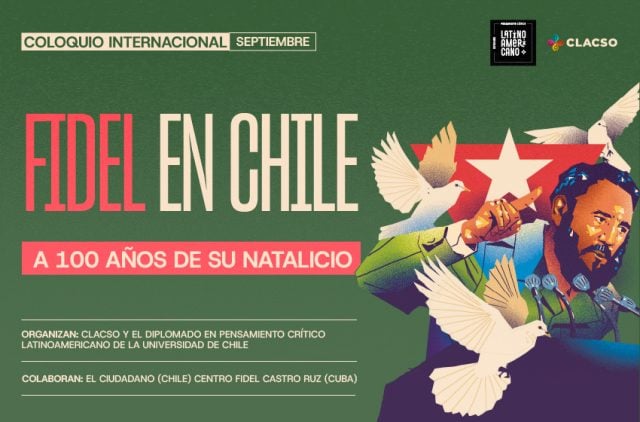
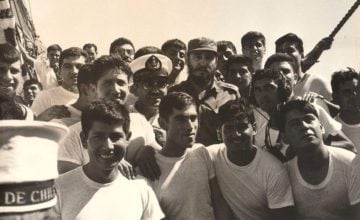
Fidel’s relationship with Salvador Allende represents one of the most significant chapters in Latin American history. Fidel respected the specificity of the Chilean path to socialism, understanding that it could not simply replicate the Cuban experience. His visit to Chile in 1971 and the friendship he built with Allende endured despite strategic differences.
During that visit, Fidel held an illuminating meeting with committed Christian sectors involved in socialist transformation. In that conversation, Fidel expressed an idea that gained great importance for the convergence between revolutionary Christians and Marxists: «I feel allied with you.»
After the 1973 coup, Fidel projected the memory of the martyr president as a symbol of consequence, heroism, and dignity while maintaining unwavering solidarity with the resistance against Pinochet’s dictatorship.
The first time I personally met Fidel was in October 1986, when I was 22 years old. That encounter lasted all night. In the clandestine delegation of the main left-wing forces from Chile that traveled to Cuba were Jecar Neghme, Germán Correa, José Sanfuentes, Sergio Wartenberg, Jaime Cataldo, Jorge Heler, and I.
Jecar, spokesperson for the MIR who would later be assassinated by the dictatorship, and I were the youngest. Alongside Fidel were also the remembered commander Manuel Piñeiro, «Barbarroja,» and Armando Campos. That meeting profoundly marked my life and militant commitment.
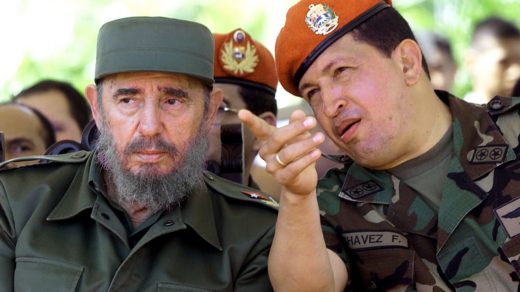
The arrival of Hugo Chávez to the presidency of Venezuela opened a new cycle. The relationship between Fidel and Chávez was extraordinarily close and fruitful, finding common ground in Bolívar and Martí.
Health cooperation, such as the Miracle Mission, and integration projects like ALBA and Petrocaribe revitalized the dream of Latin American and Caribbean unity.
Fidel enthusiastically supported and provided concrete solidarity for the Sandinista Popular Revolution that triumphed in Nicaragua in 1979, viewing the FSLN’s actions as a continuation of Our America’s emancipatory struggles.
He also saw Lula da Silva and the new progressive and leftist governments in Argentina, Bolivia, Ecuador, Nicaragua, and El Salvador as opportunities to build autonomous spaces against Washington, like UNASUR and CELAC.
It was alongside Lula, in the years following the fall of the Berlin Wall, that Fidel recognized the need to create a space that allowed Latin America’s left to debate and build agreements amid an adverse environment. Thus, the São Paulo Forum was born in 1990.
It was not about imposing a single line but generating a space for unity —unity in diversity— where parties and movements from different traditions could meet, recognize each other, and develop common strategies against neoliberalism and imperialism. Unity was for Fidel not an empty slogan but a historical and strategic necessity.
Debt, Predatory Capitalism, and the Ecological Crisis
Fidel deeply identified with the vision of «the condemned of the earth» by Frantz Fanon, understanding that colonialism persisted under new forms of economic subordination.
The theory of dependency found in Fidel a political interlocutor and leader; reflections by Theotônio dos Santos, Ruy Mauro Marini, Vânia Bambirra, and André Gunder Frank on dependency, imperialism, and economic subordination converged with many of his concerns about the sovereignty of the Third World.
In 1985, he initiated a major gathering to denounce the transfer of resources from poor countries to the rich, questioning the legitimacy of a system that sacrificed social development.
Fidel, the revolutionary and the socialist, understood that the self-determination and sovereignty of peoples could not be reduced to formal declarations of political independence. They required, instead, a profound transformation of the economic structures that perpetuated dependency and looting.
For this reason, his struggle for sovereignty was always also a struggle for socialism, understood as the only alternative capable of returning control over resources, economies, and destinies to the peoples.
This battle directly links to his ecological warning at the 1992 Rio Summit: «A significant biological species is at risk of disappearing due to the rapid and progressive liquidation of its natural living conditions: man.»
Fidel coined the term ecological debt, establishing a continuity between the struggle against financial debt and the defense of life. For him, the climate crisis was not a natural phenomenon but the result of predatory capitalism, a production and consumption model sacrificing the planet’s survival for the unlimited accumulation of wealth.
Confronting this crisis demanded not mere technical adjustments but a civilizational transformation that could only be socialist.
Thirty years later, during COP27 in Egypt, amid an increasingly visible climate crisis, it was difficult not to recall those words. Climate change, biodiversity loss, desertification, wildfires, the water crisis, and human displacements confirm that the ecological issue is inseparable from social justice and relations between the Global North and South.
When a Revolutionary Dies, He Never Dies
When Fidel passed away in 2016, I wrote that a revolutionary never dies. And ten years later, on his centenary, that assertion holds true.
Fidel is present in current struggles: in Palestine, in Western Sahara, in the resistance for Puerto Rican independence, in the defense of Cuba and Venezuela, in the battle against debt and speculation, in defending indigenous lands and communities, and in the fight against the climate crisis.
His legacy is a formidable collection of principles, ideas, and proposals for transforming the world. Today, we question what sovereignty, internationalism, solidarity among workers and peoples, and socialism mean in a world besieged by wars, looting, exploitation, genocides, and profound inequalities.
Fidel Castro, citing José Martí, said that «the glory of the world fits in a grain of corn.»
This statement, as humble as it is profound, encapsulates the very essence of his life and work. He did not seek personal glory nor the vanity of monuments; he understood that true greatness lies in the smallness of the collective, in the strength of the organized people, in the seed that germinates in fertile soil.
Therefore, we can assert with full conviction that all the glory of the peoples of the world who have fought and continue to fight for Another Possible World fits in the struggle and legacy of Commander Fidel Castro Ruz.
In that grain of corn is the people, the only source of legitimacy and horizon of emancipation. Thus, a hundred years after his birth, the Commander remains present, and the commitment to the liberation of Our America and the Global South reaffirms itself as his most vibrant legacy. Until victory, always!
Esteban Silva Cuadra
August 17, 2026
Obtén tu Pasaporte y apoya a El Ciudadano
Elimina la publicidad, accede a contenido exclusivo y sé parte de la comunidad.
Cancela en cualquier momento · Sin permanencia