Original article: Díaz-Canel denuncia “genocidio” por sanciones de EE.UU.: mortalidad infantil se duplicó y faltan medicamentos en Cuba
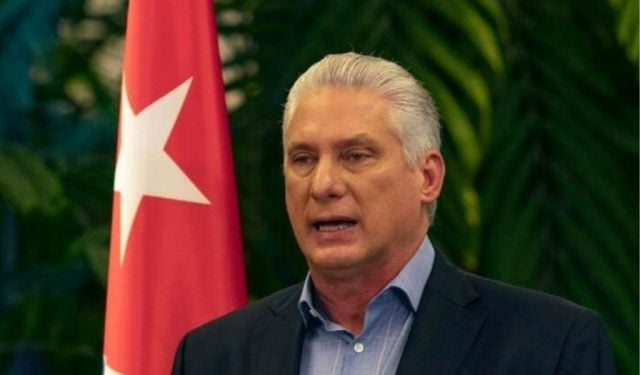
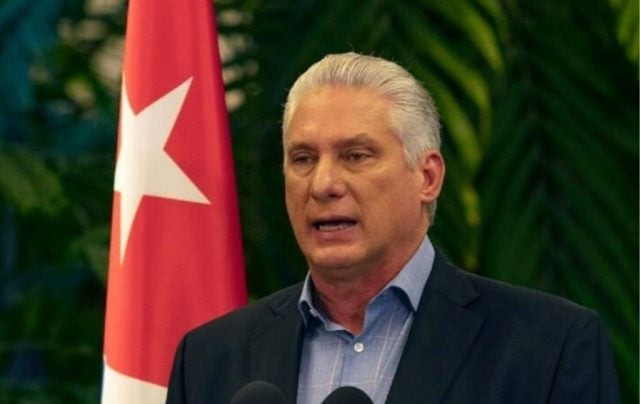
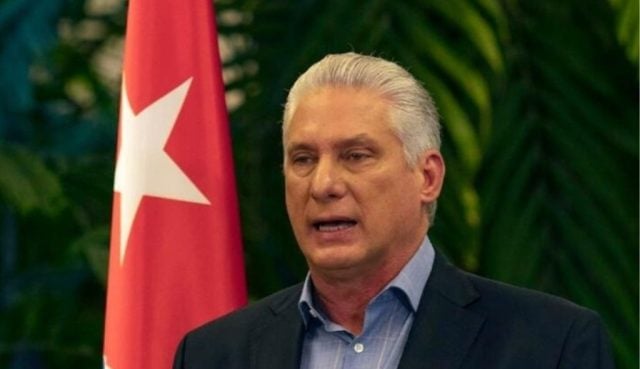
Cuban President Miguel Díaz-Canel Bermúdez criticized the sanctions imposed by the United States against the island, labeling them as an act of «genocide«.
In an interview with the Brazilian newspaper Folha de Sao Paulo, the leader described the oil embargo and the array of coercive measures enforced by Washington as part of a multidimensional war aimed at suffocating the economy of the Caribbean nation, which is currently facing an unprecedented energy crisis. He pointed out that childhood mortality rates have doubled and thousands of patients are suffering due to a lack of medications.
Díaz-Canel stated that the Trump administration «has built a network of sanctions and coercive pressures that restrict the country’s operations, which is increasingly becoming genocide».
He asserted that the aggression perpetrated by the White House, which merges ideological, cultural, economic, and media pressures, aims to provoke a social explosion leading to the collapse of the revolutionary government.
Internal Reforms and Defense of Sovereignty
The president took the opportunity to clarify that the recent economic transformations approved by the National Assembly are unrelated to any concessions to Washington. He explained that the 176 measures—75% of which are already legally supported—are the result of a «refinement debate» lasting over a decade and are not a response to external demands. «The United States has no moral grounds to request any concessions from us, nor are we willing to make them,» he emphasized, making it clear that the strengthening of private actors and openness to foreign investment is aimed at increasing domestic production without abandoning the principle of social justice.
Energy Blockade as a Tool of Asphyxiation
The Cuban leader elaborated on the severity of the energy crisis stemming from the oil blockade imposed in January 2026, explaining that the inability to purchase fuel on the international market has prevented the country from generating at least 1,400 megawatts daily, leading to prolonged blackouts affecting all aspects of daily life. «When there is no energy, there is no electricity, water, or transportation. Domestic life becomes complicated,» he described, adding that the fuel shortage has paralyzed productive processes and essential services.
He affirmed that this situation is part of a deliberate strategy by Washington to «sacrifice the Cuban people in an attempt to subdue a nation».
The Humanitarian Impact: Children Without Vaccines and Patients Without Treatment
One of the most alarming aspects of Díaz-Canel’s denunciation refers to the critical condition of Cuba’s public health system, revealing that the child mortality rate has doubled.
«There are already more than 64,000 children with delayed vaccination schedules, an unprecedented situation. The child mortality rate, which was four to five deaths per one thousand live births—typical in developed countries—has more than doubled. These are child deaths that could have been prevented, as we know how to prevent them,» he accused, as reported by TeleSUR.
The president also noted that over 117,000 cancer patients, including 1,200 minors, are not receiving adequate oncological treatment, along with a waiting list exceeding 98,000 patients for surgeries.
Pressure on Trade and Withdrawal of Investments
The Cuban president explained how the threat of secondary sanctions from the U.S. has succeeded in internationalizing the blockade, impacting third-party companies maintaining ties with Havana. «We currently have thousands of containers at various ports around the world that are not reaching the country,» he reported, detailing that these shipments contain food, spare parts for electrical systems, photovoltaic systems, and raw materials essential for local drug production. This situation has resulted in the island being able to cover only 30% of its basic medicine list.
Similarly, these pressures have forced the exit of most tourism companies, leaving 50% of hotels closed and around 27,000 workers in the sector unemployed.
Resistance and Response to Military Threat
When questioned about the possibility of U.S. military intervention akin to that in Venezuela, Díaz-Canel was adamant that from the Trump administration, «we can expect anything.» He emphasized that Cuba is a peaceful nation while acknowledging that the rhetoric of threats is constant, and the country is preparing through exercises like National Defense Day. «Our only alternative is to resist,» he affirmed.
When asked about his fate in the event of military action, the leader responded firmly: «If my time comes, it has come. But it will not be with weakness and cowardice. It will be fighting.»
Creativity and Resilience of the People in the Face of Adversity
Despite the grim outlook, the Cuban president highlighted the resilience of civil society. He acknowledged that the country is going through «a complex and suffering situation,» but underscored «the heroic resilience of the Cuban people» as a driving force for seeking alternatives. He provided the example that, even without electricity, doctors and nurses reach hospitals to save lives, and teachers managed to complete the school year, graduating over 30,000 university students. «If we are so incapable, inept, and inefficient, why block us? Wouldn’t it be better to let us fall on our own?» questioned the president, concluding his remarks with a declaration of principles: «This nation does not give up, this people do not give up.»
Obtén tu Pasaporte y apoya a El Ciudadano
Elimina la publicidad, accede a contenido exclusivo y sé parte de la comunidad.
Cancela en cualquier momento · Sin permanencia