Original article: Palantir: El arma digital de la Derecha, ¿llegó a Chile?
By Javier Córdova
A highly secretive presidential meeting between Kast and Peter Thiel, one of the most influential figures in global right-wing technology, along with a proposed constitutional reform granting exceptional powers to the Head of State regarding domestic security, should not be seen as isolated events but rather as interconnected issues within a concerning pattern.
In May, José Antonio Kast held a meeting with Peter Thiel, which the government confirmed weeks later, yet the content of that conversation remains shrouded in mystery to this day.
Three months later, Kast introduced a constitutional reform proposing a new State of Exception for Public Security, allowing the restriction of assembly freedoms, confiscation of goods, and interception of private communications for up to 240 days without Congressional approval.
Thiel landed in Chile to attend closed-door meetings not only with our President but also with Congressman and President of the National Libertarian Party, Johannes Kaiser, and neoliberal ideologue of the dictatorship, José Piñera. Prior to this, he visited Brazil and met with the President of Paraguay, Santiago Peña.
Born in Germany and naturalized as an American, Thiel amassed his fortune co-founding PayPal in 1998 alongside figures like Elon Musk.
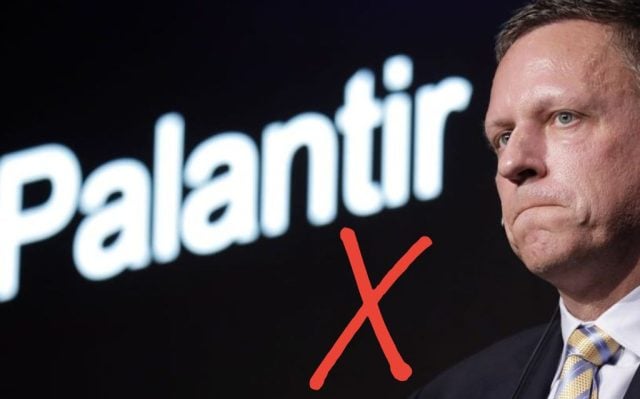
In 2003, he took a significant step by founding Palantir Technologies, a firm focused on predictive data analytics for the military and intelligence sectors. He currently resides in Argentina and has close ideological ties with Javier Milei.
In the famous saga The Lord of the Rings, palantíri refers to the crystal ball used by the evil sorcerer Saruman to spy on the world. Thiel drew inspiration from this object to name his company.
The activities carried out by Palantir are highly confidential, but their track record speaks volumes: their analytical tools were pivotal for the U.S. Immigration and Customs Enforcement (ICE) to execute mass deportations, and their software systems are employed by the U.S. Department of Defense and Israeli armed forces in conflict zones.
In its recent 22-point corporate manifesto, Palantir advocates for «software-driven hard power» and the direct involvement of the tech sector in national security, a stance that academics and sociologists have straightforwardly labeled as technofascism.
Thiel himself has expressed disdain for republican order, stating that «freedom and democracy are no longer compatible.»
Currently, they offer various products, but one that particularly stands out is Gotham.
This tool focuses on state security, processing existing databases to create detailed profiles of individuals, relationship maps, and suspicious behavior patterns through artificial intelligence, allowing investigative agencies and military forces to visualize complex networks and anticipate movements.
It’s an ideal tool for a government looking to implement a vandal registry, as proposed by the Chilean right today.
These AI-powered tools have emerged in a context where the far-right wins elections in South America, leading governments—such as in Chile—to propose authoritarian reforms that stifle civil rights.
The case of Ecuador is particularly intriguing due to its troubling parallels with our country.
In 2025, the Ecuadorian government adopted Palantir’s software with the promise of modernizing customs and combating corruption. The government of Daniel Noboa faces criticism for unconstitutionality, and their new security plan presented on July 14 seeks to involve the armed forces in internal security and reform the constitution.
When the mass surveillance capabilities of these companies intersect with the aspirations of an Executive without democratic checks, the boundary between protecting citizens and authoritarian control blurs.
Are we witnessing a legitimate plan to combat organized crime with modern digital tools, or are we faced with an AI-based weapon for the excessive use of state force?
Javier Córdova
Obtén tu Pasaporte y apoya a El Ciudadano
Elimina la publicidad, accede a contenido exclusivo y sé parte de la comunidad.
Cancela en cualquier momento · Sin permanencia