Original article: El Sáhara Occidental: la herida abierta del colonialismo en el siglo XXI
By Carlos Martínez, Political Scientist and Member of Sovintern
Some causes transcend borders and the interests of the powerful. There are struggles that, although silenced by major media outlets and overlooked by Western governments, are rooted in historical truth, rights, and the dignity of a people. The cause of Western Sahara is one such struggle.
It is not only an anti-colonial and anti-imperialist cause; it is also a fight for justice, international law, and the fundamental principle that no people should be subjected against their will.
The Legal Framework: A Debt Owed to History
Western Sahara remains on the United Nations list of non-self-governing territories even today.
It was included in 1963, and since then, the international community has made it clear: Spain remains de jure (by law) the administering power of the territory.
The UN General Assembly stated back in 1965, through Resolution 2072, that Spain must lead Western Sahara toward political emancipation. However, that process was halted.
The so-called Madrid Agreements of 1975, signed in the twilight of Franco’s regime, did not transfer sovereignty over the territory nor change its international legal status.
The UN’s legal advisor reminded us in 2002 that Spain could not unilaterally dispose of its status as the administering power or transfer sovereignty over the territory. This criterion was reiterated even by Spain’s National Court in 2014.
Yet, the promised self-determination referendum has yet to take place. MINURSO was established in 1991 to oversee that consultation. More than thirty years later, the Sahrawi people are still waiting.
The recent Resolution 2797 from the Security Council, adopted on October 31, 2025, renews MINURSO’s mandate for another year but fails to open substantive pathways toward the referendum. It is the same inaction as always, the same postponement that benefits the occupier.
The Betrayal of 1975 and the Cession of 2022
Spain did not just abandon its responsibility; it handed it over to those who had no right to receive it. On November 9, 1975, King Juan Carlos I, imposed by Franco and a «brother» of the Alaouite monarch Hassan II, negotiated the handover of the Sahara to Morocco.
This was not an act of majority state consensus nor one that was consulted; it was a shameful concession, crafted in back offices, that condemned an entire people to occupation.
And half a century later, history repeated itself. Pedro Sánchez, without consulting Parliament or the Spanish people, altered Spain’s long-standing position of neutrality, endorsing Morocco’s autonomy plan as «the most serious, realistic, and credible basis» for a solution. Analysts have interpreted this shift as a gradual accommodation towards Rabat’s positions.
The administrative agreement signed in December 2025 between the education ministries of Spain and Morocco, which hands over educational control in the Spanish school La Paz in Laayoune to Moroccan authorities, is just the latest episode of this capitulation.
Morocco has recognized the weakness of the Kingdom of Spain and its governments, and unlike them, knows what it wants and how to achieve it, while Spanish authorities lack a plan and their subservience to US interests and fear of the Alaouite crown, along with bribes and corruption, maintains an erratic, fearful liberal policy devoid of any defense of sovereignty and dignity.
Morocco, the U.S., and Israel: The Axis of Occupation
Morocco does not act alone. Its territorial expansion, based on alleged historic rights of ancient sultanates irrelevant to contemporary international law, relies on strategic alliances with Western powers and the Zionist entity of Israel.
In December 2020, the Trump Administration recognized Moroccan sovereignty over Western Sahara in exchange for normalizing relations between Morocco and Israel. It was a disgraceful swap: a territory pending decolonization was treated as a bargaining chip in the Abraham Accords.
Since then, the U.S. has reiterated its support for Rabat’s position, and both France and Germany have deemed Morocco’s autonomy plan as «serious and credible.» The alliance with Israel, with cooperation in security, technology, and economy, has granted Morocco unprecedented political and military backing.
This alliance is not an isolated phenomenon. It is part of a new alliance map that weakens Europe’s negotiating position and turns the Mediterranean into an arena for pressure and blackmail. Morocco has learned it can use migratory pressure as a bargaining tool. It is not a reliable partner; it is a country that systematically plays with marked cards.
But the Alaouite dynasty also exploits its own people, expropriating their wealth and rights, impoverishing them and denying them welfare, while oppressing other internal minorities, all while its king possesses the fifth-largest fortune in Africa.
The Polisario Front: The Legitimate Voice of a People
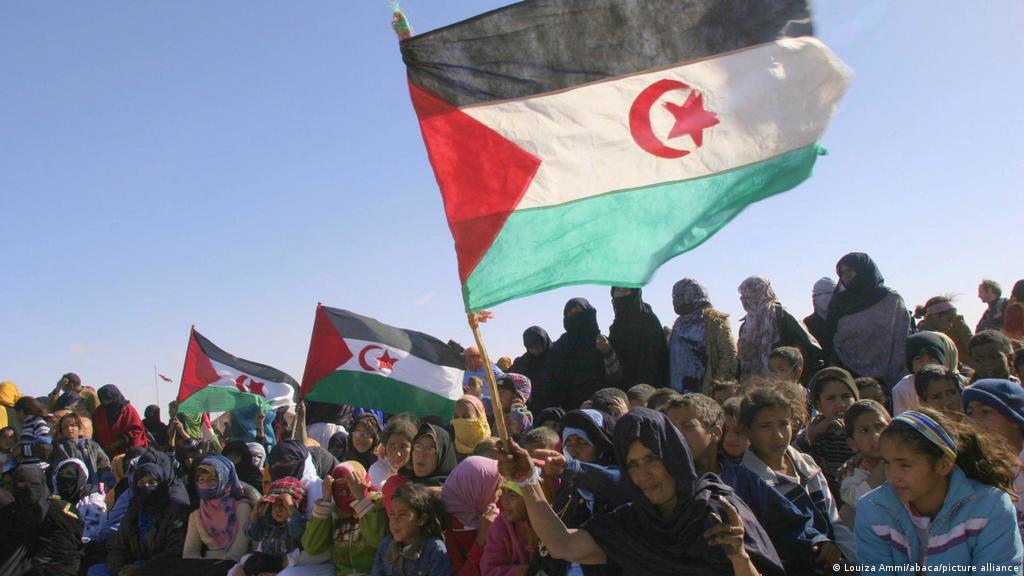
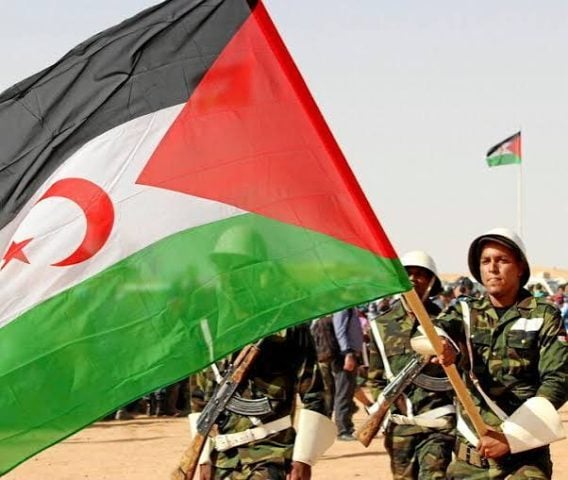
Against this alliance of colonial and neo-colonial powers, the Polisario Front stands firm. It is not just another group in dispute with others; it is the only legitimate representative of the Sahrawi people, recognized as such by the UN and the African Union.
The UN General Assembly, through Resolutions 34/37 (1979) and 35/19 (1980), recognized the Polisario Front as the representative of the people of Western Sahara. Since 1984, the Sahrawi Arab Democratic Republic has been a full member of the African Union.
The vast majority of African powers, all of whom are former colonies, recognize the Polisario Front as the legitimate representative of the Sahrawi people. Numerous nations, political parties, and international associations support its cause.
The Sahrawi struggle is also an anti-imperialist cause. Morocco, the U.S., and Israel only enjoy support from powers that have been colonizers and wish to turn the Alaouite kingdom into a base against multilateralism and the sovereignty of peoples.
Neocolonialism: The Exploitation of the Global South
Western Sahara is not an isolated case. It represents a broader scourge: neocolonialism. The West and its powers continue to commit usurpation and expropriation of the natural wealth of the Global South.
Western Sahara is rich in phosphates, fishing resources, hydrocarbons, and other materials. Its occupation prevents the local population from exploiting these resources, while the crown offers them to multinational companies and foreign powers that are invading the territory.
Morocco, with the connivance of the U.S., Israel, NATO, and the European Union, maintains a scenario of war and occupation to ensure control of these riches.
When nations around the world prove capable of achieving their own development, colonial powers resort to henchmen or war. The Sahrawi cause illustrates that colonialism remains present, and that both Morocco and the delegations acting on behalf of the West exercise it, just as the Zionist entity of Israel does in Palestine or Great Britain does in Gibraltar.
Justice Does Not Prescribe
Western Sahara is the last colony in Africa. It serves as a reminder that colonialism is not a matter of the past, but a present reality. It proves that international law can be violated with impunity when the powerful so decide.
But justice does not prescribe. The Sahrawi people remain steadfast, the Polisario Front continues to fight, and the international community has a moral and legal obligation to demand compliance with UN resolutions.
Spain, as the administering power, is obliged to facilitate a self-determination referendum. It cannot wash its hands of this issue. It cannot hide behind shameful agreements.
The Sahrawi people deserve to decide their future. And the world, if it truly believes in justice, international law, and the sovereignty of peoples, must stand by their side.
Carlos Martínez
Obtén tu Pasaporte y apoya a El Ciudadano
Elimina la publicidad, accede a contenido exclusivo y sé parte de la comunidad.
Cancela en cualquier momento · Sin permanencia