Original article: El comercio global se acelera y los minerales críticos marcan la agenda: claves del panorama económico mundial
The global economy is navigating a landscape filled with both opportunities and tensions. International trade is experiencing rapid growth, yet trade wars, tariffs, and sanctions are reshaping the marketplace. Concurrently, governments are racing to secure supplies of strategic minerals and position themselves in the artificial intelligence race.
By Bruno Sommer
A Booming Global Trade Landscape
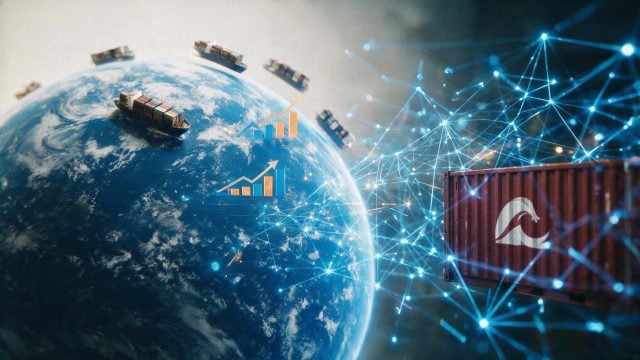
The first half of 2026 revealed alarming yet positive figures. According to the United Nations Conference on Trade and Development (UNCTAD), global goods trade surged by 12.5% year-on-year, while services grew by 10.5%. This surge is primarily driven by East Asia, spurred by demand for artificial intelligence-related products, digital technologies, and electric vehicles.
The statistics are striking: trade in critical minerals climbed by 38%, semiconductors by 25%, and batteries by 15%. However, the rosy picture is tempered by rising energy, transport, and logistics costs which are inflating prices, and ongoing geopolitical tensions that could further fragment growth.
Simultaneously, the Trade Policy Activity Index (TPA), compiled by the International Monetary Fund and the World Trade Organization, indicates an increase in protectionist measures. Tariffs, import bans, and quantitative restrictions are multiplying, while trade facilitation measures grow at a significantly slower pace.
The Race for Future Minerals
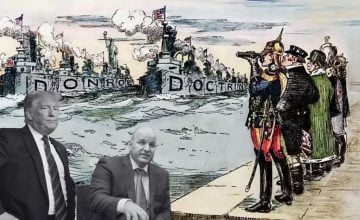
A predominant topic across developed economies is the need to secure supplies of critical minerals. The United States has announced a $3 billion investment to support critical minerals and battery projects. During a meeting with the mining industry, President Donald Trump made the strategy clear: to boost extraction and processing on American soil, while also providing funding for projects in allied countries.
Canada is similarly expanding its support for critical minerals through investments in infrastructure and long-term purchasing agreements. The Canadian government is focusing on developing resources such as germanium, antimony, nickel, lithium, and cobalt.
Australia is also taking significant steps. The country plans to introduce a 10% tax credit for the processing and refining of critical minerals starting July 2027. This initiative aims to attract private capital and extend the value chain, benefiting sectors like lithium, rare earths, nickel, and cobalt.
Artificial Intelligence: The New Trade Frontier
The World Trade Organization is focusing on artificial intelligence. On September 14, it will host the first «World Trade and Technology Day» in Geneva to discuss how AI can transform international trade.
According to the WTO’s World Trade Report 2025, if the gap in AI adoption is closed, artificial intelligence could boost global GDP by 13% and international trade by as much as 37% by 2040. Discussions will address topics such as digital trade, intellectual property, AI standards, and the participation of developing economies in this technological value chain.
The European Union is already making moves. It has launched a call to create up to seven «super-factories» for artificial intelligence with a public investment of up to €10 billion, aiming to mobilize an additional €20 billion in private capital. These facilities will provide high-performance computing resources for startups, SMEs, research centers, and large corporations.
South Korea has outlined its roadmap as well. The government has introduced the «Seven SEED» strategy to drive future technologies, which includes AI applied to biotechnology, quantum computing, and new materials. The Asian nation aims to extend AI from software and semiconductors into new fields such as biomedicine and research automation.
Geopolitical Pulse in Markets
Geopolitical tensions are reflected in commodity prices. Brent crude is trading between $92 and $96 per barrel, while WTI ranges from $86 to $89. Ongoing disruptions in maritime traffic through the Strait of Hormuz maintain a geopolitical risk premium that could spike prices if the conflict escalates.
In precious metals, gold has broken barriers, surpassing $4,600 per ounce and accumulating three consecutive weeks of gains. Silver, with its dual industrial and financial components, shows even greater volatility than gold. Among base metals, copper leads the increases, with inventories on the London Metal Exchange at historic lows and spot prices hitting record highs.
China Responds to U.S. Sanctions
The Chinese government has taken a firm stance in response to sanctions imposed by the United States. The Ministry of Commerce announced a tightening of export controls on drones and their components to the U.S. Starting August 5, exports of these products will be subject to case-by-case review, without access to simplified licensing procedures.
Furthermore, Beijing has added six U.S. organizations to its sanctions list, including Applied DNA Sciences, Stratum Reservoir, Altana Technologies, the Responsible Business Alliance, Vitec Group, and Human Rights in China. This measure responds to what China deems illegal sanctions under the pretext of «forced labor».
Two Chinese Companies Challenge the System: Lessons for the World
In an unprecedented development, two Chinese companies have made significant strides in their fight against U.S. sanctions, offering valuable lessons for any company operating in an increasingly complex global environment.
Hoshine Silicon, which was placed on the U.S. Customs forced labor list in 2021, managed to be removed on July 14. The company presented thousands of pages of evidence gathered over years of regular operation: audits, labor records, and supply chain traceability. After five years of litigation, the U.S. side opted for an out-of-court settlement and lifted the import restrictions.
Hesai Technology, a laser sensor manufacturer, was added to the U.S. Department of Defense’s list of «Chinese military companies» in 2024. The company sued the Pentagon, and although it initially lost, it appealed and successfully had a federal court overturn the decision, arguing that the Defense Department had violated constitutional due process.
These cases provide several critical lessons for global firms:
- Compliance should be part of daily management, not merely a reaction to crises. Hoshine Silicon was able to present thousands of documents precisely because they were organized well in advance.
- Utilize judicial mechanisms in the affected country. When administrative resources are exhausted, judicial avenues can be effective.
- Timelines are critical. Companies must act quickly if they choose to challenge an administrative decision.
- Defense can be based on both substance and procedure. Hesai Technology won its case not by proving it was not a military entity, but by demonstrating that the procedures followed by the U.S. government were flawed.
- Prepare for a long battle. Both cases extended over years and required significant determination from management.
However, experts caution that these victories are relative. In Hoshine Silicon’s case, being an out-of-court settlement means that the U.S. government could re-list it in the future if deemed necessary based on new «evidence». In Hesai Technology’s case, the court only ordered the Pentagon to redo its procedures, not guaranteeing that the company will ultimately be removed from the list.
Other News Impacting the Landscape
The United Kingdom has announced an additional £100 million investment to expand venture capital funding for early-stage companies. The program, which will total £400 million, plans to create up to ten new venture capital funds across the country.
Thailand is preparing to regulate the digital transport and delivery platform sector with rules addressing commissions, algorithmic transparency, and operating conditions.
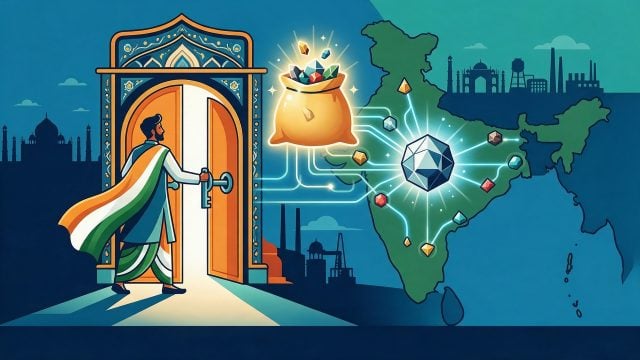
India has approved a tax reform law that extends incentives for electronics manufacturing for ten years and streamlines requirements for foreign investment funds.
The European Union remains focused on regulatory compliance concerning «forced labor», so companies that have been excluded from U.S. lists should not let their guard down: exclusion in one country does not automatically mean exclusion in others.
The Citizen
Obtén tu Pasaporte y apoya a El Ciudadano
Elimina la publicidad, accede a contenido exclusivo y sé parte de la comunidad.
Cancela en cualquier momento · Sin permanencia
Artículos Relacionados
China Denies Claims of Industrial Overcapacity and Publishes Defense Document on Development Model
Hace 3 meses