Original article: Milei, Kast, Pinochet y la expansión de la ultraderecha
By Leopoldo Lavín Mujica
Javier Milei’s visit to Chile was not just a political speech; it was an attempt to glorify the 1973 coup and promote the dictatorship of Augusto Pinochet.
When a foreign leader praises a regime that dismantled democracy, persecuted, tortured, murdered, and disappeared Chilean citizens, it constitutes an unacceptable political provocation. Chile’s history should not be used as fuel for the ideological battles of international far-right movements.
The situation becomes even more concerning when viewed in a regional context. Milei is advocating for a military buildup in Tierra del Fuego and has announced plans for a new naval base in southern Argentina, explicitly linking it to Argentina’s presence in the South Atlantic and Antarctica.
At the same time, a senior Argentine Air Force officer, Brigadier General Gustavo Valverde, has called into question Chile’s sovereignty over the Strait of Magellan.
These instances, while distinct, collectively require Chile to remain extremely vigilant.
The memory of the Beagle conflict further complicates this episode. Argentina and Chile were on the brink of war in 1978 over a territorial dispute, which was ultimately resolved diplomatically through papal mediation and the Treaty of Peace and Friendship in 1984.
Therefore, when military factions in Argentina use rhetoric that challenges Chilean territorial sovereignty, the democratic response must be firm, calm, and diplomatic. It is not about creating enemies but rather about not normalizing signals that jeopardize fundamental national interests.
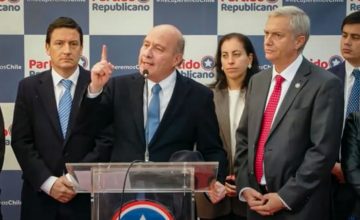
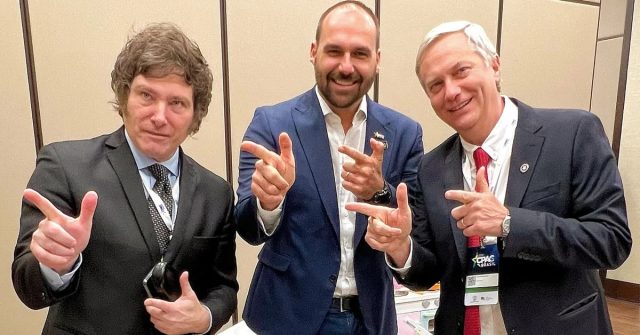
In this context, José Antonio Kast’s actions are particularly concerning. The Chilean President shares ideological affinities with Milei and actively participated in the Madrid Forum, the same venue where the Argentine leader vocalized his support for Pinochet.
However, political camaraderie cannot supersede the enduring interests of Chile and its people. The legacy of historic leaders like Allende, who held steadfast to socialist ideals until death, should not be disrespected. Kast has a constitutional and political duty to uphold Chilean sovereignty, international treaties, and democracy, even if it causes discomfort among his ideological allies.
These episodes reflect a hallmark of the new far-right movements: their expansive ambition. They are not content with merely gaining national governments; they build international networks, export narratives, coordinate leaders, and strive to transform electoral victories into a continental political force.
Milei stands out as one of the main proponents of this movement. His remarks in Chile, his endorsement of Pinochet, and his call to enhance these networks indicate that the conflict transcends national borders.
The involvement of Chilean far-right factions in this endeavor is also significant. Chile is viewed as a strategically political territory for this expansion, since it possesses a recent history that can be reinterpreted and used as a foundational myth for a new authoritarianism.
Transforming Pinochet into a role model, framing the coup as a historical necessity, and downplaying human rights violations dangerously shifts the parameters of what is considered democratic.
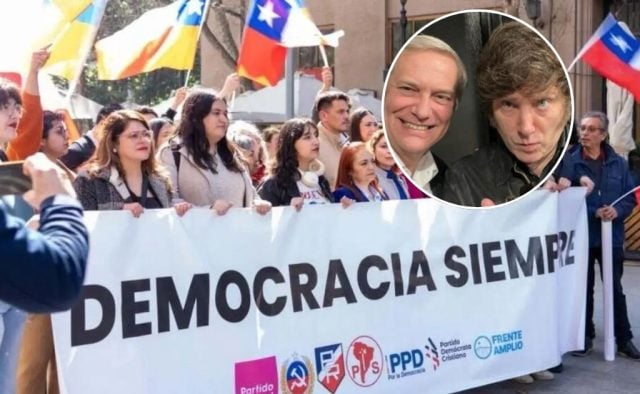
Hence, the response should not be characterized by fear or violence but by a democratic, social, and civic mobilization capable of politically constraining those who seek to normalize authoritarianism.
Democratic parties, unions, social organizations, universities, civic movements, and ordinary citizens must defend equality, public freedoms, human rights, our memory, and national sovereignty. Democracy does not preserve itself: it requires citizens willing to protect it when it faces new threats.
Chile must state unequivocally: it is acceptable to debate the economic model, criticize the left, defend wealth concentration, seek to normalize inequality, or uphold conservative values; what cannot be tolerated is the glorification of a dictatorship as a political solution.
And least of all should we remain silent while foreign powers laud the coup amidst resurgent territorial disputes in the southern extremities.
In light of the international expansion of far-right movements, the response must similarly be internationalist, grounded in unwavering friendship and solidarity with the Argentine people, and democratic: more equality, greater rights, expanded citizenship, and no nostalgia for dictatorships.
Leopoldo Lavín Mujica
Obtén tu Pasaporte y apoya a El Ciudadano
Elimina la publicidad, accede a contenido exclusivo y sé parte de la comunidad.
Cancela en cualquier momento · Sin permanencia