Original article: El 11s en EEUU y las «Mentiras que matan» («Wag the dog»)
By Lisandro Prieto Femenía, educator, writer, and philosopher
«The entire life of societies in which modern conditions of production reign is announced as an immense accumulation of spectacles. Everything that was once lived directly has become distant in a representation» – Guy Debord, The Society of the Spectacle (2002, p. 37).
Few films have so accurately anticipated the fractures in the regime of truth in postmodernity as Barry Levinson’s “Wag the Dog” (1997).
This cinematic satire depicted a scenario where a political advisor and a Hollywood producer fabricate a fictional war in Albania to divert public attention from a presidential scandal.
At the time, this hypothesis seemed a bold caricature of media cynicism. However, just four years later, the real-time images of the Twin Towers collapsing in New York shattered the thin line between audiovisual production and global history.
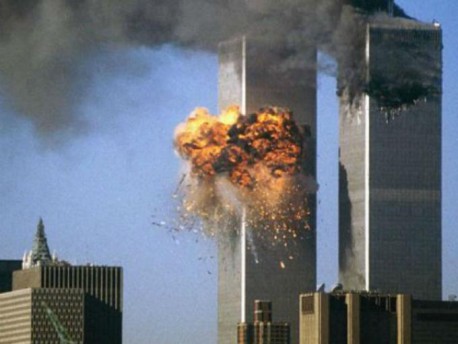
The horror of September 11, 2001, not only shook global geopolitics but also highlighted how postmodern power operates through the aestheticization of conflict and the symbolic management of the masses through injected fear.
If we closely observe both scenes, we will realize that the true point of convergence lies not in a conspiracy theory, but in the ontological mutation of reality itself.
While in Levinson’s film, the simulation of a young girl fleeing with a kitten was enough to create patriotic consensus, the New York tragedy operated under a disturbingly similar visual grammar.
Cameras broadcasted the collapse of the skyscrapers as if it were a catastrophic superproduction, where the tangible violence was subordinated to its own scenic impact.
In his essay titled “The Spirit of Terrorism,” published in 2002, Jean Baudrillard posited that terrorism «invent nothing, inaugurates nothing» but merely «brings things to the extreme, to the paroxysm» (p. 11), exacerbating an implicit logic within the culture of the screen. The attack unfolded as the definitive image, designed to be consumed hypnotically by billions of terrified viewers.
Then arises a painful paradox that pervades contemporary consciousness. For decades, the cultural industry has filled cinemas with tales of mass destruction, invasions, and skyscraper collapses. When violence finally erupted on the streets of Manhattan, the collective mind did not perceive the event as a radical novelty, but rather as the physical staging of a fantasy previously rehearsed.
Regarding this, philosopher Slavoj Žižek explored this phenomenon in “Welcome to the Desert of the Real” (2005), where he notes that «the fact that the September 11 attacks were the material of popular fantasies long before the event took place gives us another proof of the oblique logic of dreams» (p. 20).
On that fateful Tuesday, fiction did not imitate life; rather, reality desperately sought to resemble cinema to be assimilated. The shock did not only lie in the tragic loss of human lives but in the overwhelming vertigo of discovering that our sense of the real entirely depends on a prior audiovisual script.
It is precisely at this crossroads between media design and sovereign calculation that the category of false flag operation or self-attack becomes most unsettling. Far from being an espionage gimmick or a persecutory fantasy, the manipulation of one’s own vulnerability has historically served as a decisive catalyst for state power.
Already, Hannah Arendt argued in her essay “Lying in Politics,” included in “Crisis of the Republic” (1999), that the falsification of facts «is a phenomenon as ancient in history as politics itself, but what distinguishes it today is the massive substitution of reality with the fabrication of images» (p. 14).
The story of the 20th century is filled with episodes where the creation or instrumentalization of provocations served to legitimize military escalations. From the Reichstag fire in 1933, rapidly used by the Nazi regime to abolish civil rights, to the murky skirmishes in the Gulf of Tonkin in 1964 that served as a pretext for massive military intervention in Vietnam, and even the declassified plans of Operation Northwoods in 1962 – where U.S. military leaders contemplated staging terrorist attacks on American soil to justify an invasion of Cuba – the structure of the State has shown a cold willingness to sacrifice the lives of its own citizens on the altar of hegemony.
From contemporary political theory, this inclination to inflict or sponsor one’s own trauma finds even deeper readings.
For instance, Jacques Derrida coined the term “political immunology” during his famous dialogue with Borradori published in “Philosophy in a Time of Terror” (2004), explaining that “an autoimmune process is that frightening process wherein a living organism spontaneously produces a defense that ends up destroying its own protective principles” (p. 162).
Thus, the modern state acts as an autoimmune logic when it tolerates, precipitates, or capitalizes on aggression against its own structure to rearm itself with impunity.
Simultaneously, when analyzing the legal architecture of these crises, Giorgio Agamben argues in “State of Exception” (2005) that “modern totalitarianism is defined as the establishment, through the state of exception, of a legal civil war that allows the physical elimination not only of political adversaries but of entire categories of citizens” (p. 24).
Under this lens, the original truth of the perpetrator of an attack loses relevance compared to the use that “the Sovereign” gives it: the tragedy immediately transforms into the definitive license to suspend constitutional guarantees and subject the population to totalitarian surveillance in the name of security.
Faced with this abyssal outlook, civic consciousness becomes trapped in a double existential and political tear where any outcome pulverizes the normative foundations of the modern project. If we were to accept the hypothesis that the very power structure planned or instigated the massacre to justify an endless military crusade in the Middle East, the conceptual framework of the constitutional state of law would collapse immediately.
Recall that in the pages of “Leviathan,” Thomas Hobbes (2006) immortalized the core premise of the political pact by stating that “the end of obedience is protection” (p. 208). When the Sovereign transforms that protection into a deliberate sacrifice of its own governed for the sake of imperial expansion, the social contract loses all validity, and the republic reveals itself as a bloody spectacle of despotic self-preservation.
The figure of democracy would then be reduced to a perverse simulation aimed at pacifying victims while they are handed over to the designs of a few degenerates with future investment interests.
On the other hand, if we reject the conspiracy and assume that the tragedy occurred due to the blindness, incompetence, and bureaucratic clumsiness of intelligence agencies, the blow is equally devastating. In this second scenario, the veil of invulnerability of the most armed power in human history falls abruptly, exposing the radical fragility of its security structures against a handful of fanatics armed with stilettos.
As Judith Butler aptly observes in her work titled “Precarious Life” (2006), the eruption of violence in Manhattan unveiled an unavoidable condition by noting that “to know oneself as vulnerable is to know oneself exposed to a wound that is not always predictable or controllable” (p. 62).
Ultimately, the illusion of an impregnable strength dissolves, leaving citizens trapped between two unbearable abysses: either living in a nation ruled by leviathans prepared to betray them brutally or under the guardianship of a clumsy giant incapable of safeguarding their physical existence. In both facets of this dilemma, faith in republican institutions explodes.
As a result of this structural fissure, state authorities deployed a strategy where the manipulation of fear exceeded the confines of the cinematic plot presented in “Wag the Dog.”
From the ashes of the World Trade Center, the American political machinery structured the narrative of the infamous “War on Terror” and the subsequent invasion of Iraq based on fuzzy arguments about weapons of mass destruction (never found) akin to the argumentative arbitrariness of a studio script.
At this juncture, it is essential to refer to “The Society of the Spectacle” (2002), where Guy Debord firmly stated that “the spectacle is not a collection of images, but a social relationship between people mediated by images” (p. 38).
Thus, political sovereignty is no longer exercised through community building but through the monopoly of the staging, turning the citizen into a spectator whose only function consists of morally validating the military deployments decided behind the scenes.
The aforementioned willingness to symbolic manipulation and systematic concealment not only extended to the external geopolitical front but also adversely affected the physical and psychological health of the citizenship itself.
Documents and journalistic investigations reveal that after the September 11 attacks, the authorities in New York City and the federal government deliberately concealed crucial technical information about air toxicity in the “Ground Zero” area.
The slogan that the air was safe to breathe sought to project an illusion of prompt economic recovery and patriotic invulnerability, resulting in chronic illnesses for thousands of rescuers and residents of lower Manhattan. This episode exposed the fact that the spectacle does not hesitate to sacrifice the real bodies of its population to preserve the coherence of a triumphalist script.
Perhaps the most unpredictable mutation of this superstructure of fear lies in the way the social fabric, subjected for decades to institutionalized Islamophobia, ends up dismantling the prejudices instilled by power.
In his influential study “Good Muslim, Bad Muslim” (2004), Mahmood Mamdani analyzed how the hegemonic discourse following 9/11 reduced the sociopolitical complexity of the Islamic world to a binary stigma intended to justify military interventionism and domestic stigmatization. However, the trajectory of a community does not remain frozen in the molds of state propaganda from a specific period.
Over the years, the electorate of New York City has undergone an unimaginable ethical and political turn from the immediate days following the collapse of the towers: the election of Zohran Mamdani as mayor of the city, a leftist Muslim leader who took his oath on a historic copy of the Quran. This phenomenon exposes the long-term failure of state stigma and attests to the capacity of civil society to mutate the meaning of public space in the face of paranoia promoted by early-century elites.
The tension stirred when the new municipal leadership confirmed its attendance at the September 11 memorial ceremonies at Ground Zero – despite the heated resistance from conservative sectors attempting to veto his presence – reflects the relevance of this dispute over political memory.
Those who sought to exclude him defended the monopoly of a ritual founded on identity grievance and eternal enmity. By presenting himself at the epicenter of collective trauma, the presence of a Muslim mayor challenges the ontology of the fabricated enemy, reconfiguring mourning not as fuel for warlike hatred or police control, but as a common exercise of memory, dignity, and shared healing.
Ultimately, dear readers, it becomes clear that grasping the profound resonance between the fiction of “Wag the Dog,” the three-dimensional tragedy of September 11, and its unsuspected historical turns requires gazing into the abyss of our own political condition.
The human tragedy fades when death, pain, and institutional deception become materials for montage to justify state control, the suspension of civil liberties, and the stigmatization of whatever is labeled as “different.”
If truth has been relegated to a mere production effect and if suffering only moves us when it adheres to the laws of audiovisual aesthetics, the democratic horizon becomes unsettling.
Are we still capable of awakening from the hypnotic fascination of the screen and questioning the official truths that sicken and manipulate our societies?
Have we resigned ourselves to inhabit a reality where each real tragedy is merely the prologue to the next war, or will we be able to fracture the scenery of fear to create a common space where otherness is no longer perceived as a threat but as the condition of our freedom itself?
What remains of the republican promise if we must choose between being expendable subjects of a treacherous State or defenseless prey against the clumsiness of its guardians?
Lisandro Prieto Femenía
References and consulted sources
-Agamben, G. (2005). State of Exception (F. Costa and I. Costa, trans.). Adriana Hidalgo Publisher.
-Arendt, H. (1999). Crisis of the Republic. Taurus.
-Baudrillard, J. (2002). The Spirit of Terrorism. Anagrama.
-Butler, J. (2006). Precarious Life: The Power of Mourning and Violence (F. Rodríguez, trans.). Paidós.
-Debord, G. (2002). The Society of the Spectacle (J. L. Pardo, trans.). Pre-Textos.
-Derrida, J. (2004). Autoimmunity: Symbolic and Real Suicides. In G. Borradori, Philosophy in a Time of Terror: Dialogues with Jürgen Habermas and Jacques Derrida (J. J. Botero, trans., pp. 131-195). Taurus.
-Hobbes, T. (2006). Leviathan (C. Mellizo, trans.). Alianza Editorial.
-Mamdani, M. (2004). Good Muslim, Bad Muslim: America, the Cold War, and the Roots of Terror. Pantheon Books.
-Žižek, S. (2005). Welcome to the Desert of the Real. Akal.
Obtén tu Pasaporte y apoya a El Ciudadano
Elimina la publicidad, accede a contenido exclusivo y sé parte de la comunidad.
Cancela en cualquier momento · Sin permanencia