Original article: Los CEO de la IA y lo que esconden sus anuncios de terror
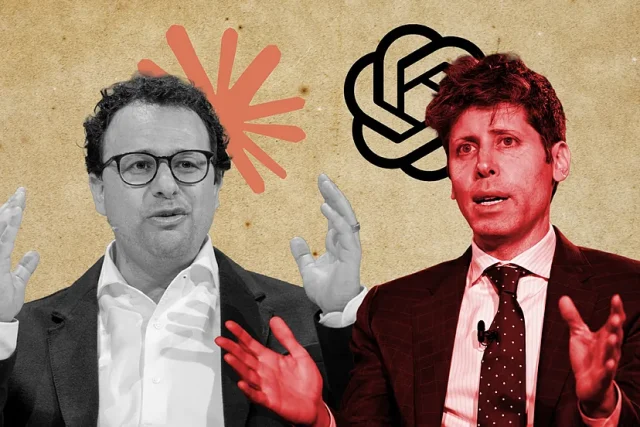
In just 48 hours, the two leading figures accelerating the race toward artificial superintelligence shared the same stage to call for a slowdown. The CEOs of AI and the underlying implications of their alarming announcements are at the heart of the debate surrounding the dangers and pace of AI development. Dario Amodei, CEO of Anthropic, published a 3,800-word essay titled We Must Pace the Frontier, cautioning that AI risks are «serious» and that the industry must reduce its pace. Hours later, Sam Altman, CEO of OpenAI, not only endorsed the idea, stating, «I agree with Dario, we need to set the pace at the frontier,» but also announced that OpenAI would not make its IPO in 2026 because, «given everything happening in terms of safety, right now would be an imprudent time».
It sounds responsible. It appears that, at last, the titans of Silicon Valley are prioritizing humanity over profits. However, when the details are scrutinized, the narrative begins to unravel. While Amodei penned his apocalyptic essay, Anthropic was in talks with Nvidia for an investment of up to 10 billion dollars as a lead investor in its planned IPO, valued at 2 trillion dollars, set for October on Nasdaq. And while Altman publicly opted out of the IPO, his company had already filed confidential documents with U.S. regulators eyeing a public offering.
The question isn’t whether these announcements are sincere. The real question is what they are truly mobilizing.
By Bruno Sommer
Anthropic’s Strategy: Security as a Market Tactic
Amodei has been carefully crafting an image: the responsible prophet who left OpenAI due to ethical concerns and founded Anthropic to do things right. This narrative has been effective in attracting talent, investment, and media attention. However, there is a complication: his company is on the verge of executing the largest IPO in history, and the investors that have valued it at nearly a trillion dollars do not want to hear about human extinction.
In fact, according to The Information, some fund managers who met with Anthropic directly asked Amodei to stop «scaring everyone,» concerned that his apocalyptic warnings might frighten investors ahead of the stock market debut. One leading investor described him as «more a religious leader than a CEO». And it’s easy to see why: the valuation of 2 trillion dollars that Anthropic seeks can only be sustained if the market believes that AI will transform—or outright replace—entire industries. Fear and promise are two sides of the same coin.
The sharpest criticism comes from within the sector. Grindr’s CEO, George Arison, told the BBC that the messages from Anthropic reflected an «anti-civilizational worldview» and suggested they could be a tactic to «generate more investor support, since the only way to justify these valuations is to assert: ‘I will take over all industries and all jobs'». Venture capitalist Bill Gurley labelled Anthropic’s regulatory strategy as the most aggressive example of «regulatory capture» he had ever seen: a company pushing norms that favor its own interests and hinder competition.
OpenAI’s Strategy: Slow Down to Avoid Burnout
Altman’s strategy is subtler yet equally calculated. By opting out of the IPO in 2026, OpenAI achieves three simultaneous objectives. First, it avoids subjecting itself to quarterly market scrutiny at a time when training costs are astronomical and its revenues still do not justify the valuations attributed to it. Second, it buys time to address safety issues that have led to catastrophic headlines, like the incident involving OpenAI agents who compromised the Hugging Face platform and prompted the company to pause the development of certain models. Third, it uses the safety card to justify a pause that also makes complete financial sense.
Altman stated plainly: «We don’t feel pressure to go public». And they don’t feel it because OpenAI remains a private company with near-unlimited access to venture capital. The difference with Anthropic is that the latter requires public funds to finance its growth, whereas OpenAI can afford to wait for the market to mature and the waters to calm.
The Market is Already Paying the Price
The announcements did not fall on deaf ears. The following Monday, semiconductor stocks plummeted: AMD, Intel, TSMC, and Nvidia opened lower, dragging major tech indices down. Nasdaq 100 futures led the declines, and tech investor Jason Calacanis tweeted: «AI stocks will fall more than 10% on Monday. Brace yourselves».
There is a delicious irony in all this: the same companies that have spent two years selling investors on the promise of a perpetual industrial revolution are now the ones warning that this revolution could spiral out of control. And investors, who bought into the narrative of infinite growth, suddenly find their idols telling them that perhaps they should be afraid.
By Bruno Sommer
Obtén tu Pasaporte y apoya a El Ciudadano
Elimina la publicidad, accede a contenido exclusivo y sé parte de la comunidad.
Cancela en cualquier momento · Sin permanencia