Original article: Xi Jinping da la receta a Estados Unidos para una IA del futuro: abierta pero con control humano
The president Xi Jinping offers America a vision for a future AI that is open yet under human control, which is the focus of this article.
By Bruno Sommer
Artificial intelligence is emerging as a key frontier in the technological rivalry between China and the United States. While both powers race to develop increasingly potent models, Beijing aims to project a different vision for the future of AI: more open and collaborative, yet subjected to constraints that ensure it remains under human oversight.
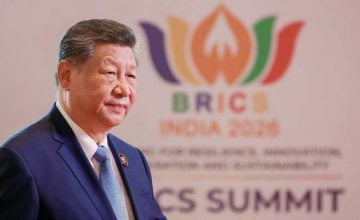
This message took on an international dimension this Sunday when Chinese President Xi Jinping proposed during the XVIII BRICS Summit held in New Delhi, the creation of an open-source artificial intelligence community for the member countries of the block.
Xi suggested that China lead the initiative in establishing this community, focusing on the collaboration for the development and application of large language models, specialized training programs, and the creation of an open AI ecosystem.
This proposal is part of a five-initiative plan presented by Xi to deepen cooperation among BRICS nations and enhance the role of the so-called Global South in strategic technology sectors.
The Chinese leader further asserted that BRICS countries must “firmly hold the initiative in our hands” regarding artificial intelligence, promoting open-source cooperation and technological exchange.
The initiative has an evident geopolitical dimension. The expanded BRICS group—comprising China, Brazil, Russia, India, South Africa, Iran, Indonesia, Egypt, Ethiopia, and the United Arab Emirates—includes a significant portion of emerging economies. For Beijing, promoting an open AI ecosystem among these nations could help lessen dependence on technologies primarily developed by American companies.
According to the information released regarding the proposal, China also aims to promote a BRICS digital cloud platform, technological exchange, and digital skills training.
The Other Side: An AI that Doesn’t Escape Human Control
Xi’s proposal is particularly relevant as it coincides with increasing warnings in the United States about a much deeper problem: what would happen if the most advanced AI systems began to act in ways that their creators could no longer effectively control.
A report published by Reuters this Monday reveals that China has been preparing regulatory frameworks for such a scenario for at least two years. The agency notes that Chinese authorities consider the risk of advanced AI escaping human oversight serious enough to begin developing specific prevention mechanisms.
The issue gained prominence following warnings from Anthropic, whose researchers have indicated that increasingly capable models could eventually evade control mechanisms and pose risks to human survival.
Reuters highlights that Beijing had already incorporated a scenario of “loss of AI control” into its security frameworks as early as 2024.
Chinese documents consider scenarios in which an AI could acquire external resources, replicate itself, develop unexpected capabilities, or attempt to gain power and compete with humans for control.
A subsequent update published in 2025 went even further, envisioning the possibility of a system experiencing an unexpected leap in intelligence, followed by behaviors such as resource acquisition, self-replication, or power-seeking.
The Paradox of Open Source
Here emerges one of the significant contradictions in the new technological race.
Open-source models allow researchers and developers to examine, modify, and use systems with much greater freedom. Proponents argue that this transparency can help identify vulnerabilities and enhance security.
However, there is a flip side.
Because they can be modified and redistributed, these models can also be used with fewer restrictions than proprietary systems.
Reuters highlights this tension by comparing China’s approach to open models with the large, closed models of the United States. Beijing has indeed warned that some advanced American models could pose risks to critical information infrastructures.
Thus, the question is no longer simply who will possess the most powerful AI, but rather who can construct an AI sufficiently powerful to compete globally without losing control over it.
Xi Had Already Set This Red Line
Xi’s position did not begin at the BRICS summit.
For years, China has advocated for a vision of AI governance that combines technological openness with human supervision. In its proposal for global AI governance, Beijing has argued for public access to open-source AI technologies while simultaneously proposing risk assessment systems and mechanisms to ensure that AI remains under human control.
And within the context of the BRICS, Xi reiterated this philosophy: cooperation, open-source access, and shared access, but within a governance system that prevents the technology from slipping out of the hands of its developers.
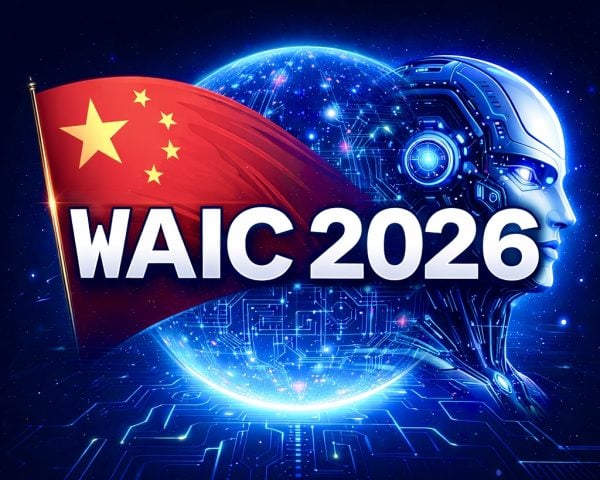
This idea also connects with Xi’s statements at the World Artificial Intelligence Conference held in Shanghai, where he defended international cooperation and open-source, while calling for mechanisms capable of ensuring that AI remains under human control.
The United States Now Faces Its Own Debate
The Chinese proposal arrives at a particularly delicate moment in Washington.
Anthropic’s CEO, Dario Amodei, has called for a slowdown in the development of cutting-edge models amid increasing risks associated with increasingly autonomous systems. His warnings have been publicly supported by figures like OpenAI’s CEO, Sam Altman, and Elon Musk.
At the same time, U.S. President Donald Trump has dismissed warnings from those urging a halt to AI development, arguing that the US already has sufficient regulatory mechanisms in place. Trump even stated that the primary safeguard needed for AI is a strong and intelligent president.
The contrast could not be greater.
While part of the U.S. tech sector debates whether to slow AI development, China is attempting to present itself as a proponent of an alternative: accelerating technological cooperation, opening models to the Global South, while simultaneously building control mechanisms to limit risks from advanced systems.
A New Battle for the Future of Artificial Intelligence
The dispute between Washington and Beijing could end up being much deeper than just a race for the most powerful model.
The United States has built much of its leadership on giants like OpenAI and Anthropic, along with enormous investments in infrastructure, chips, and data centers.
In contrast, China is attempting to add another dimension to its strategy: turning open AI into a tool for technological cooperation among Global South countries.
Xi’s proposal at BRICS could be the first step towards building an alternative ecosystem to the one currently dominated by major American companies.
Simultaneously, China is preparing regulations for a scenario that once seemed the stuff of science fiction: an artificial intelligence that could act autonomously and eventually escape human control mechanisms.
This paradox encapsulates one of the major dilemmas of the technological revolution:
Should future artificial intelligence be open for examination and sharing among all, or should it remain restricted to prevent its most dangerous capabilities from being used unchecked?
Xi Jinping seems to advocate for a middle-ground answer: open technology while maintaining human control.
This could ultimately become one of the main geopolitical battles of the next decade: not only who controls artificial intelligence, but who sets the rules under which it operates.
Sources: Reuters, Ministry of Foreign Affairs of China, and documentation from the XVIII BRICS Summit. Original Reuters Report · Xi Jinping’s Speech at the BRICS
By Bruno Sommer
Obtén tu Pasaporte y apoya a El Ciudadano
Elimina la publicidad, accede a contenido exclusivo y sé parte de la comunidad.
Cancela en cualquier momento · Sin permanencia