Original article: Alegoría de la incertidumbre
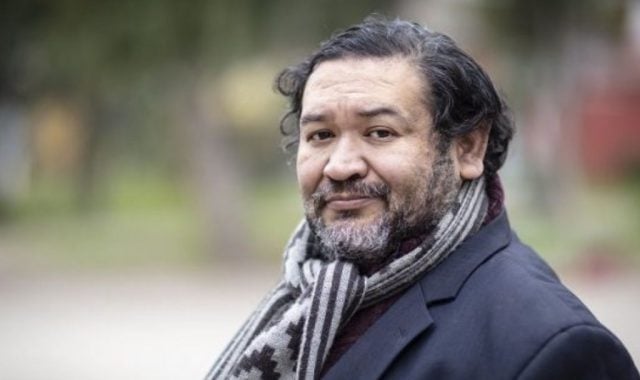
By Leonardo Guerrero Campos, philosopher, with contributions from Raffaella Di Girolamo, psychologist
“Love is the emotion that founds the social, it is to let the other appear as he is” – Humberto Maturana
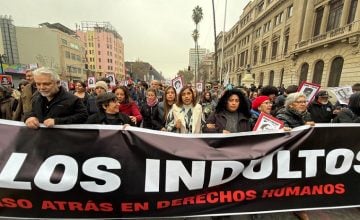
Every move made by this government in any area reveals a regression in the rights acquired by those of us who inhabit the national territory.
Decades of democratic struggle concerning educational rights, gender rights, food rights, human rights, labor rights, health rights, sexuality, and even reproductive rights seem to be on the verge of total abolition, reminiscent of the style of Führer Kast.
There is a relentless frenzy to dismantle, detract from, and strip the meaning of each of our lives in our national existence.
As the ultra-rightpinochetist government applauds its “public policies,” the shortcomings of our civil society grow, and certainty becomes increasingly scarce. An allegory of uncertainty that compromises while attempting to reconfigure each of our bodies, already submerged in anxiety, absence, the need for labor, and the pain of contempt for the other, in the lack of what once shaped our lives.
Governability and the unfortunate performances of the prevailing fascism throw us into a (dis)inhabiting that slowly dehumanizes, disempowers, and dismantles the common spaces of the social. We are then inhabiting from the loss of affection, (co)habiting from total denial of the other, from a delegitimization of the other, an affectation from those of us who coexist and resist day by day, making homeland and memory in each of the country’s regions.
The forum in Madrid that passed through Santiago de Chile is a vivid example of the social space that those who claim to defend freedom while loving the chains of dictatorship seek to emancipate; those who profess to follow Christ but despise their peers; those who reject discourse that is not their own and reduce their arguments to insults and dehumanizing belittlements, just like the diaper-wearing occupant Milei, who described the Chilean left as filthy, when he is the one failing to wash.
Is this the society and type of peace that the descendant of Nazis, who currently inhabits La Moneda, wishes to build?
A state that, through its government, allows the reproduction of “hate speech”—echoing Karl Popper in “The Open Society and Its Enemies,” which states that if intolerance reigns in a society, that society risks being annihilated by intolerance. Considering this argument, we are clearly facing a selfish government, lacking empathy with the victims of dictatorship, aiming to erase the coup by glorifying the image of the traitor, murderer, and thief Pinochet.
However, if we manage to reflect on some history and go beyond the present, we can understand more profoundly how stripped of meaning we are today.
What is the true objective of governing? According to all political logic, the social contract theory of Jean Jacques Rousseau described in «The Social Contract,» alongside John Locke’s «Treatise on Civil Government,» undoubtedly laid the foundations for promoting the politics of the “social pact.” This concept aims, in its genesis, to respond to the needs (to organize) of each of us who inhabit a “nation-state,” as Aristotle would say, and who bear the name of citizens.
In light of this categorical imperative of the political, that is, the “common good” through a rational pact or contract, as the ultimate goal of administering “democratic” power, our “beings,” our “subjectivities,” our “social relationships,” and even today our “virtual relationships”—in light of the case and the bot farms of Cerimedo that involve the current Executive—our “bodies” are entirely trained and numbed under the dominance of the various conditions of micro-power operative in each space of our postmodern society, as Michel Foucault would clearly describe.
Those trained bodies are shaken and reflect multiple historical lacerations; thus, they are mirrors of the traces as immutable as the principle of non-contradiction of Parmenides.
Still, this crowd of ignorant ultra-rightists wants to lead us into the lands of the Greek goddess “Lete.” They attempt to erase every aspect of our identity, our national being. They want to obliterate horrors, disappearances, torture, pain, love, disillusionment, visions, testimonies, social rights, laments, resistance, struggles, sores, songs amid empanadas, chicha, and the Prussian glories of those who still question us: “Where are they?”
Isn’t this form of “governing,” which has barely lasted months, clear evidence of a lack of responsibility for the periodic care of the other?
Indeed, two clear examples can be the high unemployment rate today and the denial of recognizing state commemoration to respect human rights and the figure of Salvador Allende.
Therefore, given this context, we must weigh that trivializing the pain of others and even denying it is macabre, cruel, and inhumane. If we do not consciously assume the other in Chile as an equal and not as an enemy to be abolished/eliminated/nullified, as was done during the dictatorship (even invoking allegories of the regime), we are denying ourselves the possibility of thinking, and that poses the greatest moral threat present in contemporary Chilean society at the beginning of the 21st century.
When we hear the President of Chile say that “we must move forward” and look to the future without considering the past (painful for millions of compatriots) of which he himself was a part, we are witnessing the first step in propagating social hatred and evil that may become normalized in those who perceive/receive this message.
In the words of Hannah Arendt, the banality of evil is born, which is precisely what is happening with these discourses of political hatred, social hatred, and the discursive dehumanization of public space/debate; a discourse that slowly permeates every political site and corner of Chilean society.
A disgrace for social peace, a disgrace for the quality of public debate arguments, a disgrace for equal treatment, and surely for maintaining the fundamental minimum guarantees needed to coexist in democracy.
A democracy that is in evident decay, as the one who leads it from the Presidency lies, supports the killers of the dictatorship, lowers taxes for the wealthiest, and endorses (without refutation) the hateful discourse of a foreign president in office and during national sovereignty.
A macabre president with the dictatorial fangs of his own past, who today definitely embodies the essence without class, without the clarity of those who face forward, more so in the style of Charles Montgomery Burns from The Simpsons, but with biblical music in the background, his blonde family around him, and his republican party, which is the forerunner of national socialism in a gloomy Chile, a more impoverished, yet supposedly happier Chile, according to a parliamentarian stemming from the womb of Thanatos.
If this is the normality they wish to impose on us: We will shout loudly and clearly from our “social being,” considering Lacan in the “effect of social language”: “FUCK BEING YOUR NORMAL”. It is our duty to inform ourselves with reliable sources, our duty to begin turning off those damned televisions and stop listening to cardboard journalists; let’s strip the discourse that revels in confusion, that delights in lies, because many times we KNOW NOTHING and they make us seem otherwise.
Let us learn to be silent, speak concerning what we know, what is truly tangible, necessary, and concrete that stems from reality and not from the misinformation that allowed vulgar beings in ties to inhabit La Moneda.
It is time to enrich the content of the debate and then raise the banners of healthy political and social relationships, to inform those lacking messages of love who spew hatred and ignorance: That love is, as Humberto Maturana stated, the only emotion that founds the social (beyond Christian love, which they do not profess beyond a mere Eucharist) and undoubtedly allows for the integration of the other in their entirety.
This is how political agreements are built, by paying attention to the real problems affecting people and their communities.
For example, HIV is on the rise in Chile, and they only speak of prevention; they refuse to call public officials by their social names by decree, thereby disregarding the rights already enshrined by law.
We see a doctrine emerging that goes against all limits. It denies the silence of Ludwig Wittgenstein, which the Chilean political class in general, but especially this neofascist government, certainly lacks—the notion that “whereof one cannot speak, thereof one must be silent,” a task they could never execute even if they aimed to, for they nourish themselves on post-truth rather than adhering to the logic of the sense of what their discourse broadcasts, which is as visceral and irritable as it is fallacious and irrational.
Chile deserved and needed more love in La Moneda, but hatred won, memory was lost, and love, which today is more resistant than ever in an unfortunate Chile drifting in turbulent waters like the “whale ship Pequod” from Moby Dick.
To resist, to resist, and to resist is the premise, and perhaps in this case, amidst such a cultural battle, the pursuit of general well-being may be less complex than the search by Cesária Tinajero in Roberto Bolaño’s «The Savage Detectives.»
Leonardo Guerrero Campos, with contributions from Raffaella Di Girolamo.
Obtén tu Pasaporte y apoya a El Ciudadano
Elimina la publicidad, accede a contenido exclusivo y sé parte de la comunidad.
Cancela en cualquier momento · Sin permanencia