Original article: «Quieren borrar lo que pasó en el Aeródromo Tobalaba»: Denuncian robo de placa que recordaba a víctimas de «vuelos de la muerte»
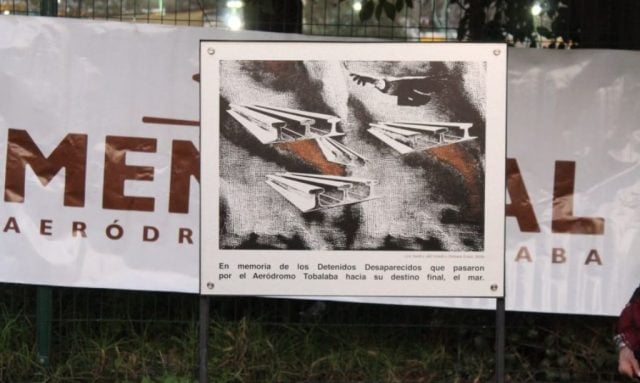
Less than three days after its installation, the memorial plaque honoring the victims of human rights violations at Tobalaba Aerodrome during the military dictatorship was removed.
The plaque was placed on Friday, September 11, by the Aeródromo Tobalaba Memorial Group (AMAT) in front of the airport terminal located in the La Reina commune of Santiago Metropolitan Region, timed to coincide with the 53rd anniversary of the 1973 coup d’état. It aimed to highlight that this site served as an operational center for Pinochet’s regime, from which Army helicopters took off with disappeared detainees who were later dumped into the sea, a practice known as «death flights«.
However, on Tuesday, September 15, the memorial plaque, crafted by artist Ximena Erazo, was stolen by unknown individuals, according to a statement from AMAT’s president, María Angélica Roger.
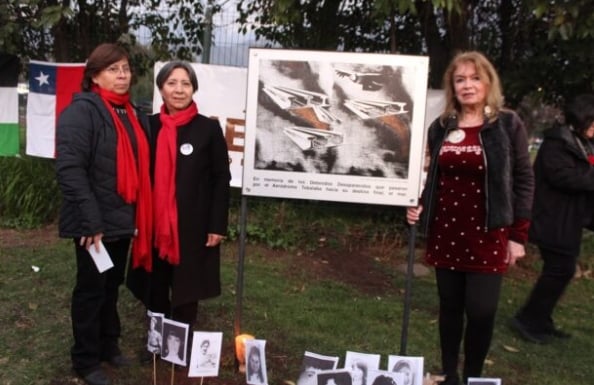
“They want to erase from Chile’s history what happened at the aerodrome, but they won’t succeed,” stated the group through a release shared on social media, emphasizing that the human rights organization will persist in its fight for truth, justice, and memory regarding the crimes against humanity committed at the aerodrome.
Additionally, they assured that AMAT will continue until they establish a memorial that symbolizes the genocide perpetrated by Augusto Pinochet’s civil-military dictatorship.
According to reports, in 1973, at the start of Pinochet’s dictatorship, Tobalaba Aerodrome was home to Army Aviation Command and housed nine French-made Puma helicopters.
One of these aircraft was part of the delegation led by General Sergio Arellano Stark, which traveled throughout central and southern Chile, facilitating the summary execution of political prisoners as part of the so-called “Caravan of Death.”
As part of the regime’s criminal actions, the military aircraft stationed at Tobalaba Aerodrome were used to dump over 1,000 bodies of political prisoners into the sea, as part of the death flights.
For this reason, organizations like AMAT insist on erecting a memorial to remember the role of the site in the civil-military dictatorship’s terrorist strategy.
Obtén tu Pasaporte y apoya a El Ciudadano
Elimina la publicidad, accede a contenido exclusivo y sé parte de la comunidad.
Cancela en cualquier momento · Sin permanencia