Original article: Paro Nacional del 1 de Octubre: ¿Qué está en juego?
By Andrea Abarca and Takuri Tapia (*)
Since the current government took office, the silence from key national authorities has been striking. Among them, Education Minister María Paz Arzola has stood out for her minimal public appearances and indifference towards critical educational issues.
In addition, on Wednesday, September 30, the government will present the 2027 budget, where the much-publicized «budget cuts» will be proposed to Congress.
The outlook for early, general, and higher education is dire, with anticipated cuts affecting everything from nutrition programs, adjustments to the SLEP, to reductions in already low baseline funding for state universities.
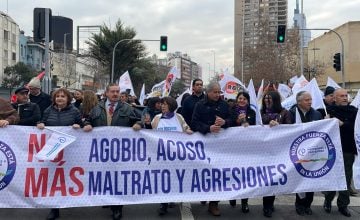
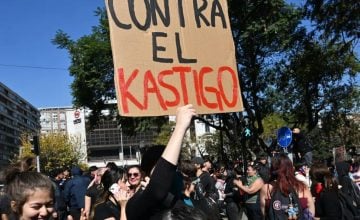
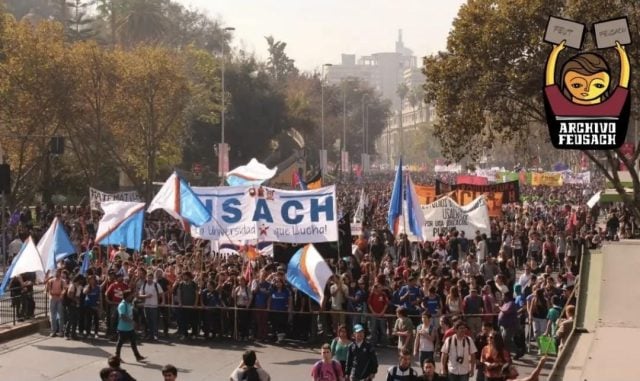
In this context, the mobilization on Thursday, October 1, becomes immensely significant as it reasserts the education movement’s agenda.
This will not only be a show of strength, returning to the streets in a broader social unity beyond the student movement, but also a re-engagement in the defense of Public Education alongside communities and families across our nation.
Today, we believe our challenge is monumental: to confront an ultra-right government that will restrict the public sector’s actions, diminish social support for those in need, and repress and criminalize anyone who dares to protest against these impositions, following the blueprint of authoritarian regimes.
From state universities, we are concerned about the threats to various educational projects due to an unjust funding system, yet we emphasize: state universities do not exist to adhere to a neoliberal profitability logic. Their social profitability lies in training professionals, developing research, producing knowledge, contributing to regional development, and serving the country.
Their strengthening is not a privilege for those studying there; it is an investment in Chile’s future.
Thus, it is at least contradictory that those who present themselves as patriots are willing to cut resources allocated to public institutions that play an essential role in national development.
What does it mean to defend the country if we cannot ensure the conditions for our public universities to operate effectively and serve the nation?
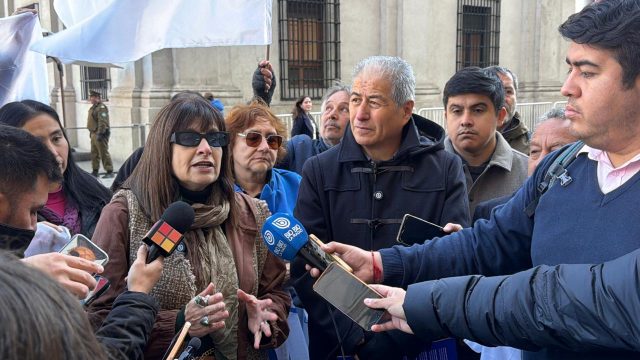
This is why, from the student movement, along with educators and various sectors of national production, we have decided to mobilize against the threats currently facing public education. These threats have so far been evident through the signals and announcements made by the government itself.
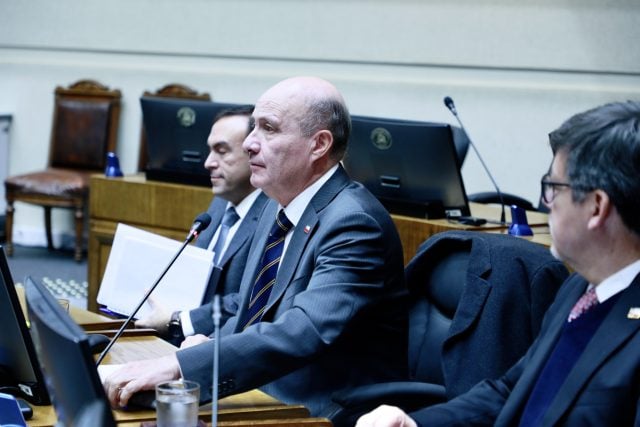
Our concerns are not unfounded. We have seen Minister Quiroz signal a scenario of greater fiscal restrictions while at the same time, the Minister of Education questions the allocation of university gratuity and hints at a possible reduction of the BAES scholarship, generating legitimate uncertainty regarding the future of this right.
We cannot analyze these measures as mere budget figures; behind every cut or modification are students who must choose between paying for transport, buying materials, eating, or simply continuing their higher education.
So, what’s at stake? Our educational system; the dream of a better life for families involved in the educational system.
We cannot allow the government and its agenda to continue undermining our Public Education at this moment, making the mobilization on Thursday immensely important, as it will mark the beginning of a rearticulation of the movement for Public Education, free and of quality.
From the organizations that called for this national strike; students and education workers, we foresee the challenges ahead with concern, but we are clear that the path forward is to build unity among various social actors, promote social dialogues on education, and make visible our visions, proposals, and solutions to the current scenario posed by the government.
(*) Andrea Abarca is the spokesperson for the Confederation of Students of Chile (Confech) and president of the Federation of Students of the University of Santiago; Takuri Tapia is president of the National Federation of State University Workers (Fentuech) and president of the Usach Officials Association (Afusach)
Obtén tu Pasaporte y apoya a El Ciudadano
Elimina la publicidad, accede a contenido exclusivo y sé parte de la comunidad.
Cancela en cualquier momento · Sin permanencia