Original article: Peste neumónica: Expertos llaman a la cautela ante caso en Rusia
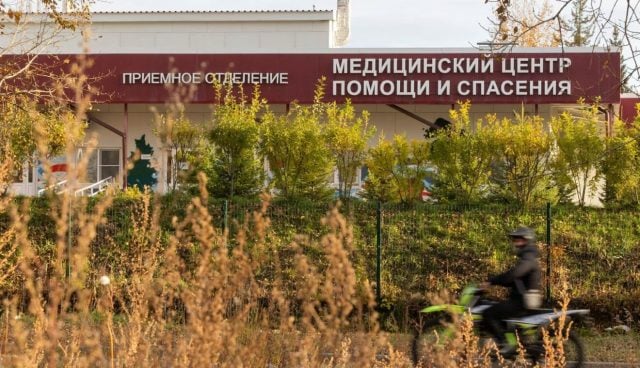
Various international media outlets have reported on a potential incident occurring at a laboratory in Siberia, Russia, which could be related to Yersinia pestis, the bacteria responsible for pneumonic plague.
So far, Russian authorities have denied the existence of any cases of this disease, leading to multiple interpretations.
In this context, Sergio Wehinger, an academic from the Master’s program in Biomedical Sciences at UTalca, explained that pneumonic plague is «the most severe form of infection caused by Yersinia pestis, a gram-negative bacterium also responsible for bubonic plague, historically associated with the so-called Black Death.»
Unlike bubonic plague, which primarily affects the lymph nodes, the academic clarified that «in pneumonic plague, the bacteria affect the lungs and result in severe pneumonia that progresses very quickly. It can arise because the bacteria reach the lung from another form of plague or, less commonly, through direct inhalation of respiratory droplets containing the bacteria.»
The specialist noted that this form of plague «can be transmitted directly from person to person via respiratory droplets, mainly through particles expelled while coughing and during close contact with an infected person.»
«It should not necessarily be imagined as an infection that spreads easily over large distances through the air. The incubation period is very short, typically only a few days, and in some cases can be as short as 24 hours,» he added.
Among the symptoms, Wehinger mentioned that initial signs include high fever, chills, headache, weakness, and general malaise. Symptoms can start abruptly: «Afterward, severe pneumonia rapidly develops, leading to cough, chest pain, followed by breathing difficulties and sputum production, which can be watery or bloody,» the academic indicated.
The specialist added that this is a potentially lethal infection that can progress very quickly; however, «there is a significant difference compared to the time of the Black Death, as we currently have effective antibiotics, and if the diagnosis is made early and treatment begins ideally within the first 24 hours, recovery chances are high.»
Treatment involves antibiotics, along with other options depending on the patient. «In the case of significant clinical suspicion, treatment should start immediately without waiting for definitive laboratory confirmation. Close contacts of a patient may require monitoring and preventive antibiotics,» he emphasized.
Rare Disease
Nevertheless, Wehinger pointed out that this remains a very rare disease today.
The bacteria, however, have not disappeared and remain in animal reservoirs and their fleas in certain regions of the world.
«In recent years, most cases reported to the WHO have been concentrated mainly in the Democratic Republic of the Congo and Madagascar,» the academic noted.
Given all this, the lecturer from the University of Talca urged caution and stressed that «so far, a pneumonia of initially undetermined cause has been confirmed as the cause of death for a researcher at an institute in Irkutsk. Russian authorities subsequently informed the WHO that no cases of plague have been detected in that city, and all individuals studied who had contact with the deceased have tested negative for infectious agents.»
In this regard, Érika Retamal Contreras, an academic from the Department of Public Health at UTalca, stated that, based on the available information, no identified risk currently exists for Chile.
«The event is contained, and no secondary transmission has been proven, meaning to other individuals beyond the investigated case. The WHO is evaluating the information. It is important to clarify that this type of disease requires direct contact with an infected individual, so caution should be exercised, and one should seek information from official health organizations,» concluded the specialist.
We will continue to provide updates.
Obtén tu Pasaporte y apoya a El Ciudadano
Elimina la publicidad, accede a contenido exclusivo y sé parte de la comunidad.
Cancela en cualquier momento · Sin permanencia