Original article: Cosechar riqueza, producir precariedad: Los cuerpos detrás del crecimiento de la fruticultura chilena
By Ignacia Borgeaud and Carolina Amaral, Center for Studies and Research La Grieta — Kilombo Negrocentricxs
Chile often showcases its agriculture as a success story, highlighting export growth, market expansion, technological innovation, and the competitiveness of its national products. This narrative has accompanied the consolidation of the agro-export model for decades.
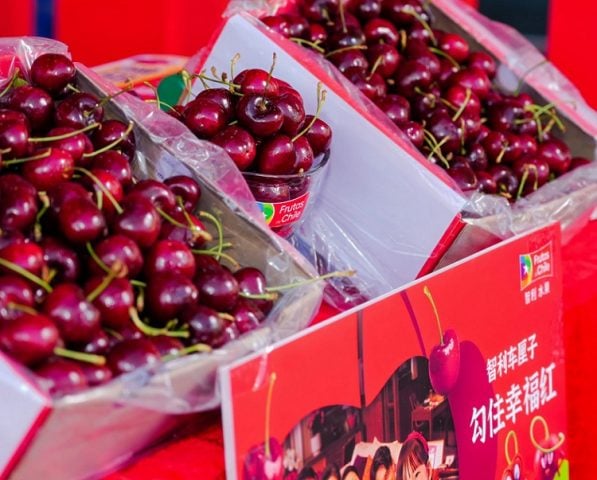
Cherries have perhaps become one of the perfect symbols: bright, selected, traceable, carefully packaged, and set to travel thousands of miles to enter highly competitive international markets.
The significance of fruit cultivation extends beyond its export figures.
Structurally, the primary forestry and agricultural sector has represented about 3% of the national GDP over recent decades. However, when accounting for its linkages to agro-industry and associated services, its expanded economic impact reaches approximately 10.4% of GDP, according to the latest estimates from ODEPA.
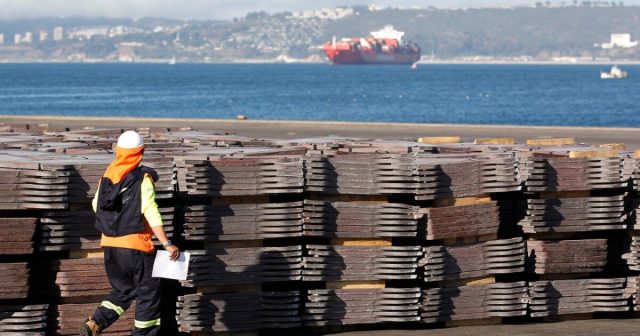
In 2026, fruit remains strategically important to foreign trade: during the 2025/2026 season, fruit exports exceeded USD 9 billion, with fresh fruit comprising the majority of that value.
Even in a year marked by setbacks in some fruit production, its overall performance has directly influenced the agricultural and forestry sector as measured by the Central Bank.
This context highlights the contradiction we are analyzing: we are not discussing a marginal economic activity but a significant production chain crucial for generating wealth and foreign currency for the country. Thus, it is politically necessary to ask who produces this wealth, under what conditions, and what proportion of social costs falls on seasonal workers and migrant laborers.
Behind that commodity lies a less visible story—the story of those who prune, thin, harvest, select, pack, load, and transport that fruit.
Seasonal workers, both national and migrant, women who juggle paid work with caregiving responsibilities, and individuals who travel seasonally in search of where to sell their labor again.
Our research in the O’Higgins Region stemmed precisely from this contradiction: questioning the bodies that disappear behind the statistics. This led us to a more political inquiry: What labor relations exist behind Chile’s agro-export success, and why are they so absent from public debate?
While we discuss how much Chile exports, how much the sector grows, or how much a particular season generates, we neglect to talk about who produces this wealth, under what conditions, and how the costs, risks, and benefits of that growth are distributed.
The precarious conditions currently experienced by some migrant populations in Chilean agriculture did not start with irregular migration.
This realization dismantles one of the most widespread ideas in public discourse: that the arrival of foreign workers has produced or deepened the deterioration of labor conditions on its own.
The history of agricultural labor in Chile shows something different. Long before the current Latin American and Caribbean migration waves, the expansion of export-oriented fruit farming already solidified a labor force characterized by temporality.
Agricultural production has specific timelines; it requires thousands of workers during certain periods. The labor force must appear when the fruit needs it and disappear from permanent costs when the season ends.
This solidifies a fundamental figure in the transformation of the Chilean countryside: the seasonal worker. They are not an anomaly of the model but central to its functioning.
Agricultural modernization did not eliminate that condition. Although technology increased, irrigation systems improved, packing processes became more sophisticated, and cold chains expanded, many who enabled that transformation continued to enter and exit work based on production needs.
The merchandise modernized, but labor relations did not benefit similarly. Here emerges the central contradiction underpinning our research: the same model capable of ensuring extraordinarily demanding international standards for fruit does not translate into equivalent conditions for all those who produce it.
Premium fruit requires countless hands, and cherry production illustrates this contradiction distinctly. It involves an intensive utilization of human labor concentrated during relatively brief periods. When the season starts, thousands of hands must be available:
Someone prunes. Someone thins. Someone harvests. Someone selects. Someone packs. Someone transports.
The cherry that ultimately appears as a sophisticated and highly valued commodity results from an extensive labor chain, necessitating a shift in focus from the commodity to the social relations that produce it.
It goes without saying that capital does not produce wealth alone, as it needs labor and must organize that labor compatibly with accumulation needs.
During certain weeks, there is a huge demand for workers, which then decreases. The limited temporality of labor ‘agreements’ helps address this issue.
Subcontracting and informal arrangements rapidly provide workers without permanently integrating them into the company structure. A population with fewer negotiation tools can exacerbate the inequality between those needing to sell their labor and those able to purchase it.
In this sense, what costs of the agro-export model are absorbed by companies, and which are individually borne by workers, their families, and communities?
Who bears the months without employment? Who suffers the cost of falling ill? Who pays for transportation between seasons? Who sustains life when the harvest ends? Who takes care of others while working?
Who assumes the risks when no contract exists?
When these questions vanish from economic analysis, the commodity seems to produce itself. Throughout our research, it became evident that women are at the heart of agricultural transformation. Working-class women have historically operated in the rural Chilean world, although much of this work remains invisible as family support, domestic labor, or collaboration within peasant economies.
The expansion of fruit cultivation massively incorporated women into paid labor, but primarily through temporary positions: Harvesting. Selection. Packing. Wrapping.
Women entered productive work without leaving behind reproductive work. After returning from the fields or packing, they continue with meals, child-rearing, cleaning, and caring for the elderly and sick. The everyday reproduction of life is not secondary to the economy; it is a central aspect of it.
The production of commodities also depends on the daily reproduction of those who work, and a considerable portion of that cost stays out of corporate accounts, continuing to be absorbed by households, disproportionately by women.
Therefore, when we talk about seasonal workers, we are not merely discussing women’s integration into the labor market; we are also discussing an economy that utilizes paid labor while relying on immense amounts of unpaid caregiving work.
Accumulation thus has a dimension rarely reflected in export statistics. While fruit crosses borders as a commodity, part of the costs necessary for its production remains within homes. The migrant worker enters a labor structure that has already been built upon temporality, flexibility, and an unequal distribution of risks.
This difference is politically significant as it allows us to invert the question. Instead of asking whether migrants deteriorated the labor market, we should ask why certain labor market sectors find in economically pressured workers with fewer institutional tools a particularly available workforce.
Labor exploitation rests at the intersections of subalternity—class, gender, nationality, race, language barriers, migration status, and more. Our research in O’Higgins revealed precisely how these dimensions can occur in one body: worker-woman-migrant-seasonal caregiver.
What happens to someone who stays in the country, needs to survive, and has fewer opportunities to enter the formal labor market? To what extent does irregular migration cease to be a system failure and become a condition constructed for the benefit of the private sector?
A person with irregular migration status has little, if any, bargaining power, as they fear expulsion for speaking out, are excluded from citizenship and rights, and may be unaware of inalienable rights, denouncement mechanisms, or labor institutions. When migratory rights diminish, so too can the effective capacity to exercise labor rights.
The answer to this crossroads lies in thinking beyond the migration debate and linking these issues to discussions about the dignity of work. In 2026, the government has deepened its agenda centered on border control, expulsions, and the removal of individuals in irregular migration situations. The official discourse places «migratory order» and border control at the forefront.
However, while the State is supposedly intensifying its approach to irregular migration, the productive needs of sectors like agriculture do not disappear.
Thus, there exists a structural perversity in enforcing individual migratory control, vilifying irregular migrants without scrutinizing large companies profiting from these individuals’ legal vulnerabilities.
We must ask ourselves: How many employers are scrutinized for using informal labor? Who is accountable when a worker lacks a contract? Who is responsible for abusive working hours?
Who accounts for exposure to agrochemicals? Who is responsible for irregular labor intermediaries?
Migratory security cannot replace labor security. Additionally, there exists a dispute over the meaning of the word security in contemporary public discourse, as security and migration increasingly correlate.
But what does security mean for a seasonal worker?
Security can also be rethought as labor guarantees, especially in sectors with high medical and physiological risks, with long and exhausting hours, typically outdoors, exposed to weather conditions, pesticides, and places without access to safe drinking water.
There exists then the security from the criminalizing discourse emanating from the State and the vision of bolstering labor security for those who contribute to Chile’s economy’s productivity.
When the former monopolizes the discussion, the latter disappears. Xenophobia displaces the structural conflict of labor precariousness in Chile, revealing the political function of anti-migrant discourses.
In societies riddled with economic insecurity, insufficient wages, housing crises, indebtedness, and weakening social rights, there is always a struggle to explain the causes of discomfort, with individualistic perspectives abounding in media controlled by private and business interests.
Why can a company find workers willing to accept certain conditions? What structures enable that inequality? What happens to the bargaining power of the entire labor force when there exists a segment of workers with greater difficulties in saying no?
Here lies a consequence that should also concern the national working class, as the precariousness of some is always expandable to all.
Therefore, defending the rights of migrant workers is not a separate demand from defending national workers from a class perspective.
If an employer can pay less to someone with irregular status, the problem is not the worker’s nationality; the issue lies in the existence of a labor relationship where that vulnerability is exploited to reduce costs or discipline the workforce.
The answer, therefore, should not be to strip even more rights but to guarantee that no worker can be used to lower conditions for another.
When Chile celebrates its agro-export competitiveness, we should also question how that competitiveness is constructed.
What occurs when one person’s vulnerability turns into an economic advantage for another?
Now another contradiction permeates our present: The border may close to rights while certain market sectors remain open to that same labor force. The contradiction of the Chilean cherry is right there. A commodity that can traverse the globe freely while some of the individuals who produce it face deeply unequal conditions to move, work, and exercise their rights.
Fruit crosses borders as a commodity. Capital crosses borders as investment. However, when the traveler is the worker, something hardens.
Ignacia Borgeaud and Carolina Amaral, Center for Studies and Research La Grieta — Kilombo Negrocentricxs
Obtén tu Pasaporte y apoya a El Ciudadano
Elimina la publicidad, accede a contenido exclusivo y sé parte de la comunidad.
Cancela en cualquier momento · Sin permanencia