Original article: Chile a la cola de Sudamérica: FMI recorta drásticamente proyección de crecimiento a 0,6% y anticipa más desempleo
Chile is struggling at the bottom among South American nations in the economic projections released by the International Monetary Fund (IMF), which has significantly reduced its growth forecast for 2026 to 0.6% of the Gross Domestic Product (GDP), while also predicting increased unemployment for the country.
According to the IMF’s October World Economic Outlook, entitled “Resilience under Pressure, Urgent Decisions”, this figure indicates a reduction of 1.8 percentage points from the 2.4% predicted in April.
The projected 0.6% growth for this year is the lowest since a 6.1% contraction in 2020. It is also lower than the 0.64% of 2019 and the 0.68% of 2023.
After estimating a 2.4% growth in April, the IMF downgraded its forecast to 1.8% in July. However, the October projection represents a new downward adjustment of 1.2 percentage points from that estimate.
With these figures, the country is now among the worst-performing economies in the region, in a context of mining contraction and a deteriorating job market.
Chile Lagging Behind in South America
The report indicates that Chile ranks as the second lowest growth country in South America for this year. Only Bolivia ranks lower, with a projected 3% contraction.
The contrast with other nations in the region is stark: Peru is set to lead South American growth with 3%, followed by Brazil and Colombia, both at 2.2%, Argentina at 2.1%, and Uruguay at 1.3%.
For Latin America and the Caribbean, the IMF anticipates an average growth rate of 2.3%, a figure that exceeds Chile’s projected 0.6%.
The IMF’s cut coincides with downward revisions from national authorities. In its Monetary Policy Report (IPoM) for September, the Central Bank set a growth range of 0.25% to 0.75%. Meanwhile, the Ministry of Finance lowered its projection to 0.7% in its latest Public Finance Report. Thus, both official expectations and the IMF’s forecasts point towards a stagnant 2026.
Concurrently, the 1.0% decline in the Monthly Economic Activity Index (Imacec) in August impacted projections for the growth margin of the Chilean economy for 2026, leading experts to warn that an annual contraction can no longer be ruled out.
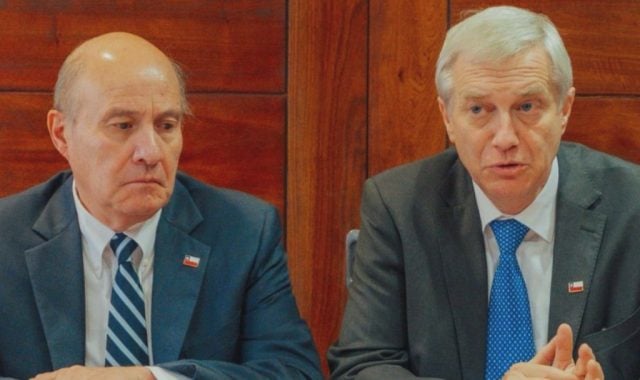
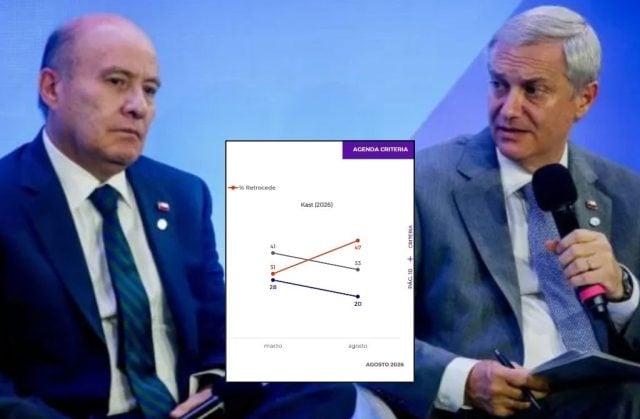
The Central Bank reported, with preliminary data, that the seasonally adjusted series fell by 0.7% compared to the previous month and 2.1% over the last twelve months. Under the administration of José Antonio Kast, activity has seen two consecutive months of year-on-year declines, following the 1.5% drop in July, the worst record in over three years, while six months of contractions have been recorded from January to August.
The decline occurred in both the original and seasonally adjusted series, primarily due to a 17.4% drop in mining production.
IMF Anticipates Rising Unemployment in Chile
The IMF’s projections also foresee a deterioration of the labor market over the next two years. The organization predicts that the unemployment rate will rise from 8.5% in 2025 to 9.5% in 2026, and then increase further to 9.6% in 2027. According to its series, this year’s rate would be the highest recorded since 2020, when it reached 10.8%.
This change represents a decline from the expectations set in April, when the IMF projected a unemployment rate of 8.1% for this year.
In the database, Chile ranks 11th among 106 economies for projected unemployment in 2026.
For next year, the organization maintained its projection for Chilean GDP growth at 2.6%, a figure slightly above the average of 2.5% estimated for Latin America and the Caribbean. On inflation, the IMF projected that in Chile the average would drop from 4.2% in 2025 to 3.7% this year and to 3.5% in 2027. Both estimates remain above the 3% target set by the Central Bank.
Obtén tu Pasaporte y apoya a El Ciudadano
Elimina la publicidad, accede a contenido exclusivo y sé parte de la comunidad.
Cancela en cualquier momento · Sin permanencia