Original article: Protesta social global y la necesidad de una plataforma para conectar las luchas
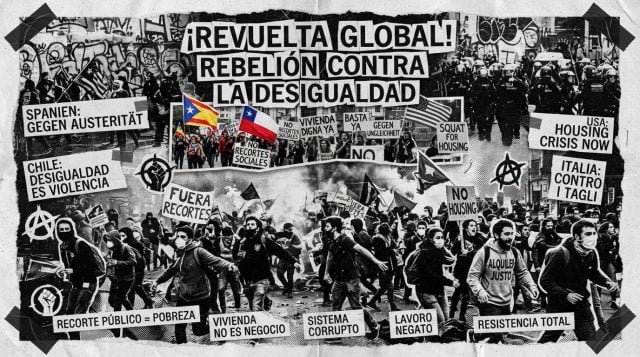
From Puerta del Sol to Tirana, from the encampments in Lisbon to the riots in Brussels, the weekend of October 17 and 18 has revealed a map of discontent that shares underlying causes but lacks coordinated responses. The prevailing question in these public spaces is not why people are protesting, but how the internationalism of social struggles can connect, converse, and stand in solidarity.
The Citizen
There is a recurring scene: young people with tents set up in central squares, handmade banners, and the background noise of a water cannon or a barrage of tear gas. This occurred in Madrid, Lisbon, and Athens. It also happened, with a different repertoire, in Milan, Paris, Brussels, Santiago, and Tirana. And it occurred, with a distinct language—voting and early ballots—in three thousand acts across the United States under the slogan «No Kings.»
The weekend of October 17 and 18, 2026, will be archived as one of those coincidences that analysts take time to recognize and social movements take time to leverage. At least ten countries experienced simultaneous protests. While the triggering factors varied, the underlying substrate remained the same. Notably absent, however, was any real coordination mechanism between them.
The capital concentration described by Thomas Piketty has intensified to unprecedented levels. The Global Inequality Report 2026, coordinated by the French economist, confirms extreme wealth concentration: the top 10% possess 75% of global wealth, while the bottom 50% barely reach 2%; in fact, the richest 1% holds 37% of global wealth, a proportion greater than that of the bottom 90%. Piketty’s dynamic—where capital yields consistently exceed economic growth rates—reflects in Oxfam’s 2025 data: the combined wealth of the world’s more than 3,000 billionaires reached a record $18.3 trillion, having grown 16% in just one year and 81% since 2020. The increase of $2.5 trillion recorded in 2025 approximately equals the total wealth of the 4.1 billion poorest people on the planet, highlighting that accumulation at the top starkly contrasts the situation at the base.
This staggering wealth gap acts as a social pressure cooker. While a quarter of humanity faces food insecurity and nearly half subsists on less than $8.3 a day, unrest translates into concrete outbursts: in Madrid, up to 100,000 people took to the streets to denounce a rental increase of over 50% in five years and to highlight that families allocate more than 70% of their salaries to housing. Global youth unemployment stood at 12.4% in 2025—about 67 million young people—and 69% of Generation Z report that housing costs heavily influence their work and life decisions. Adding to this is a corrosive political dimension: billionaires are 4,000 times more likely than an average citizen to hold a political office, creating what Oxfam warns is a «dangerously unsustainable political deficit.» The combination of unbounded wealth accumulation and a majority of society seeing their mobility blocked fuels the tension and delegitimization evident on the streets.
A Map of Accidentally Synced Discontent
| Country | Format | Main Trigger | Outcome |
|---|---|---|---|
| U.S. | 3,000 electoral events | Opposition to Trump and protection of voting | No serious incidents reported |
| France | National strike and march | Cost of living, educational reform, wages | 1,200+ arrested, ~150 officers injured |
| Italy | Urban riots | Cost of living, Meloni’s policies | 200+ arrested |
| Belgium | Riots | University tuition fees (€835→€1,194) | 195 arrested, 5 officers injured |
| Albania | Revolt («Flamingo Revolution») | Corruption and tourism project | Up to 500 detained, 120 police injured |
| Portugal | Encampments | Housing and wages | No detention figures available |
| Spain | Encampment (3 weeks) | Housing and evictions | Institutional tension, closure of metro |
| Greece | Encampment in Syntagma | Student housing | No incidents |
| Chile | Commemoration and march | 7th anniversary of the uprising, cuts | 29 detained |
| Germany | Small gatherings | Education and counter-protests | No incidents |
Four Common Denominators
1. Cost of Living as a Universal Grammar. Italy, France, Belgium, and Portugal share the same underlying complaint, although articulated in different accents: wages are insufficient. In Italy, protests over fuel prices in Rome and riots in Milan exemplify two sides of the same phenomenon. In Belgium, educational reform represents the visible face of a broader issue recognized by the organizers: transportation, job insecurity, cost of living.
The same is true in Chile, where the cost of living is rising at a rate that workers’ wage increases cannot keep up with.
2. Housing as a New Social Issue. Perhaps the most significant finding from the weekend is that Spain, Portugal, and Greece have converged on the same tactic—encampment—and the same demand: affordable rents. This coincidence is not accidental. The Greek slogan «Study or Survive?» is identical to what has been seen in France, where students in Athens explicitly raise it as a symbol of solidarity. When a slogan migrates between countries without translation, it’s already been pre-translated by the material conditions.
3. Corruption as a Legitimacy Crisis. Albania presents the most volatile variant. The «Flamingo Revolution» started as an environmental and tourism conflict—a luxury hotel complex with investors like Jared Kushner—and has escalated to become the biggest challenge for Edi Rama in over a decade. The demand for resignation, the burning of government buildings, and 120 injured police officers depict a conflict that is no longer about a hotel; it’s about who decides and for whom.
4. Democratic Deficit as a Framework. The United States and Chile represent two poles of this dimension. In the U.S., the «No Kings» movement does not protest against a specific policy; it protests against power concentration and does so through an electoral lens, channeling discontent toward the early voting on November 3. In Chile, the seventh anniversary commemoration of the 2019 uprising has become a platform to reject cuts from the José Antonio Kast government, with the chant «October remains relevant.» Two countries, two historical moments, one shared intuition: institutions are not responding.
United States: «No Kings» Mobilization for Early Voting
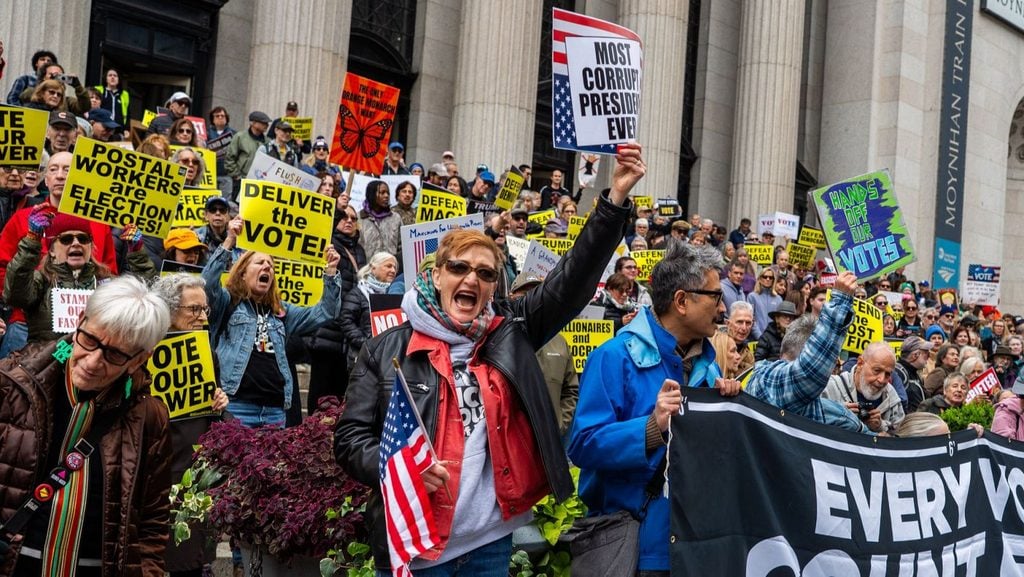
Protests in the U.S. had a markedly electoral character. Under the slogan «No Kings», the anti-Trump movement organized nearly 3,000 events across the country on Saturday, October 17.
The aim was not only to express opposition to the president but to mobilize voters for the midterm elections on November 3 and promote early voting. Organizers were looking for mass participation to safeguard the results against possible challenges, in a context of distrust toward the government due to its critiques of mail-in voting. Citizens’ demands also included issues such as the cost of living and foreign policy.
Italy: Riots and a Wave of Protests over the Cost of Living
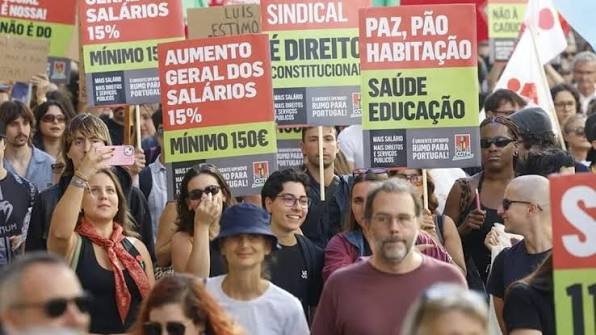
Italy experienced a weekend of severe riots, especially in the northern part of the country. What began as a demonstration against the high cost of living and Giorgia Meloni’s government policies escalated into clashes with police.
- Milan: It became the epicenter of violence. On Saturday, groups of youth broke off from the march to attack stores and police. On Sunday, clashes continued in Piazza del Duomo, leading to looting at a supermarket and damage to public infrastructure. The police arrested roughly 200 individuals over the weekend.
- Other cities: Incidents were also reported in Turin (where individuals were arrested with stones and hammers) and Bologna (resulting in the temporary closure of the train station). In Rome, thousands protested against fuel prices.
- Government Reaction: Prime Minister Meloni condemned the incidents, stating that «protesting is a right, but devastating our cities is not,» and called for a security meeting.
France: A Day of National Chaos
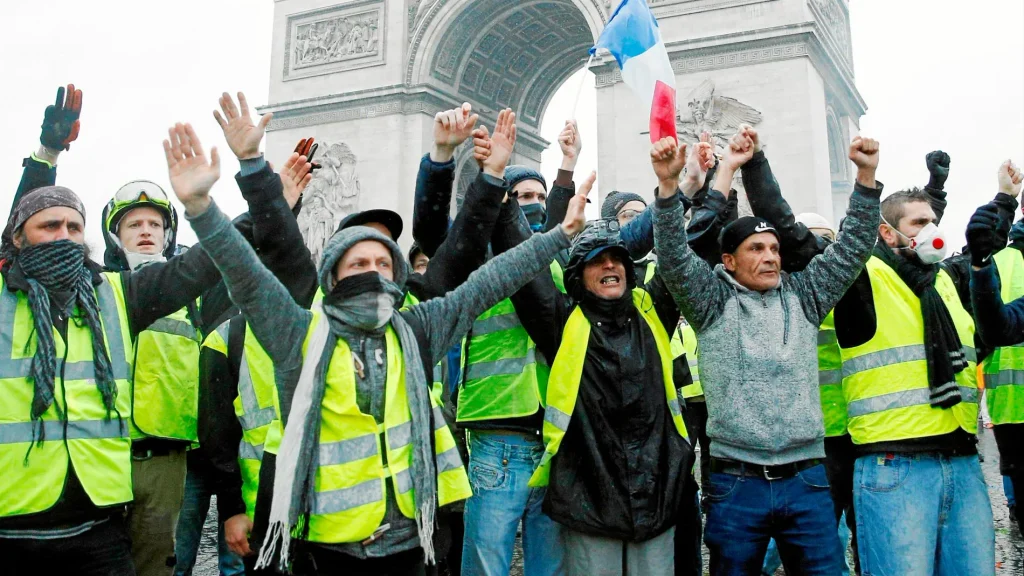
France was the scene of one of the largest and most violent protests, resulting in hundreds of arrests and significant material damage. The marches, called against the high cost of living, educational reform, and for wage improvements, spread throughout the country.
- Participation: The government estimated 550,000 participants, while labor unions raised the figure to 800,000.
- Violence and Damage: Although most marches were peaceful, incidents of violence were recorded in Paris, Lyon, Marseille, Lille, and Nice, including vehicle fires, looting, and attacks on public buildings (such as city halls and a tourism office). In Limoges, a 19th-century town hall was largely destroyed by fire.
- Consequences: More than 1,200 arrests and around 150 police officers were injured were recorded. A 17-year-old lost a hand due to a police grenade in Saint-Étienne. President Macron condemned the violence, stating that «there is no place for violence.»
Portugal: Encampments for Housing Rights
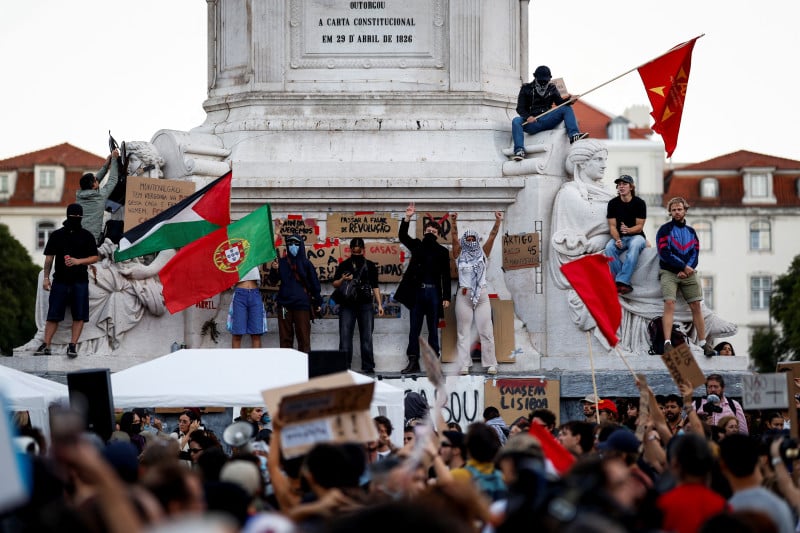
In Portugal, the protest centered on the housing crisis and rising cost of living. Thousands took to the streets in Lisbon, Porto, Coimbra, and Faro on Saturday.
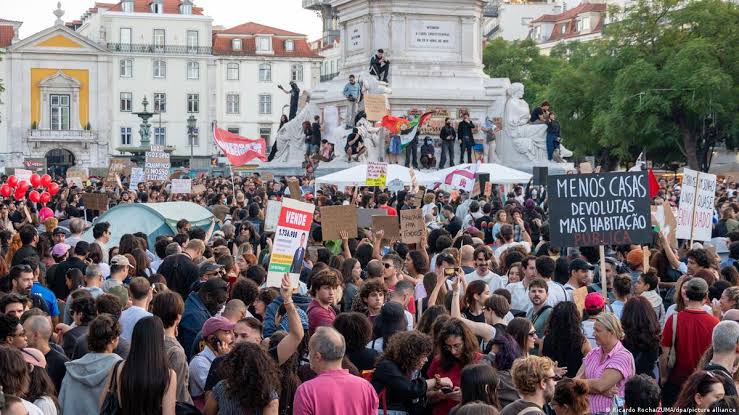
The movement, which continued into Sunday, was marked by tent encampments in central squares. In Lisbon, protesters set up tents in Rossio Square, and in Porto, they did the same in Praça D. João I, defying eviction orders and demanding laws to curb real estate speculation. The protest was called by the CGTP union and also demanded better wages and public services.
Spain: The Madrid Encampment Remains Strong
In Spain, the protest focused in Madrid, where the housing encampment at Puerta del Sol reached its third week. Hundreds of people, braving rain and cold, continued to demand affordable rents and an end to evictions.
The protest, which began after the death of an 87-year-old woman who was evicted, has become a gathering point for various leftist groups (anti-fascists, anti-capitalists, pro-Palestine). The situation has generated tension with Madrid’s regional authorities, which deemed the occupation as «illegal» and ordered the temporary closure of Sol metro station for health reasons, while the central government refused to evict the square.
November 11, 2026, is emerging as a pivotal date on the European social protest calendar, primarily organized around a general strike in Spain called by major unions CCOO and UGT, alongside organizations like the Tenants’ Union, demanding «better wages and dignified housing.» This call, occurring just two weeks before the general elections, seeks to bring the housing crisis and price control into the labor realm that «burdens the working class’s income.» The CNT has also joined this mobilization, demanding a widespread increase in salaries, a reduction of the workweek to 30 hours, and that housing costs do not exceed one third of net salary. Additionally, the call has crossed borders: from the housing encampments in Lisbon and Porto, a «Iberian general strike» is proposed for that same date, aiming for the peninsula to “come to a full stop” in defense of the right to housing and against the cost of living.
Chile: Commemoration of Social Uprising with Political Protest
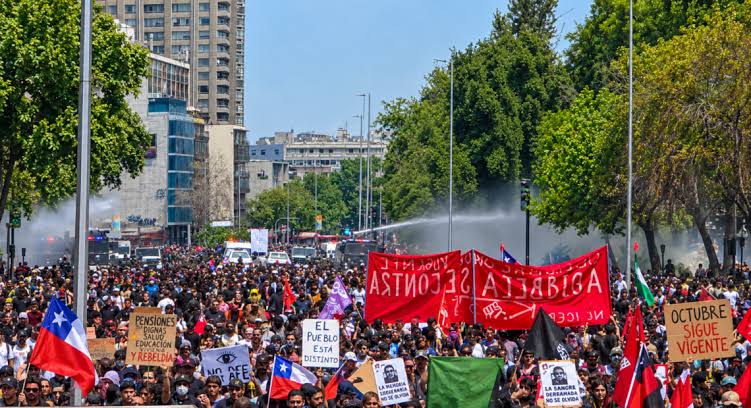
In Chile, the protests on Sunday, October 18, held dual significance. Thousands gathered in Plaza Italia in Santiago to commemorate the seventh anniversary of the 2019 social uprising, but also to protest against the economic situation and the cuts from the José Antonio Kast government.
- Demands: Protesters chanted slogans like «October remains relevant» and criticized the «billionaire cuts» in health, education, and social programs. The protest was called by social and student organizations.
- Incidents: The main march proceeded normally, but by midday, clashes erupted between isolated groups and security forces. Carabineros detained at least 29 individuals and reported injured officials.
Furthermore, in Chile, the populace is re-organizing in response to a series of environmental conflicts affecting the country, part of the extractive agenda of the neoliberal model. The next call for a national social mobilization for the environment is to halt the Dominga project. The mobilization will be on October 31 at 12 p.m. with gatherings in La Serena, Santiago, Valparaíso, Talca, and Concepción.
Germany: Educational Protests and Opposition to the Far Right
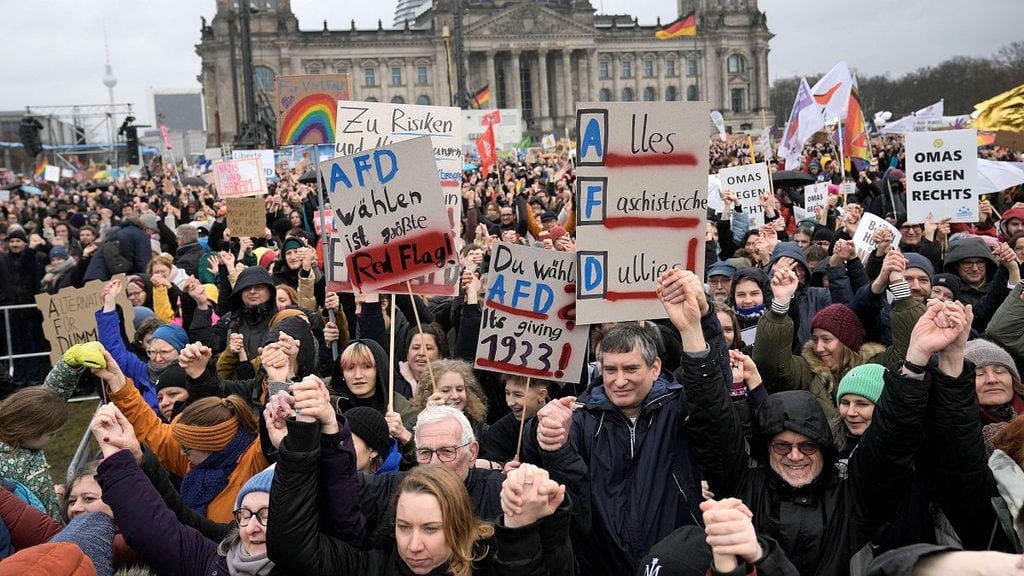
Unlike the major European mobilizations, protests in Germany were of smaller scale and varied themes.
Berlin: About 300 students protested in Kleistpark demanding better educational conditions and showing solidarity with the student movement in France.
Hamburg: Hundreds gathered in front of the Planetarium to protest an action by the far-right group «Save Europe Act Now,» which organized an event under the slogan «Remigration.»
Albania: The «Flamingo Revolution» and Calls for Resignation
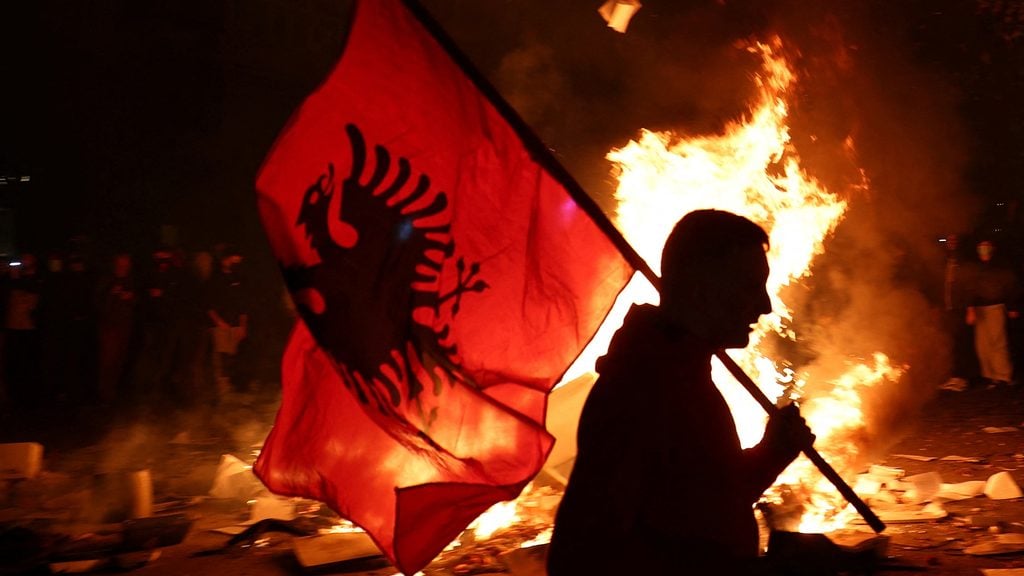
What began as a protest against a tourism project has turned into the greatest challenge for Edi Rama’s government in his more than ten-year tenure. The mobilizations of this weekend, led by students, demand the prime minister’s resignation for corruption and mismanagement of the project.
Origin of the Conflict: The catalyst was the government’s approval for a luxury hotel complex on the southern coast, an ecologically significant area. The project is backed by investors including Jared Kushner, son-in-law of former U.S. President Donald Trump. Protesters denounce the lack of transparency and the connection between large investments and corruption, in a movement they have dubbed the «Flamingo Revolution».
Developments and Violence: On Saturday, October 17, thousands of young people gathered in front of the Ministry of Education in Tirana, marking the fifth consecutive day of protests. The situation turned violent when masked youths hurled stones at the police, who responded with tear gas, stun grenades, and water cannons. The riots resulted in damaged government buildings, broken windows, and destroyed public furniture.
Authorities’ Balance: Although numbers vary by source and day, the police reported hundreds of arrests. Over the weekend, reports indicated up to 500 detained protesters, with 330 later released. The casualty numbers are significant: approximately 120 police officers and 45 protesters were reportedly injured, although many civilian injuries are believed to have gone unreported. In previous days, a police commander in the city of Shkodër was left in critical condition after being hit by a stone.
Political Reaction: Prime Minister Edi Rama has refused to resign and blamed the conservative opposition for the violence. The European Union has expressed concern over the escalating violence and demanded investigations into allegations of excessive force by the police.
Greece: Student Protests over Unaffordable Housing
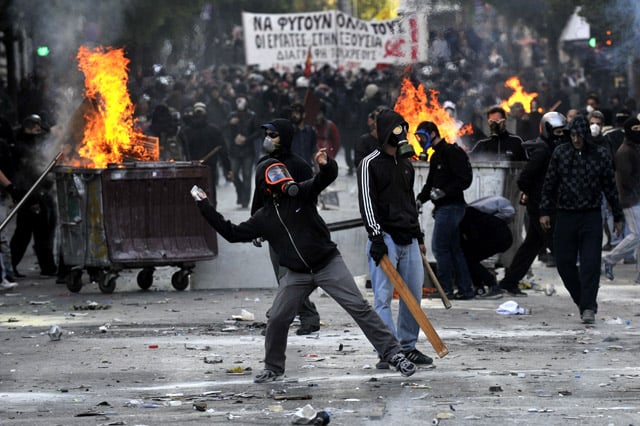
In Greece, the protests have been non-violent; instead, they have centered around a peaceful encampment to bring visibility to a silent crisis: students’ inability to afford a place to live.
The Encampment in Syntagma: Since October 13, Greek students have set up a tent camp in Syntagma Square, in front of the Parliament in Athens. The action, organized by student associations, seeks to pressure the government to take immediate action. The protest continued over the weekend, defying the rain.
Concrete Demands: Students demand that the government impose caps on the rents of student apartments, increase housing subsidies, and build more public university residences. The situation is critical: one student reported paying between €500 and €600 per month
A European Problem: The demonstrators have raised the slogan «Study or Survive?», the same one seen in student protests in France, showing their solidarity and pointing out that the rising cost of living and lack of affordable housing is an issue affecting all European youth.
Belgium: Riots and Hundreds of Arrests over Educational Reform
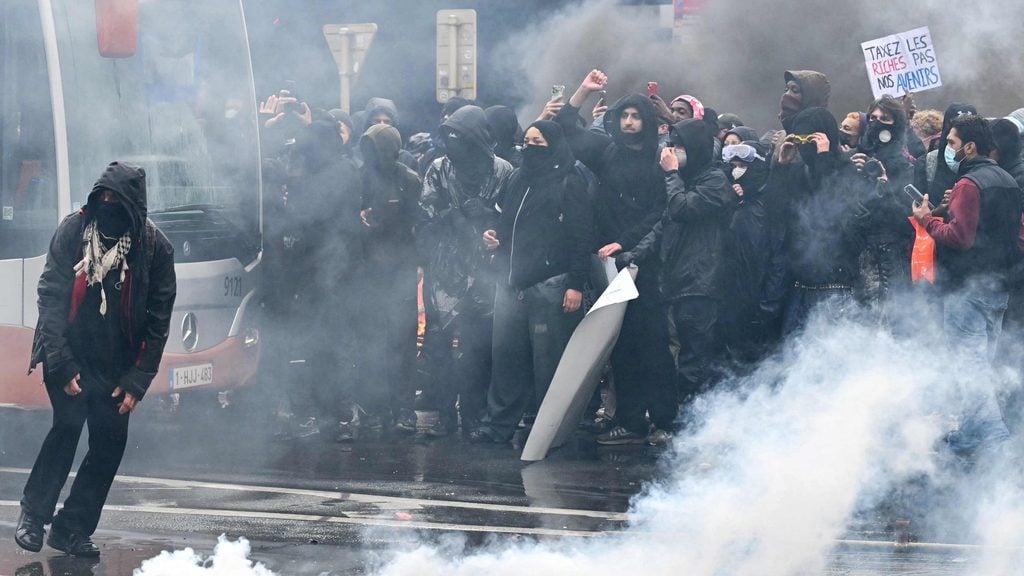
Belgium experienced a weekend of heightened tension, with massive protests leading to riots and a record number of arrests, primarily in Brussels and Liège.
The Trigger: Education Costs: The protests, called by students, teachers, and unions, are the culmination of weeks of discontent over educational reforms and rising tuition fees in the Francophone region, which have increased from €835 to €1,194. Complaints also include the high cost of living, public transport, and job insecurity.
Severe Riots and High Balance: On Saturday, October 17, the protests, which began peacefully, ended up in clashes.
Brussels: The police used water cannons and tear gas to disperse groups of youths who threw objects and erected barricades near the Brussels-Midi station. The outcome was 150 arrests, mostly administrative arrests, although 32 were judicial arrests, including 15 minors. Five officers sustained minor injuries.
Liège: Another 45 arrests were reported, 12 of whom were minors. The police also intervened using water cannons.
Government Reaction: Interior Minister Bernard Quintin condemned the incidents, stating that «what is happening in Brussels is no longer a simple demonstration» and warned that «all necessary means will be used to restore order.» Authorities have described part of the violence as «organized violence acts.»
Connecting struggles, exchanging experiences, establishing security protocols, education mechanisms, coordinating content circulation, and numerous other challenges await the world’s people as they resolutely confront governments indifferent to their claims, governments on their knees before tech oligarchs and with an agenda that is not that of students or the working people.
The Citizen
Obtén tu Pasaporte y apoya a El Ciudadano
Elimina la publicidad, accede a contenido exclusivo y sé parte de la comunidad.
Cancela en cualquier momento · Sin permanencia