Original article: «La más grave crisis de Derechos Humanos desde la dictadura»: Codepu y Comisión Chilena de DDHH se pronuncian a 7 años de la revuelta
Seven years since the October 2019 uprising, the Chilean National Human Rights Commission and the Corporation for the Promotion and Defense of People’s Rights (Codepu) have separately issued statements outlining their perspectives and projections regarding the historical mobilizations that have shaped the nation.
Codepu: «No Justice or Comprehensive Reparation Has Been Achieved»
Initially, Codepu reminded us that «seven years ago, legitimate discontent over abuses, injustices, and price hikes erupted in streets and squares across the country. It was a time when the dignity of people took center stage in societal concerns.»
«The social explosion became a true social and popular uprising. Aspirations for social justice manifested through massive mobilizations, pot-banging protests, territorial assemblies, strikes, and various forms of manifestation after years of frustration with neoliberal economic policies that benefitted the elite and large capitalists,» they stated.
Codepu’s declaration further stated, «The economic power and its political representatives were taken aback by the social mobilization.»
«Entrepreneurs appeared on television stating their readiness to immediately raise salaries; their political representatives sought ways to channel popular discontent; while police and military actions were deployed to suppress dissent. Major media outlets launched a campaign to discredit and criminalize popular mobilization, emphasizing only the social violence involved,» they added.
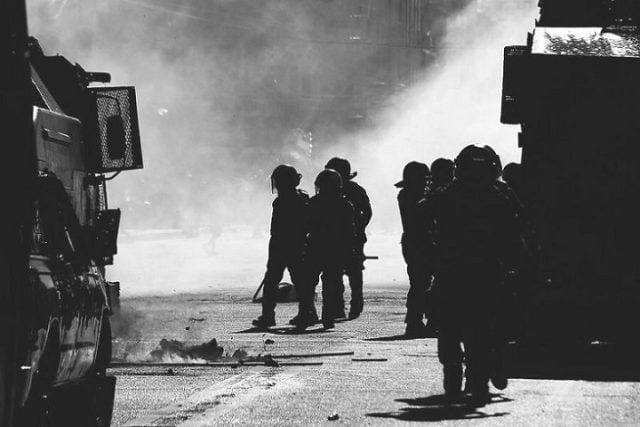
At this point, Codepu emphasized that «the state’s repressive response triggered the most serious human rights crisis since the dictatorship.»
The recount is staggering: «As of July 31, 2020, the violations documented by the National Institute of Human Rights (INDH) included homicides; attempted homicides; thousands of complaints of torture and other cruel treatment, many involving sexual violence; thousands of arrests, including children and adolescents; and over 460 individuals suffering ocular trauma caused by police gunfire.»
«The massiveness of these crimes shocked Chile and the world. There were numerous pronouncements and condemnations aimed at establishing that arbitrary detentions, torture, sexual violence, mutilation, and homicides are prohibited practices that must be prevented and punished when they occur,» Codepu emphasized.
Regarding prevention and justice, the organization described the results as «abysmal.»
«More than 80% of complaints ended with the Public Ministry deciding not to pursue investigations; less than 10% of cases resulted in formal charges against potential responsible parties, and a minimal percentage led to convictions. In cases and complaints supported by Codepu, the figures are similar.»
«There has been no justice or comprehensive reparations, impunity has prevailed, and in recent years a denialist trend regarding human rights violations has emerged that seeks to grant pardons and benefits to the few agents of the state who have been convicted,» warned the Corporation, stating that Chile «requires a profound transformation of the judicial system.»
«Currently, realities demonstrate that abuses, injustices, and price hikes continue to affect the population as a whole. Inflation, unemployment, budget cuts, and a forecast of extremely low economic growth for this year highlight the growing and difficult situation that impacts vast social sectors.»
«Times are exceptionally tough for those who live off their work while, conversely, tax reductions and guarantees are provided to the business elite and large capitalists,» they questioned.
They also noted: «There is a continuous consolidation of increasingly criminalizing legal provisions for social protest. Options for social discipline are being implemented in schools and high schools, and economic housing and public works programs that would favor employment are being postponed while focusing on those who consider Latin America their backyard and whose ambassador adopts an openly interventionist attitude.»
«Economic and social outlooks are grim,» they concluded, adding: «Certainly, the social uprising—like all histories of social and popular struggles—provides lessons for the social world. Among many others: mass participation, the willingness to present oneself in history, and the spirit of refusing to accept abuses and inequalities are entrenched in the memory of everyone who built a collective identity in the streets.»
«Today, for the social and popular sectors, it is time to reflect and act. Time to think about past struggles. Time to defend human rights, demand rights, and fight for human dignity, greater equality, and social justice,» concludes Codepu’s statement.
Chilean Commission on Human Rights: «Disgraceful Attempts to Pardon or Reduce Sentences»
For its part, the Chilean Commission on Human Rights shared a statement with the National Association of Fiscal Employees (ANEF), which we reproduce in full below:
PUBLIC STATEMENT CCHDH – ANEF
On the seventh anniversary of the so-called Social Uprising, the Chilean Commission on Human Rights (CCHDH) and the National Association of Fiscal Employees (ANEF) declare the following:
1. We reaffirm the righteousness and legitimacy of the profound causes that gave rise to one of the most massive expressions of rejection against the political, economic, social, and cultural model inherited from the civil and military dictatorship and managed during the transition.
October 18, 2019, will remain recorded in Chile’s history as a milestone of the struggle of our people in defense of their dignity and rights.
The protest days that began in October 2019 expressed the overwhelming rejection of millions of Chileans toward the deep social and economic inequalities, wealth concentration, and institutionalized abuses. They raised calls for structural changes capable of guaranteeing the effective exercise of social rights.
2. Seven years into this process, the demands that originally sparked this popular mobilization remain unfulfilled and, in various areas, their causes have deepened.
The constitutional issue remains pending. The policies promoted by President José Antonio Kast’s administration, under a narrative of economic emergency, security, and national reconstruction, aim to solidify setbacks in democratic matters and human rights.
As a result of shock policies, fiscal adjustments, and state reductions, living conditions for large segments of the population have deteriorated, jeopardizing the exercise of basic social rights such as food, education, health, and social security.
3. We denounce attempts to stigmatize and criminalize social protest, ignoring its nature as a fundamental right and legitimate tool for citizen expression.
The right to assemble is an essential dimension of any democratic society and must be protected and guaranteed by state institutions. Through this pathway, the powers currently governing in favor of the dominant sectors of our society seek to eliminate any possibility of social transformation that challenges their privileges.
4. The social rights demanded during the Social Uprising are not guaranteed in the abstract: they materialize through quality public services and the work of public employees.
Thus, we express special concern that the reduction of the state and its staff has become a central axis of government management, despite Chile’s public spending remaining below the OECD averages and much of the budget being committed to legal obligations.
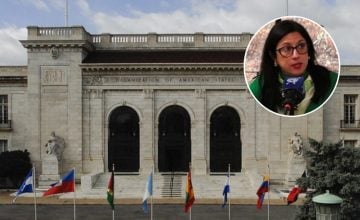
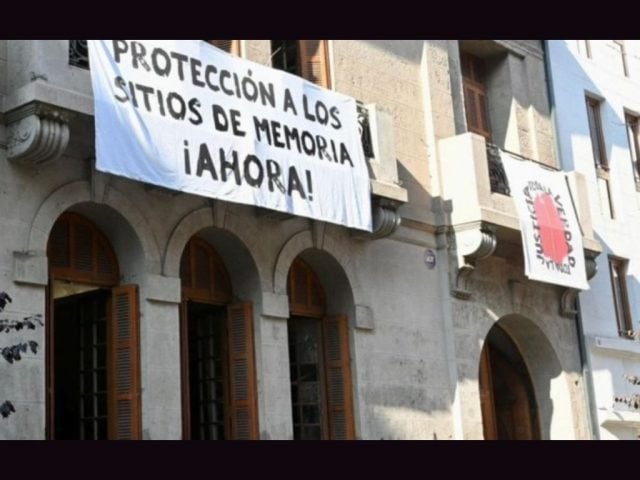
5. This approach adversely affects the institutional framework for human rights and memory. These facts were denounced in a special session of the Inter-American Human Rights System.
The IACHR requested information from the state on these issues, while the Regional Office for South America of the UN High Commissioner for Human Rights warned that any institutional or budgetary changes affecting this framework must be assessed concerning Chile’s international obligations.
6. We also remember the violent response of Sebastián Piñera’s government to the mobilizations of October 2019, which led to mass and systematic violations of human rights.
These actions cannot be relativized and must be investigated, sanctioned, and repaired according to international law.
It is particularly concerning the persistence of high levels of impunity. Of the more than 12,000 complaints recorded regarding institutional violence during the Social Uprising, only 219 cases resulted in a conviction, and 14 individuals are currently serving effective prison sentences, which constitutes about 0.1% of the complaints.
This impunity reflects a grave non-compliance with the state’s international obligations to prevent, diligently investigate, and effectively sanction human rights violations, as well as to guarantee justice and reparations for victims.
In this regard, it is worth recalling what was stated by the UN Special Rapporteur on the Independence of Judges and Lawyers, Margaret Satterthwaite, at the end of her official visit to Chile on August 9, 2024: «The slow progress of cases related to excessive force and torture by Carabineros during the social uprising is particularly concerning compared to the rapid progress in cases of property destruction due to the same events or related matters.»
7. To this situation are added disgraceful attempts to pardon or reduce sentences for individuals convicted of serious human rights violations committed during the Social Uprising, driven by sectors that also promote benefits for perpetrators of crimes against humanity during the dictatorship.
Any measure of pardon or sentence reduction must strictly adhere to the state’s international obligations and meet its requirements: two-thirds of the sentence served, cooperation with judicial investigations, and genuine remorse, among others. None of these conditions are met concerning the potential beneficiaries of these measures.
It is important to remember that 1,182 Chileans remain in the condition of forcibly disappeared, and their families, after more than 50 years, still do not know their whereabouts.
We reiterate our unwavering commitment to victims, their families, and those fighting for truth, justice, and guarantees of non-repetition. We demand that the state and its powers strictly fulfill their international obligations regarding human rights, under penalty of incurring accountability before the international community and its international human rights protection system.
8. Finally, the CCHDH and ANEF reaffirm their commitment to building a democratic, just, and solidarity-based society, where respect and guarantee of human rights—particularly economic, social, cultural, and labor rights—constitute the foundation of a true Democratic and Social Rule of Law. We emphasize the essential role of the state and its workers in guaranteeing rights, providing quality public services, and protecting social security for the entire population.
Seven years after the Social Uprising, we reiterate that the demands for Dignity, Justice, Equality, and Social Rights remain fully alive.
CHILEAN COMMISSION ON HUMAN RIGHTS (CCHDH)
NATIONAL ASSOCIATION OF FISCAL EMPLOYEES (ANEF)
Santiago, October 18, 2026
Obtén tu Pasaporte y apoya a El Ciudadano
Elimina la publicidad, accede a contenido exclusivo y sé parte de la comunidad.
Cancela en cualquier momento · Sin permanencia