«We Are Being Strangled So That Memory Sites Can Die a Natural Death»: Human Rights Organizations Denounce Budget Cuts by Kast to CIDH Rapporteur
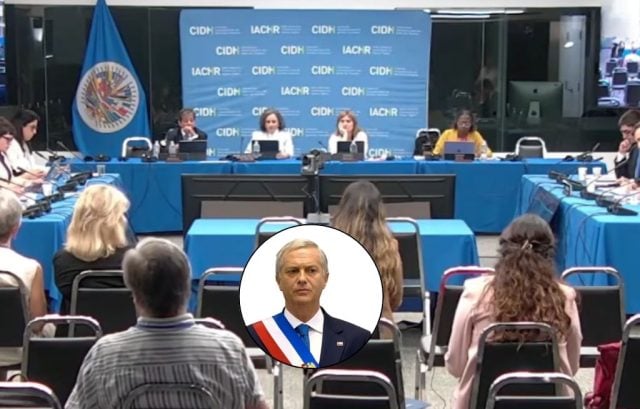
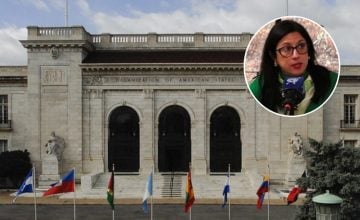
Representatives from various human rights organizations stated, «We are being strangled so that the memory sites can die a natural death«, as they condemned the budget cuts implemented by José Antonio Kast’s government before the Inter-American Commission on Human Rights (CIDH) rapporteur on Memory, Truth, and Justice, Andrea Pochak.
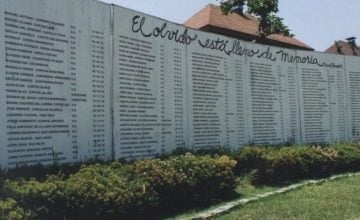
Currently, among the more than a thousand memory sites registered nationally, only 21 receive state funding for their management plans.
The amounts allocated for the maintenance, administration, and management of these sites are insufficient and often uncertain. This situation has worsened due to the budget cuts ordered by the Kast administration via Decree 332 from the Ministry of Finance (dated April 24), which reduced the funding allocated to the Memory Sites Program by 43.90%, dropping from $1,183,527,000 to $663,593,000 pesos (subtitle 24 from the Undersecretariat of Human Rights).
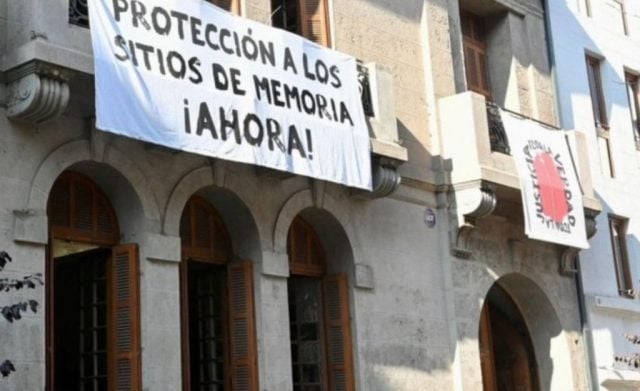
Following this budget cut from the far-right president, six memory sites that had received partial funding in previous years did not receive state financing this year, leading some to announce their forced closure while others focused their efforts on seeking financing and voluntary contributions.
Against this backdrop, representatives from various memory sites, human rights organizations, and groups such as Londres 38, the José Domingo Cañas Memory House, and the Corporation for the Promotion and Defense of People’s Rights (CODEPU), among others, held a meeting with Pochak on Thursday, where they raised their concerns regarding the budget cuts and reforms promoted from La Moneda.
«We Are Being Strangled So That Memory Sites Can Die a Natural Death«
During the meeting held at Londres 38, Marta Cisterna, the executive director of the José Domingo Cañas Memory House, stated that Chile lacks a public policy that guarantees the preservation, maintenance, and sustainability of memory sites.
She pointed out that although these sites represent the tangible evidence of the crimes committed by the state during Augusto Pinochet’s dictatorship, they lack the protection of a law that secures their operation.
Cisterna recalled that the José Domingo Cañas memory site has been open for 16 years, following a 15-year struggle that made its recovery possible. However, since Kast took office, this year cuts were applied to the resources allocated for its operational functioning, and the budget proposal for 2027 did not include increases to contributions for collaborating institutions.
«We are being strangled so that memory sites can die a natural death,” denounced Cisterna, adding that with the resources they have access to, they can only cover basic expenses, such as water and electricity.
She emphasized that the funds are insufficient to cover the financing of work teams, maintain archives, conduct research, carry out educational activities, and monitor the human rights situation in the country, as reported by Diario U. de Chile.
Cisterna highlighted that the competitive funds for memory sites have decreased by approximately 60% and that a fund intended for infrastructure improvements has been eliminated.
She warned that if the 2027 budget is approved under these conditions, José Domingo Cañas would not have the possibility to access other resources next year and noted that this same threat looms over other memory sites, particularly those dependent on competitive funds.
Reform to the INDH and the «Gravest Setback in Human Rights»
The president of the Corporation for the Promotion and Defense of People’s Rights (CODEPU), Mariela Santana, expressed her rejection and criticism of the reform to the National Human Rights Institute (INDH) being promoted by José Antonio Kast’s government, which eliminates the agency’s ability to file criminal complaints, replacing it with an «institutional complaint» which involves merely «informing» competent authorities of potential criminal acts.
«This constitutes the gravest setback in human rights recently,” she warned, stating that its implementation could contribute to creating conditions of impunity regarding potential new violations of rights.
The leader connected the reform with other changes and budget cuts, including those impacting the search efforts for the disappeared within the framework of the National Search Plan and the funding for memory sites. She also referred to repressive legislative initiatives and the escalation of police powers in what she described as a worrying scenario.
Regarding the reductions in sentences for those responsible for crimes against humanity, Santana indicated that these decisions could violate the international obligations that Chile has subscribed to and lead to international liability for the state.
Gloria Elgueta, a member of Londres 38, explained that the organization convened the meeting due to the seriousness of the situation faced by human rights groups, accusing that the measures taken by Kast’s administration reflect an authoritarian regression and aim to undermine the institutional checks and balances.
Furthermore, she denounced what she described as a contradiction between granting benefits to those convicted of human rights violations and initiatives aimed at expanding penal punishment for behaviors that currently do not constitute crimes.
The member of Londres 38 warned that Chile is moving away from international human rights standards and highlighted the importance of presenting the background of organizations before international instances, such as in this case the CIDH.
CIDH Requested Information from the Government Regarding the INDH
After receiving the information, Andrea Pochak reminded that international law establishes obligations for states concerning serious human rights violations, such as the duty to «investigate what happened, clarify the facts, conduct justice processes, and repair victims; this is an inalienable, non-amnistiable, and essential duty,” she asserted.
«This duty cannot be replaced by civil society’s struggle. It is a state duty,” stressed the CIDH rapporteur.
She pointed out that «in the face of the weakening of memory policies, or the dismantling of the National Search Program, or the lack of institutionalization of the National Search Program, or the dismantling of reparation programs, there must be a Judicial Power that acts, and there must be a society that demands that the judicial power act.»
She stated that first, it is always necessary to «demand that the Judicial Power act, from the judicial powers that act,” and that when national authorities do not respond, organizations can turn to the inter-American human rights system.
Concerning the CIDH’s tools, she explained that the Commission can incorporate the background received into its monitoring work, prepare reports and statements, convene hearings, and request information from states. It can also process cases and petitions that may eventually reach the Inter-American Court, in addition to activating precautionary measures in serious situations that threaten the life or physical integrity of human rights defenders.
Regarding Chile, Pochak indicated that the Commission is closely monitoring the regulatory changes under discussion and has requested information from the state on specific matters, including the situation of the National Institute of Human Rights.
Diario U. de Chile reported that the meeting took place after the CIDH held a public hearing in August regarding concerns about potential setbacks in Chile concerning memory, truth, and justice. After that hearing, the Commission requested background information from Kast’s government regarding the National Search Program, the institutional changes, and the budgetary adjustments.
Obtén tu Pasaporte y apoya a El Ciudadano
Elimina la publicidad, accede a contenido exclusivo y sé parte de la comunidad.
Cancela en cualquier momento · Sin permanencia