Original article: Abogados denuncian impunidad por rebaja de penas a criminales de lesa humanidad y exigen a Kast definir si está «al lado de las víctimas o de los perpetradores»
Legal Experts Highlight Impunity Over Reduced Sentences for Human Rights Violators, Urge President Kast to Choose Between Victims and Perpetrators
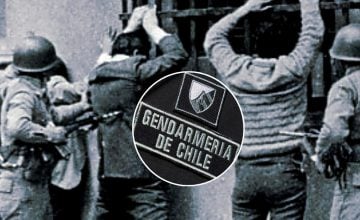
Lawyers and human rights organizations have raised alarms about the reduction of sentences for individuals convicted of crimes against humanity during Augusto Pinochet’s dictatorship, labeling it a measure of «impunity». They demand that President José Antonio Kast clarify whether he stands «with the victims or the perpetrators».
The controversy erupted after the Ministry of Justice granted sentence reductions to three individuals convicted of human rights violations—two of whom are serving time at Punta Peuco prison for aggravated kidnapping and torture, while the third case involves César Luis Acuña Luengo, a former agent of the National Intelligence Center (CNI) held in Colina I.
These actions were promptly criticized by attorneys and human rights advocates, who alerted to the detrimental impact on the pursuit of justice for victims.
Acuña Luengo’s case is particularly sensitive; he was sentenced by the Supreme Court on March 21, 2017, to 10 years and one day in prison for the aggravated kidnappings of Julián Peña Maltés, Alejandro Pinochet Arenas, Manuel Sepúlveda Sánchez, Gonzalo Fuenzalida Navarrete, and Julio Muñoz Otárola, all members of the Manuel Rodríguez Patriotic Front who were detained and disappeared in September 1987.
On May 20, the Undersecretary of Justice, Pablo Mira Hurtado, acting as interim minister, signed the decree that reduced Acuña’s sentence by 19 months. This occurred just one day after the Santiago Court of Appeals ordered the Ministry to respond to the convict’s request without mandating that the benefit be granted. According to Diario U. de Chile, «the decision cited Supreme Court rulings from 2014 to assert that Acuña met legal criteria for such a reduction.»
Francisco Bustos, an attorney from Estudio Caucoto representing the families of the five victims, asserted that the reduced sentence for Acuña is «a measure of impunity, and it must be said unequivocally.»
The lawyer questioned the application of these reductions despite the international standards governing those convicted of crimes against humanity.
«He is convicted as a co-author of five aggravated kidnappings, that is, five forced disappearances, to a sentence that is not the maximum that could be imposed, which is 10 years and one day, and yet a reduction is applied,» he asserted.
Bustos recalled that international law sets stricter criteria for granting benefits to those convicted of genocide, war crimes, and crimes against humanity, which relate to acknowledging the harm caused and cooperating in clarifying the facts.
He also rejected Justice Minister Fernando Rabat’s statements, which suggested that the benefits were based on established court interpretations. Bustos cited the example of Patricio Leonidas González Cortés and Heraldo Veloso Gallegos, convicted for the same offenses as Acuña Luengo, whose requests for sentence reductions were denied by then-Minister Jaime Gajardo due to international law requirements. Their appeals were also dismissed by appellate courts and the Supreme Court.
«On this very issue, the courts have a completely opposing view to that of the minister,» he emphasized in statements to Diario U. de Chile.
Bustos reiterated that Estudio Caucoto has opposed other benefits granted to those convicted in this context, including the cases of Rodrigo Pérez Martínez and Hugo Prado Contreras, who received sentence reductions or other benefits in 2020.
«Whenever we become aware of any perpetrator seeking impunity via administrative or judicial means, we always step in on behalf of the victims and uphold this. Essentially, we oppose these actions, as long as, of course, they do not meet the requirements, which is almost always the case,» he stated.
«Irrational Sentences Are Back»
Paulina Zamorano, a member of the Justice and Memory Observers Network, criticized the sentence reductions as well, labeling them as «a clear signal of impunity».
«Irrational sentences are back,» she warned, pointing out that some convicted for human rights violations during Pinochet’s regime «have only recently begun to serve their sentences.»
She also cautioned that this measure undermines the principle of proportionality and «violates the international standards to which the Chilean state is obligated».
Zamora believes that the application of these benefits should consider the victims, their families, society, and whether the convicted individuals have cooperated with justice in providing information about the whereabouts of the disappeared persons, which «clearly has not occurred in this case,» she asserted.
Kast Must Define Whether He is «With the Victims or the Perpetrators»
Rodrigo Bustos Bottai, executive director of Amnesty International Chile, urged Justice Minister Fernando Rabat to «provide explanations about whether these convicts have shown remorse, whether they have cooperated with justice, and if the victims have been heard.»
He added that President Kast «will ultimately have to choose whether to continue siding with the perpetrators of these crimes or finally stand with the victims.»
Obtén tu Pasaporte y apoya a El Ciudadano
Elimina la publicidad, accede a contenido exclusivo y sé parte de la comunidad.
Cancela en cualquier momento · Sin permanencia