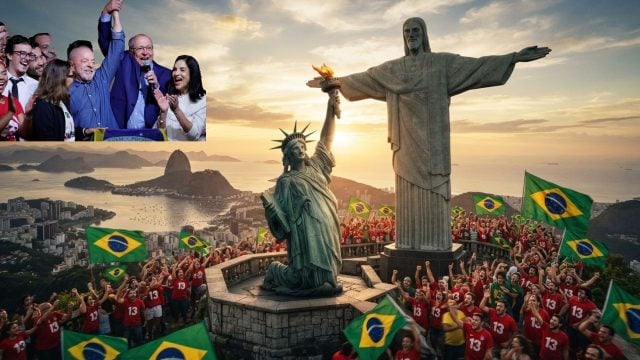
Original article: Contra todo pronóstico: Lula y el pueblo brasileño vencieron a la ultraderecha, la intervención extranjera de Estados Unidos y el paramilitarismo
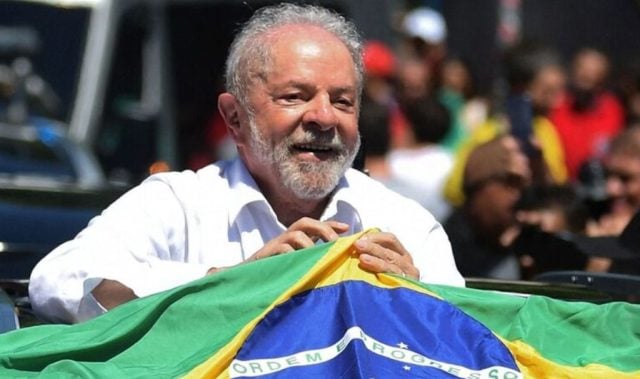
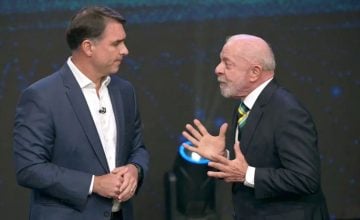
The victory of Luiz Inácio Lula da Silva in the runoff held on October 25, 2026, has reignited hope within the left and the Latin American progressive movement. Lula and the Brazilian people overcame the far-right, U.S. foreign intervention, and paramilitarism, showcasing their collective strength once more. This comeback for the president and the populace came after losing the first round, where polls deemed them defeated. At nearly 81 years old, Lula secured 51.75% of valid votes against 48.25% for Flávio Bolsonaro, the Liberal Party candidate and son of the former far-right president supported by U.S. machinery. This win marks Lula as the first candidate since Brazil’s redemocratization to become president after finishing second in the first round, sending a strong message with his people: we are NOT your backyard.
This triumph cannot be explained solely by numbers. Lula’s campaign faced simultaneous interference from one of the world’s largest tech platforms, Meta, commercial pressure from the Trump administration for corporate interests, misinformation driven by AI, and actions aimed at physically preventing thousands of voters, particularly in Lula’s strongholds, from reaching the polls. Nevertheless, the Brazilian public voted en masse, rejecting a project that sought to undermine their sovereignty.
The People’s Response: High Turnout and Rejection of Blank Votes
The first round, held on October 4, had already shown a significant level of mobilization, with a turnout of 78.9% and a abstention rate of 21.1%. Lula trailed Flávio Bolsonaro by 2.2 million votes, necessitating a runoff.
In the second round, participation soared to 80.8% among 159 million voters. A total of 128.2 million Brazilians went to the polls, while 30.5 million did not vote, resulting in a 19.2% abstention rate, the lowest for a second round since 2006. Crucial was the behavior of those who did vote: 1.4 million votes were blank, making up 1.12% of the total, while 2.7 million votes were null, constituting 2.12%. Both categories showed a decrease compared to the first round. The combined abstention, blank, and null votes—termed «electoral alienation»—stood at 19.19%, an unprecedented figure in Brazilian electoral history. Instead of punishing Lula through vote nullification, millions of Brazilians chose to participate and vote for his continuity.
The Geography of the Comeback: Northeast and Minas Gerais
The electoral map of 2026 confirmed the territorial fracture that had hinted at previous elections. To turn around the first-round result, Lula intensified popular measures: increasing Bolsa Família allocations and promoting a constitutional reform that shortens the workweek, granting an additional day off to millions of Brazilians. His campaign focused on mobilizing the left that had remained home and recovering key strongholds. This strategy proved especially effective in Northeast and Minas Gerais, a decisive state that he had lost in the first round and historically serves to forecast the election winner.
The Meta Siege: Blocks, Algorithmic Bias, and the Battle for Digital Sovereignty
Ten days before the second round, Lula’s campaign formally denounced Meta—the parent company of Facebook, Instagram, and WhatsApp—for electoral “interference.” According to the president’s team, Meta prevented Lula’s profile from promoting posts on Instagram, and one of his official posts suffered a disruption in view registrations, affecting its reach. The campaign claimed that before the first round, Lula’s page and those of other leftist leaders suddenly disappeared from Instagram’s search function, while Flávio Bolsonaro’s posts garnered more interactions despite fewer followers.
Protests were not limited to these allegations. On October 19, unions and social organizations gathered outside Meta’s headquarters in São Paulo under the slogan “Meta, don’t interfere in our election”, denouncing restrictions on content related to Lula and the unequal functioning of the company’s AI tools. Protesters found that Meta’s AI denied the creation of content supporting Lula but permitted those related to the Liberal Party’s candidate.
The Superior Electoral Court (TSE) intervened: it gave Meta 24 hours to prove that it was ensuring equal treatment for both campaigns and raised the daily fine for non-compliance to one million reais (about $185,000). On October 15, the TSE had already instructed Meta not to interfere in the distribution of political-electoral content. Meta denied favoring any candidate but acknowledged that Lula’s campaign account was accidentally deactivated for just over an hour on September 23, and admitted a deficiency in its AI protection mechanisms that allowed favorable materials for Flávio Bolsonaro to be generated, although it denied any political bias. Reports from the newspaper Folha de São Paulo, based on internal communications from Meta employees, indicated that Lula’s accounts faced limitations compared to those of his opponent.
The Role of the PT, Youth, and Communication Decentralization
If Lula’s victory in October 2026 can be attributed to his resilience against Meta’s blockade and Trump’s pressure, his rebound in the second round has a specific name and organizational structure. Faced with a hostile algorithm and a sophisticated misinformation machine, the PT opted not to compete from a centralized official account. Instead, they pursued a radical decentralization of communications, hyper-connected youth activism, and a “digital guerrilla” tactic that turned each supporter into an active propaganda node. Central to this effort was the so-called “Lula’s Army”, a WhatsApp channel that, at the time of victory, gathered nearly 11 million participants.
Lula’s Army: From 50,000 to 11 Million in Six Months
The mastermind behind this operation was federal deputy André Janones (Rede-MG), a figure previously “snubbed” by Lula who became the salvation of the campaign after the first-round loss. The WhatsApp channel was created in April 2026, with only 50,000 followers before the first round. However, after the first round, Janones transformed it into the “Exército do Lula” and, without waiting for the restructuring of PT coordination, began operating as a “general” of a digital battalion.
The mechanics were simple yet effective: through the channel, Janones spread daily texts, audio, images, and videos for his followers to replicate on other social networks, debunking false news from the Bolsonarism and participating in “missions” aimed at swaying undecided voters. The channel not only distributed content; it coordinated massive actions. For instance, it called members to conduct coordinated Google searches using specific terms against Flávio Bolsonaro—like “Flávio Comando Vermelho” or “Bolsonaro ordered Lula’s assassination”—to attempt to influence the platform’s visibility mechanisms. Lula publicly acknowledged Janones’ role: after the victory, he called him “general” and thanked him for “lifting the morale of the troop”.
“Pode Espalhar” and the “Lulaverso”: The Decentralization Infrastructure
Behind Janones’ channel was a broader architecture designed by the PT to decentralize official propaganda. The project was called “Pode Espalhar” (“You Can Spread”) and was coordinated, among others, by Pedro Rousseff (PT), to whom Lula explicitly assigned the task of leading the “digital guerrilla.” Its logic revolved around micronuclei: small groups organized in neighborhoods, communities of small and medium cities, and large cities, which received information from the federal government and the party to refute fake news and disseminate management accomplishments. Rousseff described it as a “large digital committee” that operated by “waves”, identifying false news at the grassroots level to neutralize them before they went viral.
The visible arm of this infrastructure was the Instagram account “Lulaverso”, boasting over one million followers with a pop aesthetic where Lula himself appeared as an avatar. However, the real innovation was the content factory associated with it: the website “Pode Espalhar” served as a repository stocked with audiovisual assets ready for dissemination, divided into around 40 thematic categories. Some examples of these categories reveal the sophistication of the message: “truths with tenderness” (videos of Lula with a baby filter commenting on government actions) and “BolsoTrump recorded you” (materials linking the Bolsonaro family with Trump’s tariffs). The strategy was explicit: “turn each voter into an active communication node”, facilitating messages to circulate in a “natural and organic” manner without relying on the reach of a central account. The PT’s own website allowed volunteers to sign up not to hand out flyers, but to create and edit videos or design content for networks.
Youth as the Vanguard of the “Guerrilla”
The youth component was decisive. The campaign incorporated young legislators and influencers with a strong digital presence, such as Érika Hilton (PSOL-SP) and Ana Elisa (PT-MG), who, at just 21 years of age, became one of the most visible faces of the digital mobilization. However, beyond public figures, the strategy of “digital guerrilla” was described by grassroots activists. A young member of the PT core in Argentina explained it this way: “We all go to social media at the same time, coordinated, and we like, share, schedule, and comment”. The goal was to “outsmart Meta” and “break the bubble” so that information reached corners of the country where the algorithm was not directing it. This coordination of thousands of people acting like a digital swarm was what, according to experts, allowed for an unprecedented reduction in abstention between rounds—from 21.08% to 19.22%—and largely explains the comeback.
Researcher Raquel Recuero from the Federal University of Pelotas summed up the key to success: “Janones understood the logic of the platforms: it’s not enough to create content pushed or disseminated by influencers. The grassroots effort of people for their groups, for their networks, is very important”. Faced with an ecosystem where Meta restricted the reach of Lula’s accounts, the response was not to fight for the center of the digital square but to decentralize the battle and turn each supporter into a micro-medium. The PT, a party born in 1980s labor strikes, surrendered to social media and, by doing so, found the formula for winning a communication battle that seemed lost from the outset.
Trump, the Pix, and the Defense of Visa and Mastercard
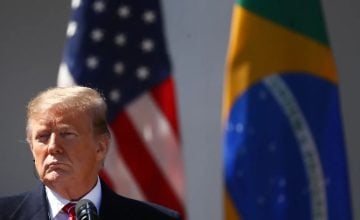
U.S. hostility was not limited to platforms. The Trump administration targeted Brazil’s instant payment system, Pix. The backdrop was the potential loss of business for Visa and Mastercard; Washington deemed Pix, with 170 million users, as “harmful” to American electronic payment corporations. The Office of the U.S. Trade Representative (USTR) opened an investigation and threatened to impose a 25% tariff on Brazil for «certain digital trade and electronic payment practices,» arguing they unfairly harmed U.S. companies.
Lula made the defense of Pix a symbol of sovereignty. At a public event, he displayed a sign reading “Pix is from Brazil” and tweeted, “Pix is ours. It belongs to Brazil and the Brazilian people”. Lula’s campaign championed the banner of sovereignty and accused Trump of wanting to “interfere in the election”. The tariff pressure and defense of the public payment system thus became a central narrative axis of the electoral discourse: Lula chose to prioritize his system over surrendering the Brazilian market to the interests of U.S. financial corporations.
Vote Obstruction: Buses Held and Polls Opened Two Hours Longer
The Bolsonarismo did not only compete in the digital realm. On election day, allied mayors of Flávio Bolsonaro reduced bus fleets to hinder voter access to polling stations. Minister Guilherme Boulos denounced that the fleet reduction was a “scoundrel act of Bolsonaroist mayors” who were “using public machinery to prevent people from voting”. In Salvador da Bahia, the Regional Electoral Court ordered the full restoration of the fleet under the threat of a fine of one million reais per hour of non-compliance, and the justice system decreed the arrest of the municipal mobility secretary, Pablo Souza, for having held hundreds of buses hostage. Complaints extended to São Paulo, Petrópolis, and other cities.
The shadow of the tricks from 2022 resurfaced, when Road Police blocked roads in the Northeast to hinder voting. The TSE, led by Minister Kássio Nunes, altered the polling place for 590,000 people without prior notice, primarily affecting regions favorable to Lula, especially in the Northeast. Moreover, flight cancellations from various airlines were reported that prevented voters from the Northeast from traveling to cast their votes. In this context, Minister Cristiano Zanin, from the Superior Electoral Tribunal and the Supreme Federal Court, decreed an extension of voting hours nationwide until 7:00 PM (two hours longer than previously scheduled). Lula described the bus shortage as a “crime” and urged voters not to give up: “Do not give up on voting. Wait and vote, because democracy must emerge victorious from this electoral process”.
The Misinformation Machinery: AI Avatars and Religious Panic
The misinformation campaign was massive and sophisticated. Social media was flooded with manipulated videos using artificial intelligence, false supporters generated by AI, and unsubstantiated alerts of electoral fraud. The most emblematic case was that of the “Blonde of Bolsonaro”: a video featuring a young blonde woman dancing alongside Flávio Bolsonaro at a rally. The woman did not exist: she was a hyper-realistic AI-generated avatar that amassed over 500,000 followers on Instagram under the name “Julia Berlli Cortez.”
Additionally, a strategy of religious manipulation was implemented. Profiles aligned with the Liberal Party distorted Afro-Brazilian rituals to falsely present them as ceremonies intended to cause harm or death to political leaders, constructing a narrative of a “spiritual battle” between good and evil that positioned Flávio Bolsonaro as a victim of supernatural aggression. A study by organizations Casa Galileia and Instituto Democracia em Xeque identified the mass propagation of these pieces by influencers, pastors, and far-right parliamentarians, with posts reaching tens of thousands of interactions within hours. This was a hybrid war: not only was false information circulated, but there was also an attempt to delegitimize the electoral system that would ultimately award victory to Lula.
The October 2026 Victory: An Analysis by Reuters Observed That It “Defied Expectations, Established Practices, and the Global Trend of Rejection Toward Incumbent Governments”, and “Stopped the Wave of Right-Wing Victories in Latin America”. Lula overcame the algorithmic interference from Meta, the tariff pressures from Trump in defense of Visa and Mastercard, the obstruction of buses, the sudden relocation of polling places, and a misinformation machine that sought to hijack the popular will with false avatars and religious panic. The Brazilian people turned out en masse, raising participation to 80.8%, lowering abstention to its lowest level in 20 years, and cornering null and blank votes to their historic minimum. Lula and the Brazilian democratic field prevailed. The Brazilian people won.
By Bruno Sommer
El Ciudadano
Obtén tu Pasaporte y apoya a El Ciudadano
Elimina la publicidad, accede a contenido exclusivo y sé parte de la comunidad.
Cancela en cualquier momento · Sin permanencia