Original article: Crónica de la construcción de una Balanza de Poder
By Sergio Rodríguez Gelfenstein
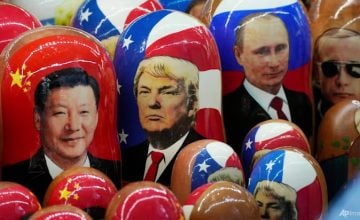
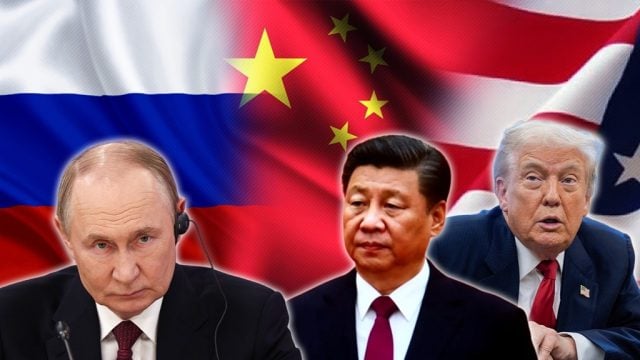
The Chinese government has refrained from officially confirming the possibility of a trilateral summit involving Xi Jinping, Donald Trump, and Vladimir Putin during the upcoming Asia-Pacific Economic Cooperation Forum (Apec) next month in the city of Shenzhen. In a statement made by Mao Ning, spokesperson for the Ministry of Foreign Affairs, it was indicated that there is «no information to offer» regarding such an event, maintaining a cautious position in light of announcements from Washington and Moscow.
Beijing has chosen to uphold its traditional stance of ambiguity and prudence publicly, striving to maintain the harmony and balance that characterize its foreign policy. This approach is intended to avoid compromising its strategic relationship with Russia—described as a «no-limits partnership»—while also keeping channels of dialogue or negotiation open with the United States following recent bilateral contacts with President Donald Trump.
As discussions about a potential tripartite meeting began, and after Trump himself mentioned the possibility of a nuclear disarmament discussion, Mao declined to confirm China’s participation in those talks. According to the English edition of the Greek portal Geopolitics, Beijing’s argument is that the United States, with its «huge nuclear arsenal,» should fulfill its «special and primary responsibility for nuclear disarmament.» The Chinese diplomat argued that China’s nuclear capabilities «are not even close to those of the United States and Russia,» and that it is «neither fair, reasonable, nor realistic» to ask China to join what she termed «the so-called trilateral nuclear disarmament negotiations at this stage.»
Nevertheless, there are several indications that preparations are underway and, more importantly, there is interest in organizing the meeting. Bilateral relations among these powers have been relatively eased following President Xi Jinping’s visit to the United States at the end of September this year and the recent trip by Steve Witkoff, Trump’s special envoy, who met with President Vladimir Putin in Moscow to discuss peace proposals regarding Ukraine and bilateral relations. It was after this meeting that Putin suggested holding a joint summit with Trump and Xi Jinping during the upcoming Apec forum in China.
The bilateral relations between China and Russia are at an unprecedented strategic level, often characterized by their leaders as a «comprehensive strategic partnership for a new era» or a «friendship without limits.»
Similarly, since Chinese President Xi Jinping’s state visit to Washington from September 23 to 25 this year and his summit with the American president, bilateral relations have entered a phase of stabilization and strategic dialogue, although they remain marked by deep structural competitions. The concept of strategic stability indicates that while both countries possess nuclear weapons, they lack incentives to launch a first strike or engage in large-scale military conflict, as articulated by Dmitri Trenin, a member of the Foreign and Defense Policy Council of Russia in an article published in March 2019 by the Carnegie Moscow Center.
Similarly, relations between the United States and Russia are undergoing a selective diplomatic rapprochement and negotiated détente, driven by Trump’s administration and its efforts to mediate in the war in Ukraine, despite ongoing deep structural frictions stemming from the armed conflict.
In this context, after Moscow’s positive assessment of the U.S. president’s decision to sign an executive order temporarily suspending the implementation of new sanctions against Russia—aimed, according to Washington, at stabilizing global energy markets and gradually restoring energy product trade—Russian Deputy Prime Minister Alexánder Novak announced on October 9 that his country would immediately begin lifting export restrictions on diesel ahead of the initially planned deadlines. He also expressed Russia’s willingness to coordinate future actions to achieve a more predictable and stable market.
Following the logic of these developments, on October 12, President Putin informed Trump of Russia’s readiness to supply oil to both U.S. and global markets. Days later, on October 19, the U.S. president announced for the first time that a date for a joint meeting with Xi Jinping and Putin would be set concerning nuclear disarmament. Regarding this matter, Trump stated: «If Putin and Xi want a trilateral meeting in China, I would be inclined to see it happen,» adding that: «I would do it if they want to have it. I just found out, and if they would like to hold it, I think it would happen… I would be willing.»
Trump —who inherited Biden’s quagmire in Ukraine and was pushed by Netanyahu into his failed war against Iran— attends as a loser alongside two winners: Russia (in Ukraine) and China…
On the same day, Yuri Ushakov, adviser to the Russian president, commented that a possible trilateral meeting could occur in Shenzhen, alongside the Apec leaders’ summit. Ushakov stated: «If the U.S. president will be there, then I believe the host of this event, President Xi Jinping, will likely take steps for the potential organization of a trilateral meeting.»
The following day, Russian presidential spokesperson Dmitri Peskov emphasized the need to include strategic stability in the agenda of a possible meeting between the three leaders, noting that «the world, for the first time in a long time, has lost a contractual legal basis» regarding this matter.
A day later, Ushakov again asserted that the leaders of Russia, China, and the United States confirmed their readiness to meet; he even became more explicit despite China’s silence on the subject, stating: «The hosts of the meeting… are already working on the preparations,» adding that «In a favorable scenario, [the meeting] will be included on the agenda» of the mentioned multilateral summit.
Among other things, Ushakov pointed out that the Russian side had shared «some practical ideas about the content» of the potential meeting. According to his sources, experts have already been working on this, but the «presence of the three leaders at one place at the same time» is yet to be ensured.
In response to the growing comparison in public opinion between this meeting and the one held in Yalta in February 1945, where the leaders of the Soviet Union, the United States, and the United Kingdom established the post-war world order, Peskov quickly rejected parallels between the two events, recognizing that this gathering would have global significance. Peskov was unequivocal in his response to a journalist’s query, stating: «From all three sides, there is an understanding that it would be beneficial to meet. There is a hypothetical willingness from all three sides to carry out such a meeting.»
Regarding this matter, Mexican international analyst Alfredo Jalife-Rahme expressed that he did not find the assertion of a Yalta 2.0 correct, noting that the meeting featured three victors of World War II, while today Trump—who inherited Biden’s quagmire in Ukraine and was pushed by Netanyahu into his failed war against Iran—attends as a loser alongside two victors: Russia (in Ukraine) and China, which has the largest GDP globally when measured by purchasing power, according to recent data from the World Bank and is a leader in the traceability of 69 out of 74 impactful technological items.
Striving to be original, Jalife opined that the upcoming trilateral summit would more accurately resemble a Congress of Vienna 2.0 (1814-1815), attended by eight major European powers: Austria, Russia, Prussia, Great Britain, Spain, Portugal, Sweden, and France (the power defeated in the ‘Napoleonic wars’…
However, Vladimir Putin took a more cautious approach. On October 21, during a meeting with the White House special envoy, Steve Witkoff, he expressed his willingness to meet with Trump in China, indicating that there were «some considerations we would like to share.»
The issue continued to gain traction in global public opinion. On October 24, María Zajárova, spokesperson for the Russian Ministry of Foreign Affairs, declared that «billions of people around the world are pinning their hopes on the meeting between the presidents of Russia, the United States, and China – Vladimir Putin, Donald Trump, and Xi Jinping, respectively – in China next month.» This highlights a widespread demand for a halt to tensions, conflict, and war, especially after all agreements pertaining to nuclear arms control signed during the Cold War have expired and remained in effect until recently.
The balance of power will be verified with the presence of China, the United States, and Russia as national and essential actors. In this league, Europe does not play and will not play.
Zajárova stated, «The leaders of the three greatest powers, at the most challenging time from an international relations standpoint, when literally the entire planet is shaking, will have the opportunity, within the framework of a multilateral format, to exchange opinions.» The Russian diplomat sought to be even more emphatic, reiterating that the meeting will concentrate «the attention of millions, I would even say billions of people who hope that this meeting will mark a turning point in the international crisis.»
She concluded by asserting, «People are placing a lot of hopes in a meeting. Why? Because many want to leave behind this slide into absolute chaos and begin returning to stabilization, or at least to a path that could lead to stabilization.»
In his repeated comments regarding the issue, on October 25, Ushakov assured that the organization of the meeting had already begun. He was even more specific: «Now I can say for certain that in Moscow, Beijing, and Washington, the preparations for the meeting [the meeting] have essentially started, and that they have begun the preparations.» He also noted that the Chinese officials had taken the organization of the negotiations very seriously.
An Irrelevant Europe
In this context, it is valid to ask, what is happening with Europe? The European Union (EU) is losing one after another of the pillars that sustained its well-being for decades. Having become dependent on China, Russia, and the United States for trade, energy, and security, the community bloc has strained its relations with all three and, in practice, «is setting a geopolitical triple while seemingly scoring in its own net,» according to a report from RT in Spanish published on October 17.
The report notes that Europe said goodbye to cheap energy from Russia, turning this vital sector into one of the heaviest burdens on its economy. According to European Commission President Ursula von der Leyen, since the beginning of the conflict in Western Asia, fossil fuel imports have cost the EU more than 100 billion euros additional.
On the trade front, problems with China continue to accumulate. While imports have increased by 45% over five years, European exports fell significantly, leading to a trade deficit nearing 1 billion euros daily, which has increased another 10% since early 2026. The situation is so severe that this year all 27 EU members reported a trade deficit with the Asian country.
But, in reality, Europe’s most costly dependence—according to the RT report—is military. Although during the NATO summit in The Hague in 2025, allies committed to raise defense and security spending to 5% of GDP by 2035, with 3.5% allocated to basic military needs, this goal remains distant as Janes, a British intelligence firm specializing in military, national security, aerospace, and transportation issues, noted that the basic military spending of NATO members, excluding the United States, barely increased from 2.2% of GDP in 2025 to 2.4% in 2026. This shortfall will have to be covered by debt, at a time when borrowing in Europe is far more costly than it was in 2022 and the financial capacity of each country varies greatly, especially as Europeans have almost fully taken on support for Ukraine since Trump reduced aid to Kiev.
In this context, it seems very difficult for Europe to reverse this trend, relegating the conglomerate to an irrelevant actor in the future. Hence, it is possible to assert that the international system of the future will be shaped by three dominant and hegemonic players. The balance of power will be verified with the presence of China, the United States, and Russia as national and essential actors. In this league, Europe does not play and will not play.
Meanwhile, if the Global South wishes to have a leading role in this scenario, it must overcome its economic limitations and political contradictions, resolutely seeking rapprochement and integration to secure a relevant role in the 21st-century world. Observing the state of the region, this claim is particularly dramatic for Latin America and the Caribbean.
By Sergio Rodríguez Gelfenstein
October 28, 2026
I invite you to follow my networks:
YouTube: https://www.youtube.com/@SoySergioRodriguezGelfenstein
Facebook: https://www.facebook.com/share/19pfvYSqSv/
IG: https://www.instagram.com/trinchera_de_ideas_sergior?igsh=aGU1Y2EzbGk3Z2pp
X/Twitter: https://x.com/sergioro0701
Blog: https://sergioro07.blogspot.com/
The opinions expressed in this section are solely the responsibility of their author(s) and do not necessarily represent the views of El Ciudadano.