Original article: Alemania: protestas pacíficas de la GenZ en 34 ciudades y el por qué de los focos violentos
Over 180,000 young people mobilized under the initiative ‘GenZ-regelt’ to demand education, affordable housing, and mental health support. The day was largely peaceful, but disturbances occurred in Frankfurt, Berlin, Hamburg, and Cologne, which the organization condemned. Various sectors justified the violence as a response to «structural violence» from the system.
The Citizen
Summary in 30 Seconds
- Nearly 200,000 people participated in protests organized by ‘GenZ-regelt’ across 34 cities in Germany.
- The marches were mostly peaceful during the day.
- Afterward, violent incidents were reported in Frankfurt, Berlin, Hamburg, and Cologne, injuring police officers and leading to barricades and the use of water cannons.
- The organization explicitly distanced itself from the violence and condemned a «narrative of violence» that detracted from their demands.
- Anarchist and radical left sectors justify the disturbances as a response to prior «systemic violence» and use them as a political confrontation tactic.
A Historic Mobilization: 34 Cities and Nearly 200,000 Participants
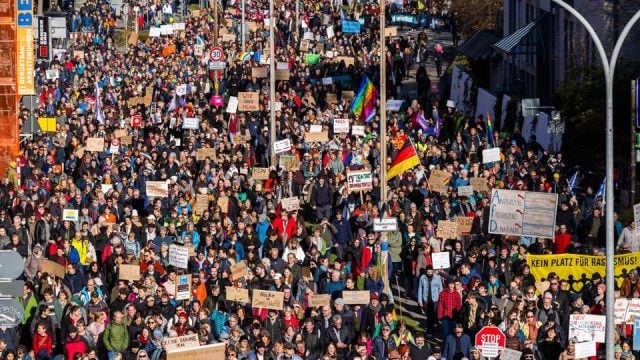
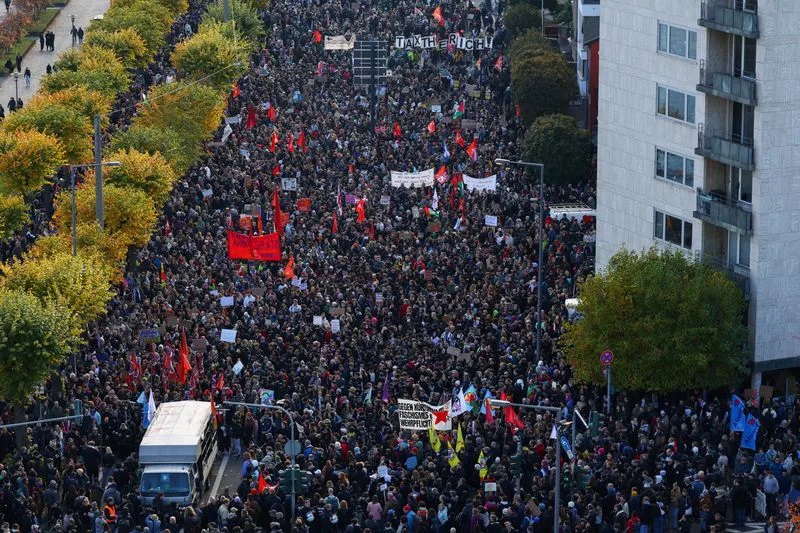
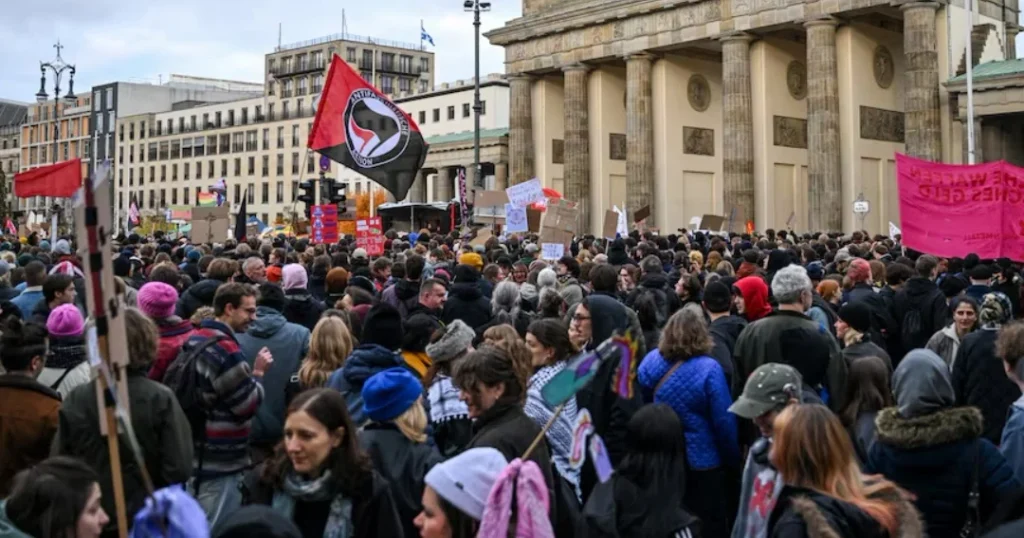
The youth initiative ‘GenZ-regelt’ (GenZ fixes it) called for protests on Saturday, October 31, 2026, in 34 German cities. The call, which originated on social media platforms like TikTok, exceeded all expectations: the organization’s platform registered over 182,000 confirmations of attendance before the start, and later reports indicated the actual participation figure to be over 183,900 people nationwide.
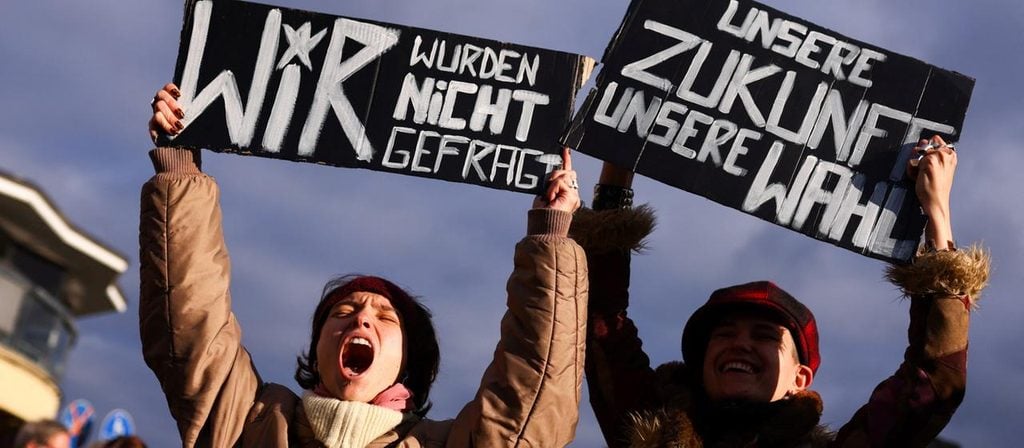
The main demonstrations were concentrated in major urban centers like Berlin, Frankfurt, Hamburg, Munich, Cologne, Nuremberg, Dresden, and Leipzig. The initiative itself took direct responsibility for organizing in Berlin, Frankfurt, Cologne, and Munich, while other cities held protests called by local initiatives.
Key fact: The movement emerged as a trend on TikTok and is defined as an «independent and non-partisan collective,» with no ties to traditional political parties.
Reasons for the Protest: «Enough is Enough!»
The discontent that drew thousands of young people to the streets stems from an accumulation of frustrations and a deep sense of lack of prospects. The organizers submitted an open letter to Chancellor Friedrich Merz under the slogan «Enough is Enough!» («Es reicht uns!») outlining six main demands:
1. Public Education in Crisis
Criticism of the «dilapidated» state of many schools and lack of investment is prominent. The demand is clear: «money for schools instead of cuts». The situation is viewed as precarious, suffering from staff shortages and inadequate infrastructure.
2. Unaffordable Cost of Living
The call for an «affordable life» is central to the protests. Participants expressed grievances over rising prices, particularly the high cost of rent that makes it exceedingly difficult for young people to move out and live independently.
3. Neglect of Mental Health
Demands include funding for psychotherapy and addiction support centers. Protesters noted that mental health services for youth are inaccessible or have been shut down due to budget cuts.
4. Social and Generational Justice
The young protesters criticized a model that, they argue, «saves at the expense of the younger generation». They call for a fair distribution of burdens and insist that people’s concerns must be prioritized on the political agenda.
5. Strong Rejection of Mandatory Military Service
The potential reintroduction of compulsory military service is a point of direct confrontation. The movement responds with a «No way» («Nein zur Wehrpflicht»).
6. Ignored Climate Emergency
They demand «consistent climate protection, now, for our future». Critics argue that the climate crisis, which will significantly impact their generation, is not being addressed with the urgency it deserves.
Testimony: A participating student expressed their distress, stating they feel like a «cog that merely has to produce and can be sacrificed arbitrarily».
A Largely Peaceful Day
Despite the scale of the call, most marches took place peacefully throughout the day. The initiative had explicitly called for peaceful protest and repeatedly distanced itself from any acts of violence.
One of their spokespersons, Dinter, denounced attempts to divert attention from their demands with a «narrative of violence». The organization emphasized that their protest is peaceful and that they do not take responsibility for subsequent disturbances.
Context: Before the protests, authorities and police expressed concerns that extremist groups, such as the radical left, could infiltrate and distort the peaceful demonstration. Merchants in central city areas reinforced their shopfronts in anticipation of possible incidents.
Violent Incidents: What Happened and Why?
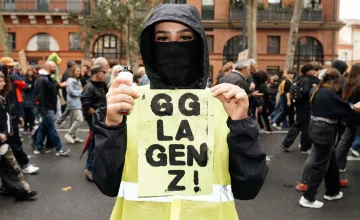
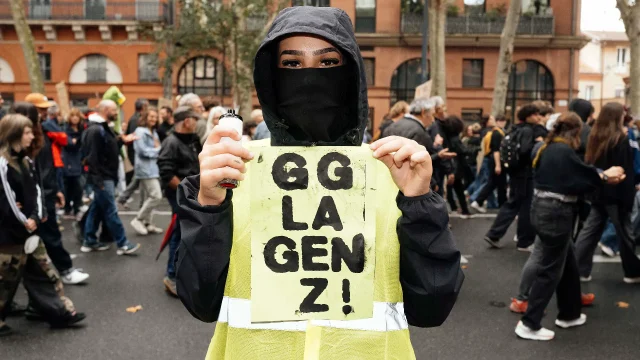
Following the conclusion of the main marches, violent incidents were reported in several cities. The disturbances were not caused by peaceful protesters, but rather by groups that, according to police, acted outside the official call.
Recorded Incidents
| City | Incidents |
|---|---|
| Frankfurt | Injured police officers and several arrests |
| Berlin | Bottles and fireworks thrown at police |
| Hamburg | Burning barricades on the streets |
| Cologne | March suspended due to use of fireworks and masked participants; intervention with water cannons |
Understanding the Violence: Two Key Explanations
1. The Thesis of «Systemic Violence»
Anarchist and radical left sectors articulate a discourse that frames violence not merely as something to be instigated, but rather as a legitimate and almost inevitable response to what they perceive as «structural violence» from the system.
- The system is violent: An Instagram video from the Stuttgart chapter of ‘GenZ-regelt’ (which was criticized by the central organization) presented this logic: «Violence is present, even if no one takes to the streets,» as the system permits homelessness, child poverty, and crumbling schools.
- Historical use of violence: The same video argued many social rights, such as those of women or queer individuals, «were won through violence, as there was no other way».
- Impossibility of a «peaceful revolution»: It concludes that «there can be no such thing as a peaceful revolution», as the system «will always defend itself with violence».
2. «Structural Violence» as a Symptom and Tactic
From a more theoretical anarchist perspective, it is argued that violence is not only a response, but may also be a symptom and legitimate means of confronting an unjust social order.
- Symptom of «late capitalism»: A leftist newspaper article asserts that violence is not only legitimate «as a means of protest,» but also «as a symptom of a violent late capitalism».
- Legitimacy of direct action: If the State uses violence to maintain an order perceived as oppressive, resistance to that order, even if violent, is considered legitimate. It is seen as a «self-defense» against a systemic aggressor.
- Tactic of confrontation: The German Anarchist Federation analyzes the protests and warns that the political system attempts to «drag every small revolt back into society» through its «demand management.» To prevent this, they advocate an «ethics of destitution» that preserves the disruptive nature of the uprising and for reflection on the «tactical placement of revolutionary cores during moments of confrontation».
In summary: The arguments presented by these sectors are not a simple call for chaos, but rather a philosophical and strategic justification asserting that the violence of disturbances is a response to prior systemic violence, a symptom of social malaise, and sometimes a legitimate tactic for political confrontation.
The protests of ‘GenZ-regelt’ have mobilized a record number of young people in Germany to demand a shift in political priorities. The largely peaceful day was marred by subsequent disturbances that the organization itself rejected, and which various sectors justify as a response to previous «structural violence.»
The underlying theme of all demands is a severe critique of the political class. The organizers express feeling that politicians «do not listen to them» and ignore their fears and objections. The letter to Merz is explicit: «Your policies are driving our future against the wall» («Ihre Politik fährt unsere Zukunft gegen die Wand»).
Ultimately, the protests raise a fundamental question: Is German politics ready to incorporate the demands of a generation that feels its future is being decided without them?
The Citizen
Obtén tu Pasaporte y apoya a El Ciudadano
Elimina la publicidad, accede a contenido exclusivo y sé parte de la comunidad.
Cancela en cualquier momento · Sin permanencia