Original article: Ni los millones de Musk salvaron a Trump: magnate destinó US$474 millones a los republicanos y terminaron perdiendo el Congreso
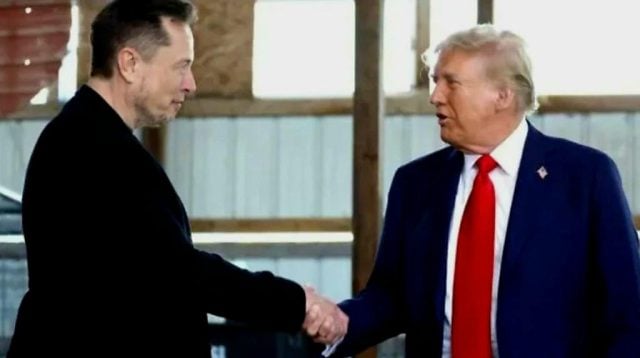
Elon Musk’s massive contributions to the Republican Party did not rescue U.S. President Donald Trump, as the tech magnate’s $474 million in donations failed to secure victories for many of his congressional candidates.
The elections held on November 3 concluded with a «blue wave», as the Democratic Party not only regained control of the House of Representatives, but also achieved a remarkable feat in the Senate: flipping states long dominated by Republicans, such as Texas, Kansas, and South Carolina, robbing them of their majority.
For Trump, who is nearing two years into his second term, this represents a significant political blow. Voters sent a clear message with their ballots: they are fed up with rising living costs, an ongoing war with Iran, and Trump’s far-right governance.
The $474 million makes Musk the largest individual donor in a single election cycle. These substantial contributions were funneled through «Super PACs,» a funding mechanism approved by the Justice Department in 2010 that allows for unlimited fundraising and some opacity to finance ads, polls, and other campaign expenses.
According to an analysis by The New York Times based on federal and state records, the majority of these funds, $216 million, went to America PAC, Musk’s Super PAC, which launched a nationwide campaign. Additionally, $168 million was directed to the Senate Leadership Fund, the main Super PAC supporting Republican senators, while the Congressional Leadership Fund, which backs House Republicans, received another $30 million.
Meanwhile, contributions to a group of Republican candidates totaled $44 million, and state-level initiatives in places like Michigan and Texas, where Republicans lost, received $16 million.
The analysis further reveals that a significant portion of Musk’s funds to the Senate Leadership Fund, estimated at $212 million, was used to bolster Ken Paxton, the Republican Senate candidate from Texas who lost to Democrat James Talarico, ending a 38-year streak of Republican victories in Senate elections in that state.
Paxton’s defeat is considered one of the most significant blows to Trump, as he had secured a substantial victory in Texas during the 2024 presidential election by almost 14 percentage points.
What Does Musk Gain from These Substantial Contributions to Republicans?
According to estimates from Open Secrets, a nonprofit investigating money in U.S. politics, midterm election expenditures are around $12 billion.
Hilary Bradset, executive director of Open Secrets, notes that moguls like Elon Musk have vested business interests in these elections, emphasizing that Musk’s companies significantly profit from government contracts.
«There is significant interest at stake for him, from a business perspective,» Bradset highlighted, while cautioning against the opacity of the Super PAC system.
«There are rules that, in theory, regulate these groups. However, in the U.S., their enforcement is very lax. In theory, these groups should not coordinate with campaigns regarding their expenditures, but in practice, this rule is followed very loosely,» she noted in comments captured by RFI.
Bradset explained that in the past year, there has been observed «an evident and open coordination between these groups and the campaigns, including a phenomenon known as ‘red boxing.’ This essentially refers to a strategy manual that these super PACs may follow to spend in favor of or against a candidate.»
According to investigations by The New York Times, Musk’s total contributions to Republicans could exceed $474 million, as he may have also made opaque donations and the federal records only cover up until October 14, meaning his contributions could have increased in the weeks leading up to the midterm elections.
Obtén tu Pasaporte y apoya a El Ciudadano
Elimina la publicidad, accede a contenido exclusivo y sé parte de la comunidad.
Cancela en cualquier momento · Sin permanencia