Original article: La izquierda socialista pega fuerte en EE.UU.: cuadruplica su bancada en el Congreso y proyecta más de 100 triunfos
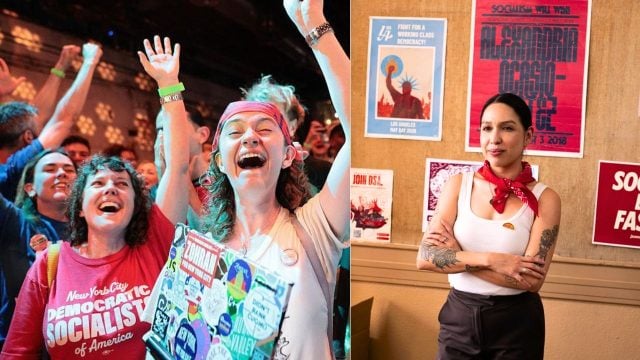
The socialist left in the United States achieved one of the most significant outcomes in the midterm elections on November 3. The Democratic Socialists of America (DSA) quadrupled their representation in the House of Representatives, increasing from two to eight members, while the organization projects at least 105 electoral victories across the country.
This progress extends well beyond Washington. According to the official report published by DSA on November 4, over 130 local chapters participated in campaigns across 43 states, with candidates running for Congress, state legislatures, mayoralties, and local governments, as well as initiatives submitted for popular vote.
The projected more than 100 victories do not solely refer to congressional seats or individuals elected to public office. The tally also includes favorable outcomes in local referendums on various issues, although the organization has not yet provided a definitive breakdown of all its victories.
Socialist Left Quadruples Congressional Representation
The increase in parliamentary representation marks one of the election’s key milestones. Congresswomen Alexandria Ocasio-Cortez and Rashida Tlaib will be joined by six new faces: Claire Valdez, Darializa Avila-Chevalier, Melat Kiros, Donavan McKinney, Chris Rabb, and Angela Gonzales-Torres.
The latter secured victory in California’s 34th district, a result confirmed by the Associated Press and reported by Democratic Left, the publication associated with DSA.
As reported by NPR, several of these candidates reached the general elections after defeating representatives from within the Democratic Party in the primaries. This was the case for Melat Kiros, who surpassed Diana DeGette, a congresswoman with 15 terms in office.
This contest highlights a defining characteristic of the movement: DSA is not an independent electoral party, but a socialist organization whose members often compete on Democratic Party slates, while also challenging the traditional leadership of that party.
The jump from two to eight representatives does not make the socialists a majority in the House, but significantly expands their parliamentary presence and opens up new negotiation opportunities within the Democratic Party, especially on debates where differences among its internal factions can be decisive.
Where Do the Over 100 Projected Victories Come From?
According to the report released by the Democratic Socialists of America, the organization participated in over 300 candidacies and initiatives during the 2026 election cycle. Its outreach involved over 130 local chapters across 43 states, a structure currently consisting of more than 130,000 members.
The projected number of at least 105 victories includes outcomes in federal, state, and local elections, as well as popular referendums. Among these is the Safe Homes for All initiative, backed by DSA and approved in Tacoma, Washington, to enhance protections for renters and hold landlords accountable.
State elections also highlighted the election of Jaelynn Scott, a DSA member who will become the first openly transgender person to serve in the Washington Legislature. In Kentucky, union activist Robert LeVertis Bell secured a seat in the state House of Representatives, another noteworthy result according to the organization.
The advances also reached mayoral races. In Washington D.C., Janeese Lewis George won the municipal election, while Yousef Rabhi triumphed in Ann Arbor, Michigan.
These results demonstrate that socialist expansion is not confined to the federal Congress, but also extends to state and local institutions where policies related to housing, budgets, and public services are decided.
A Pro-Palestinian Agenda Challenging U.S. Military Policy
DSA’s growth also integrates new critical voices against U.S. foreign policy, particularly regarding the political and military support Washington has provided to Israel.
Solidarity with Palestine is a central component of the organization’s international agenda, advocating for the rights of the Palestinian people, questioning Israeli occupation, and demanding an end to U.S. arms supplies to Israel.
On October 29, DSA launched a national campaign for an arms embargo, an initiative that includes community mobilization, political pressure, and organized worker actions to hinder the production and shipment of weaponry.
According to Democratic Left, the initiative aims to shift these demands from protests and social organizations into sustained political action.
NPR reported that several DSA-linked candidates also rejected contributions from large corporations and pro-Israel lobby groups, while questioning U.S. military assistance to that country.
Challenging Trump and the Political Direction of the United States
Beyond their stance on Palestine, DSA puts forth an agenda that confronts core aspects of Donald Trump’s policies: universal healthcare, strengthening labor rights, access to housing, increased corporate oversight, and the elimination of Immigration and Customs Enforcement (ICE).
These proposals also create divisions with traditional sectors of the Democratic Party, especially on economic, immigration, and foreign policy matters.
The growth of socialist representation thus takes on a dimension that transcends electoral figures. Their increased presence in Washington could make this current a significant player in certain legislative negotiations, though the extent of that influence will depend on the composition and majorities in the new Congress.
The electoral defeat of Republicans was not the only outcome on November 3. While Trump faces a new political landscape, socialists are broadening their institutional presence from Congress to local governments with proposals that challenge the power of wealthy elites and the role of the United States in international conflicts.
The true test will come when these candidates must turn their campaign commitments into concrete decisions. For now, the results mark a significant political fact: a socialist organization that not long ago had two members in the House of Representatives will now have eight, while extending its electoral presence across much of the country.
Obtén tu Pasaporte y apoya a El Ciudadano
Elimina la publicidad, accede a contenido exclusivo y sé parte de la comunidad.
Cancela en cualquier momento · Sin permanencia