Original article: Santiago: Invitan a Encuentro Panel para hacer frente a las pérdidas de las AFPs
Santiago Hosts Panel Discussion Amidst $7.7 Billion Losses in Pension Funds
The phrase ‘Not with My Money’ reflects the hidden discontent. Between January and September 2026, pension funds suffered losses of approximately $7.7 billion due to poor investments in U.S. funds.
Nearly 360,000 individuals expecting to retire this year will see their pensions reduced by at least 10 percent, while an estimated 85,996 pensions have severely depleted their resources.
In response to this crisis, Kast’s government has merely urged those wishing to retire to «postpone their decision.»
The losses have hit all seven Pension Fund Administrators (AFPs) in Chile, which collectively invested their affiliates’ financial assets in investment funds. These investments were directly affected by the rise in interest rates in the U.S., resulting in billions of dollars in losses for Chilean contributors.
A legal project has begun in Congress that holds AFP executives accountable for their affiliates’ losses, while a consumer organization has called on those affected in funds D and E to join a protective resource initiative.
These initiatives aim to channel public outrage over yet another blow to citizens’ retirement security caused by AFPs, renewing scrutiny of the pension system and reviving the causes championed by the No+AFP movement, which once mobilized large crowds.
The focus now is on creating socialization spaces to inform as many people as possible about the ongoing situation.
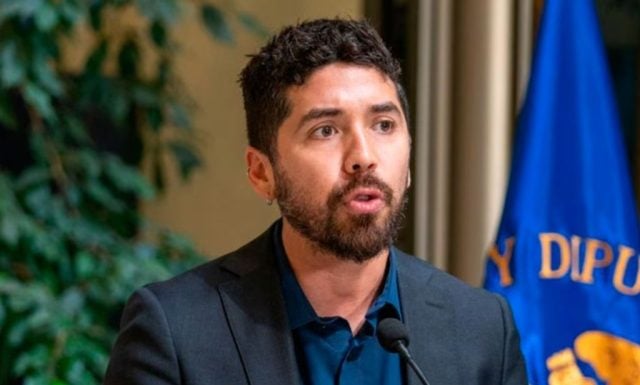
One initiative will be the Panel on Social Security and Labor Market, featuring economist Dr. Marcela Vera from Usach and sociologist Benjamín Sáez from Fundación SOL, taking place at the 4th Central Station Book Fair on Sunday, November 8, at 6 PM.
The event is free and open to the community. Prior to the panel, singer-songwriter Mauricio Redolés will perform.
This fair is organized by the Traveling, Community, and Cultural Fair (FICC Emprende), the Cultural Corporation of Estación Central, and the Chilean Writers Society (Sech), hosting a diverse cultural program including book presentations, discussions, artistic exhibitions, and interactions between writers and readers.
Artisans will also showcase their work, with traditional and Mapuche food available for purchase.
Funds with the Most Losses
The losses in these investment funds date back to 2022. The first AFP to allocate its affiliates’ money into these instruments was Habitat, followed by Capital, Cuprum, Provida, and Modelo. Finally, Plan Vital and UNO invested as well.
While the total losses of $7.7 billion affect all contributors, the most impacted funds between January and September 2026 were Fund E, which lost 10.39% in real terms, and Fund D, which saw a decline of 6.38%, according to a report by Ciper. Fund C also fell by 1.50% in real terms.
Ironically, Fund E was intended for those seeking lower investment risks and greater stability, whether due to proximity to retirement age or personal choice when these differentiated funds were created.
Currently, Fund E consists of approximately 770,000 affiliates, over 60,000 of whom are over 60 years old. According to the Superintendency of Pensions, there are 28,178 individuals in Fund E who are at retirement age.
In contrast, Fund D includes 331,529 affiliates eligible for retirement, of which 231,490 are women over 60.
In financial terms, the net assets managed by Fund E suffered a loss of $4.825 billion from December 2025 to September 2026, dropping from $25.526 billion to $20.701 billion by the end of the third quarter.
High Salaries for AFP Boards and Advertising Expenses
According to Reportea, directors within the AFPs earn bonuses that can reach up to 28 million pesos monthly, as seen with the presidents of Plan Vital and UNO during the first half of 2026.
Meanwhile, Óscar Spoerer Varela, vice president of AFP PlanVital, receives an annual salary of 171.1 million pesos, translating to about 28.5 million pesos a month, the report stated.
Benjamín Sáez, an investigator at Fundación Sol and a participant in the upcoming discussion, noted to Reportea that «generally, directors’ salaries do not represent a significant expense relative to the funds managed by the AFPs, and these amounts align with the salaries of companies on the IPSA,» which includes firms with a strong presence on the Santiago Stock Exchange.
The salaries of AFP directors are not subject to discounts or bonuses based on the poor performance of their affiliates’ funds.
Furthermore, the AFP Association reportedly has financed and supported behind-the-scenes initiatives for Ciudadanos en Acción, a foundation led by Bernardo Fontaine that played a key role in disseminating content against the 2022 constitutional process and defending the AFP model, expressed through the campaign ‘Not with My Money’, which, according to data from Meta—owner of Facebook, WhatsApp, and Instagram—mobilized at least $203 million for content distribution.
Fontaine, a strategist for Kast’s campaign and now chair of Codelco’s board, was even featured on the cover of LUN in March 2022, asserting that «Workers will no longer own their retirement savings.»
Additionally, as highlighted by Interferencia, by November 2025, the AFPs had spent around $10.4 billion on advertising and transferred another $3.4 billion to their association.

Organized Resistance Emerges
So far, two major efforts have arisen from social movements and leftist political parties to combat the AFP losses.
On one front, the National Corporation of Consumers and Users (Conadecus) has made a downloadable protective resource available on its website for affiliates who reported losses in funds D and E of the AFPs.
«This document aims to provide a support tool for individuals wishing to approach the courts and request a review of the circumstances related to the losses experienced in their pension funds,» they stated.
Meanwhile, this week, a bill promoted by Deputy Luis Cuello (PC) and Senator Daniel Núñez (PC) aimed at mandating AFPs to compensate workers for their retirement savings losses due to speculative financial operations related to U.S. interest rates was approved with 73 votes in favor, 53 against, and 2 abstentions in the Chamber of Deputies (the ‘Return the Money’ Law).
The next invitation is to discuss what can be done at the Panel on Social Security and Labor Market, set to take place at the 4th Central Station Book Fair.
El Ciudadano
Obtén tu Pasaporte y apoya a El Ciudadano
Elimina la publicidad, accede a contenido exclusivo y sé parte de la comunidad.
Cancela en cualquier momento · Sin permanencia