Original article: Xinhua y la 7ª Cumbre de Medios: los medios en la era inteligente, del consenso a la acción
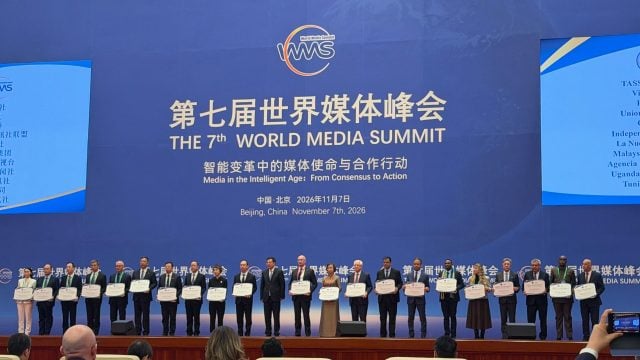
In a global context characterized by unprecedented changes and the transformative emergence of artificial intelligence (AI), the Chinese capital has become the epicenter of world journalism through Xinhua and the 7th Media Summit: Media in the Intelligent Era – From Consensus to Action.
El Ciudadano participated in this high-level meeting, which holds special significance as it coincides with the 75th anniversary of the Xinhua News Agency, China’s state news agency that has evolved since its founding in 1931 to become one of the largest and farthest-reaching news agencies in the world, with correspondents in nearly every country and a vast global distribution network. Under the motto «Media in the Intelligent Era: From Consensus to Action», over 500 representatives from approximately 330 institutions across 112 countries and regions gathered to shape the future of communication.
By Bruno Sommer
The conceptual focus of the summit, organized jointly by Xinhua and the Beijing People’s Government, is based on a foundational document warning that AI is reshaping all media workflows. While technology offers unprecedented opportunities to enhance efficiency and expand reach, the text warns of new challenges, such as the spread of misinformation, increasing algorithmic bias, and a dangerous «AI divide.»
To counter this, the document structured discussions around five major themes:
- AI for All: Seeking replicable solutions to prevent technological divides from solidifying new imbalances, especially in the Global South.
- Media for a Safer World: To strengthen fact-checking and crisis communication in the face of challenges like climate change or energy security.
- Communication for Intercivilizational Exchange: Aiming to use AI to amplify local narratives and multilingual content rather than diluting them.
- Global AI Governance: Advocating for clear limits, algorithmic transparency, and enforceable rules regarding the use of AI agents and deepfakes.
- The Beijing Approach: Analyzing Chinese modernization and green development as a model of objective storytelling for the Global South.
The main objectives of the summit focused on sharing innovation opportunities, strengthening mutual trust through objective coverage, fostering ties between nations, and building a global consensus on the ethics and governance of AI.
The Human Factor vs. the Machine
During high-level sessions, leaders from the world’s major media consortia agreed on the need to regulate AI without losing the essence of journalism.
Xinhua demonstrated its capacity to convene and act as a highly validated interlocutor in global journalism, successfully bringing together key figures from communication agencies and media in Beijing.
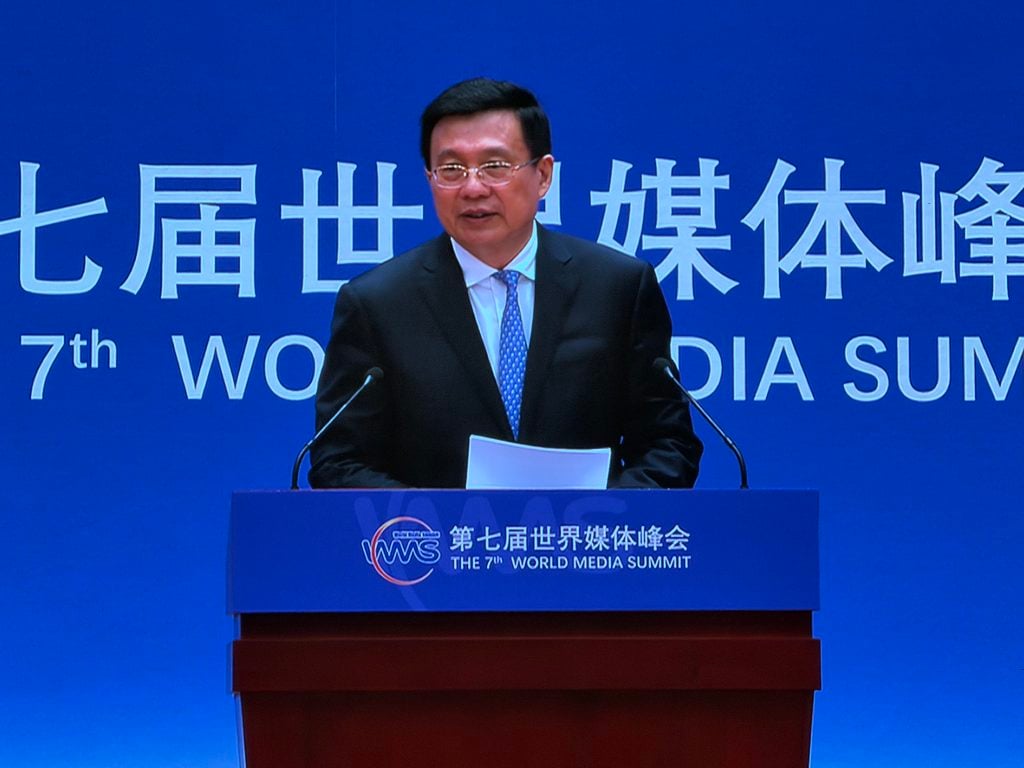
The president of Xinhua News Agency, Fu Hua, made a clear call to ensure that technology benefits everyone equally, stating, «We must lead the way to ensure that all media professionals have a fair opportunity to benefit from AI,» while urging the sharing of new technologies to close development gaps.
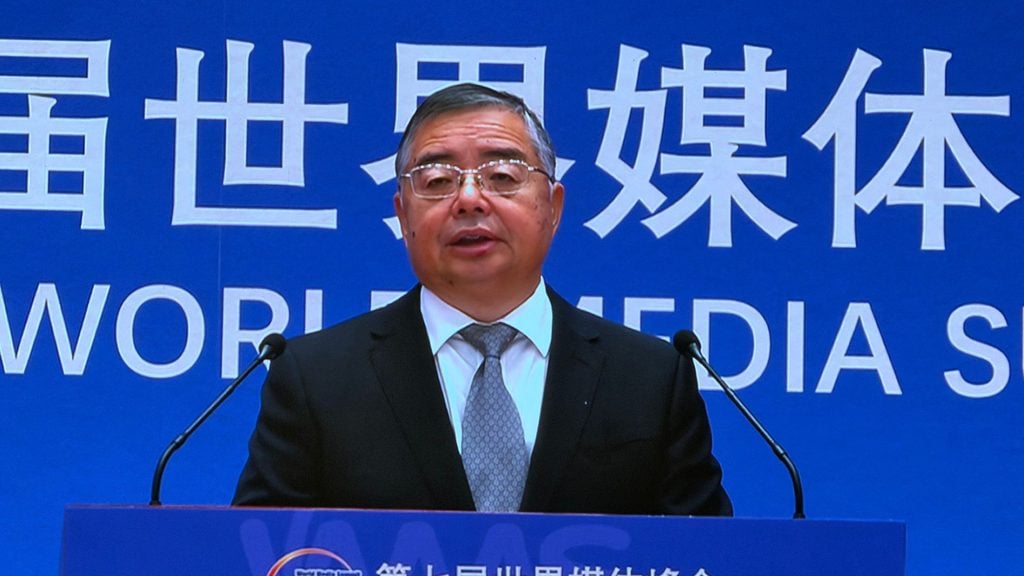
On his part, Li Shulei, Head of the Publicity Department of the Central Committee of the CPC, emphasized the need for global media to maintain their original mission and «join efforts to promote the transformation and development of the media.»
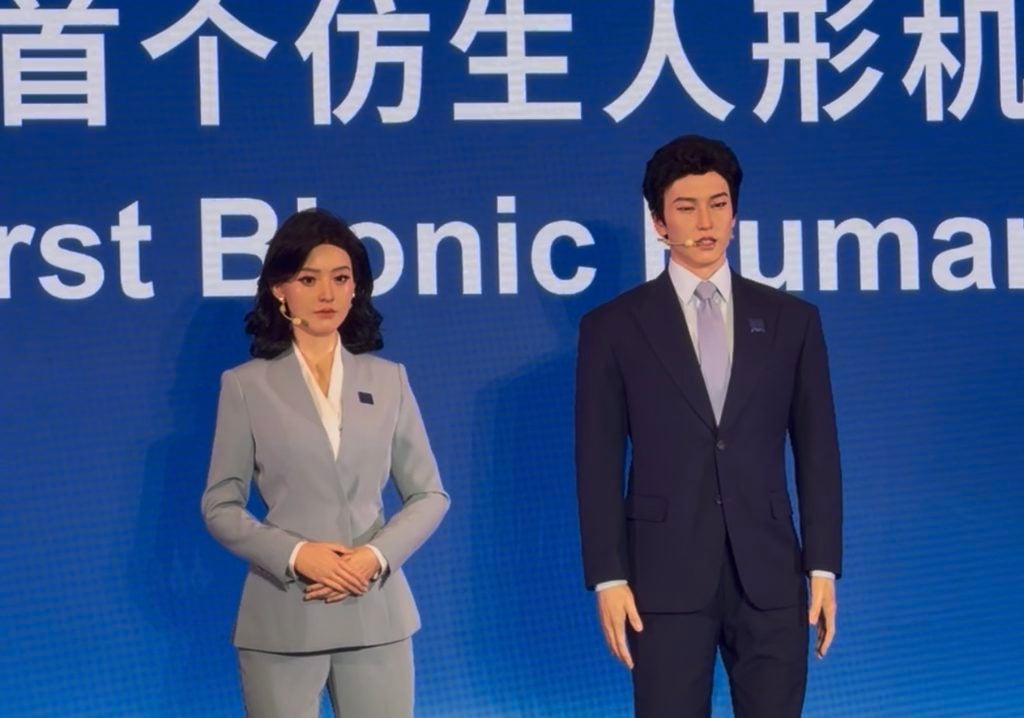
In an unprecedented development that embodies the summit’s motto of moving from consensus to action, Xinhua presented «Xinyan» and «Xinyu,» the world’s first biomimetic humanoid robot news presenters. Developed in collaboration with UBTECH and visually designed by acclaimed filmmaker Zhang Yimou, these androids feature realistic facial expressions, refined eye movements, and natural eye contact. Connected to the AI-powered news information system «Xinhua Yudian,» they are designed to present news on camera, perform multilingual deliveries, and interact live, accessing only pre-reviewed content to mitigate the risk of algorithmic misinformation.
This technological breakthrough aims not to replace traditional journalists but to serve as a supportive tool in newsrooms. While the agency emphasizes that the goal of AI is to «empower, not replace» the human factor, the presentation of these androids sparked significant debate among attendees and international experts, who questioned whether these replicas could undermine public trust. This milestone not only marks a quantitative leap in media transformation but also poses a significant ethical dilemma of the intelligent era: how to integrate disruptive tools without losing the essence and credibility of traditional journalism.
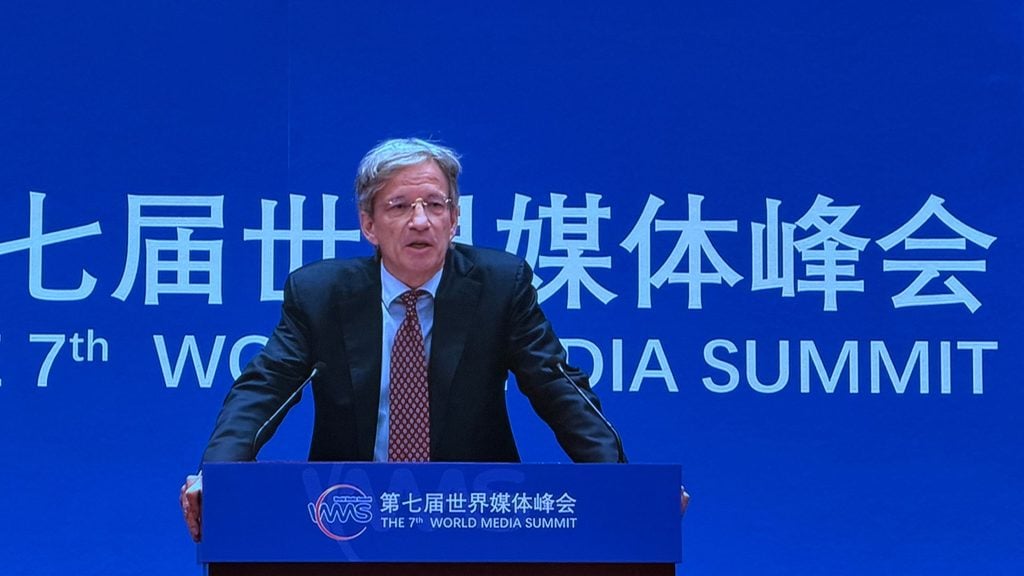
Concerns regarding accuracy and traceability were common among international agencies. Fabrice Fries, President of AFP, warned about the dangers of blindly yielding to technological tools: «AI tools are very efficient and convenient, and people tend to yield to those tools,» highlighting the urgency of ensuring that content is real and traceable.
Additionally, the head of the French agency explained that we shouldn’t fear AI but rather put safeguards in place: «AI has no legs,» he expressed, recognizing that the reporting of a journalist on the ground to gather information is irreplaceable.
In the same vein, Paul Bascobert, President of Reuters, defended the value of the human factor amid algorithmic «hallucinations»: «The qualities of a good journalist are irreplaceable by machines.» Meanwhile, Kostas Oikonomou, Senior Vice President of CNN, emphasized that cooperation is the only way to combat misinformation: «When we face situations where we must repeatedly verify the content of information, we need to sit down together to discuss.» Representing the Associated Press, its President and CEO, Daisy Veerasingham, advocated that these dialogue spaces «benefit all news organizations so we can work together to promote the power of fact-based journalism.»
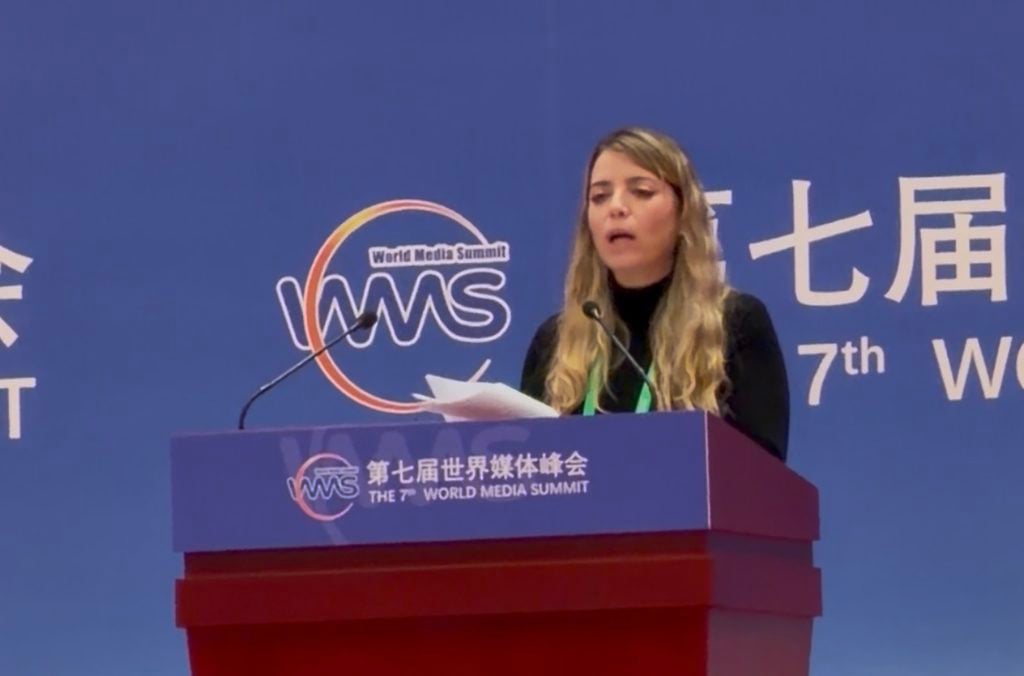
On the other hand, Patricia Villegas, Director of Telesur, stated that the AI gap cannot be closed without informational sovereignty, which she sees as «practically nonexistent today without technological independence.» She argued that technological development is not neutral, as computing power, data, and technical infrastructure are concentrated in a small group of wealthy countries in the North.
The Voice of the Global South and the UN
The meeting also served as a platform for developing nations to raise their voices in shaping the digital playing field. Le Quoc Minh, editor-in-chief of the Vietnamese Nhan Dan, emphasized that «in the era of artificial intelligence, the role of mainstream media has not only not weakened, but is more important than ever,» advocating for a people-centered approach.
African representatives were particularly emphatic about the need for equitable international cooperation. Abdishakur Ali Ahmed from Somalia highlighted that the summit provides a crucial platform for discussing Africa’s digital transformation, while Luis Alves do Rosario Canhemba from Mozambique called for stronger cooperation to facilitate the digitalization of developing countries. In line with this, Iqbal Surve from South Africa expressed his hope that the meeting «will further strengthen solidarity and international cooperation and promote friendship between Global South countries and China.»
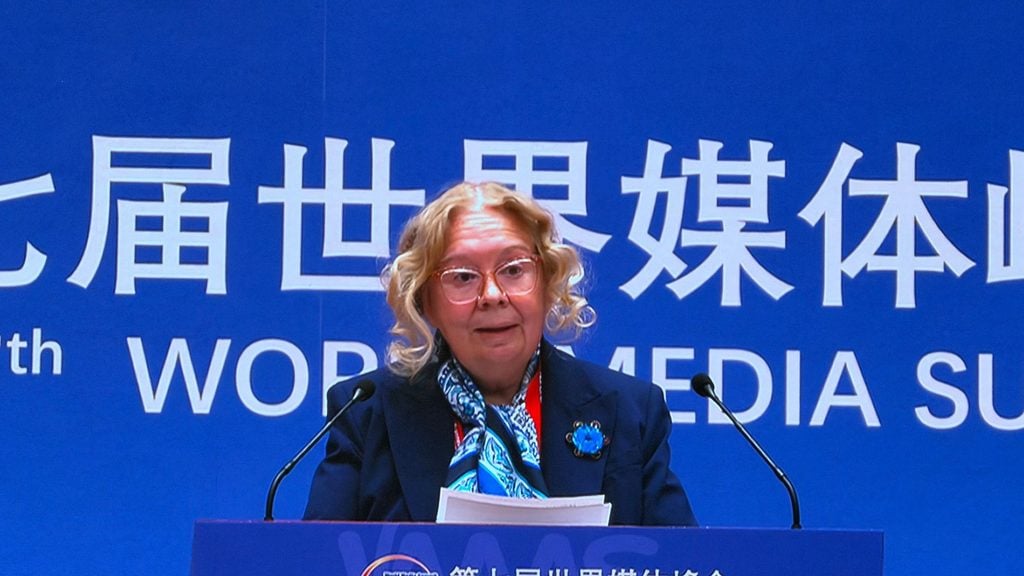
During the inaugural session, Tatiana Valovaya, Director-General of the United Nations Office in Geneva, emphasized the urgent need to preserve informational integrity and public trust in the face of advancing AI. Given the risk that technology makes it difficult to distinguish between what is real and what is manipulated, she urged media outlets to strengthen transparency and verification mechanisms. She also warned about the danger of the benefits of this digital revolution concentrating only in a few wealthy countries, advocating for guaranteed access to infrastructure, computing capacity, and technical know-how for developing nations. Finally, Valovaya stressed that while AI may facilitate decision-making, «it cannot replace human responsibility,» thus its development must focus on human dignity, transparency, and strict respect for human rights.
During the Pre-Forum held in the Golden Hall of the Beijing Hotel, Hans-Dietrich Nikolaus from Junge Welt in Germany stated that we must pay attention to “who owns and who develops AI, especially in the West where it is controlled by a handful of billionaires who pursue profit,” adding that “journalism is not just about processing data but also about value judgments.”
Latin American philosopher Diego Ruzzarin expressed his concerns over AI ownership and its purposes, highlighting the importance of the challenge of co-owned AI, questioning how AI will be used to modify capital structures, and whether it will be social beings who define technology or technology that will define us.
Other themes discussed during the meeting concerned the payments that AI technologies should make to media organizations for working with information created by journalists and having authors.
“AI feeds on the work of journalists to provide its answers and to verify facts,” was heard repeatedly in the cafes’ corridors during the summit.
With the seventh edition of the summit, not only has Xinhua’s role been reaffirmed on its 75th anniversary as a bridge between East and West, but it also marks a turning point, the definitive shift from the debate on artificial intelligence to the implementation of concrete, ethical, and collaborative actions in newsrooms worldwide.
By Bruno Sommer
Obtén tu Pasaporte y apoya a El Ciudadano
Elimina la publicidad, accede a contenido exclusivo y sé parte de la comunidad.
Cancela en cualquier momento · Sin permanencia