Original article: Las rebajas que Rabat sí pudo frenar: seis fallos avalaron sus rechazos antes del giro de doctrina
Rabat’s Rejections: Six Court Rulings That Halted Sentence Reductions Before Policy Shift
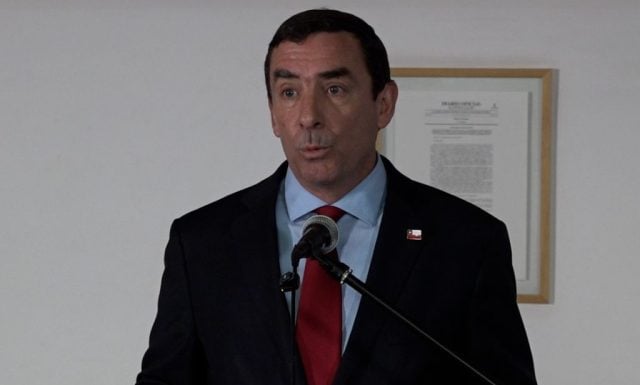
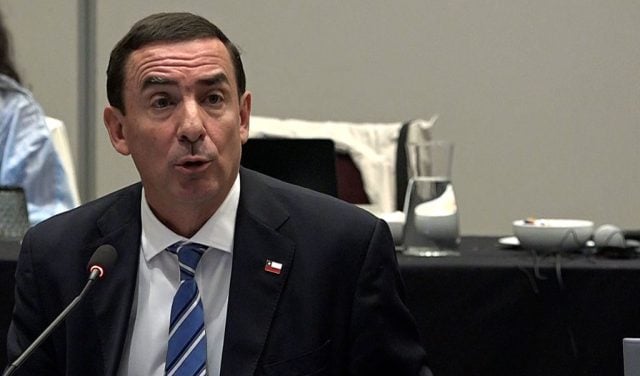
Six judicial decisions supported the rejections made by the Ministry of Justice, led by Fernando Rabat, at the start of José Antonio Kast’s administration, against requests for sentence reductions submitted by sexual offenders of minors. These rulings, obtained before the Secretary of State changed his stance and began granting benefits without litigation, contradict the account he provided to the Chamber of Deputies, where he argued that the law mandated him to grant these reductions.
A review of the judicial records conducted by CIPER identified at least nine cases in which individuals convicted of sexual offenses against children, girls, and adolescents turned to the courts to overturn the ministry’s denials, expressed through decrees issued between March 13 and May 11 of this year. In six of those cases, the judiciary upheld the government’s position: five rulings were issued by the Supreme Court, and one was upheld in the Court of Appeals of Valparaíso without escalating to the highest court. Only three times did the Supreme Court overturn the ministry’s decision and approve the reduction.
The timing is noteworthy. The last ruling favoring the decision to deny reductions was issued by the Supreme Court on June 15, just one day before the ministry released the first decree signed under the new «Rabat doctrine,» dated June 16. Therefore, court records show that the minister shifted his initial strategy of rejecting requests and defending that position in court at a time when the judiciary was supporting precisely that course of action.
The Rabat Doctrine
The Secretary of State recounted before the Chamber of Deputies on October 29 that upon assuming office, his ministry rejected «the first requests for sentence reductions». However, he explained that this position changed after receiving «a first writ of protection, where the country’s highest court reprimanded me for illegally depriving a citizen of his liberty«. Since then, the ministry began to grant decrees for sentence reductions for those convicted of abusing minors without litigating the cases.
The so-called «Rabat doctrine» refers to the 2022 legal reform, which excluded individuals convicted of certain sexual offenses against minors from these benefits. According to Rabat, that restriction cannot apply to acts committed prior to its enactment, due to the constitutional principle that prohibits applying criminal law retroactively to the detriment of the condemned.
Under this logic, all who were convicted before that date could request a reduction if they meet certain criteria, and the state would be obligated to grant it.
The head of the Justice Ministry has insisted that his role was merely to endorse the administrative acts once the sentence reduction commissions ruled favorably, assuming that case evaluation was completely closed at that earlier stage.
He even stated before the full Chamber that there would be 470 judicial rulings supporting his legal interpretation.
However, the June 15 ruling —signed by ministers Manuel Valderrama, María Cristina Gajardo, and Dinko Franulic— directly contradicts that thesis. The Second Chamber of the highest court determined that Law No. 19,856, which allows sentence reductions, concerns «a benefit and not a right, so one can only discuss a mere expectation subject to the fulfillment of the legal requirements of the case».
Additionally, the ruling classified the 2022 reform as an administrative and not criminal norm, meaning that the prohibition on granting reductions can indeed apply to convictions from prior years without violating the principle of non-retroactivity.
In the reviewed writs of protection, the ministry’s initial position aligned precisely with that reasoning. Last May, the ministry explained before the Court of Appeals that «the principle of non-retroactivity of criminal law does not extend to these laws, as by their nature they should be understood as administrative laws that govern in actu.» Similarly, in April, the then Undersecretary Luis Silva issued a decree invoking the duty of the state to protect children, stating that «potential risks to their physical and/or psychological integrity should be avoided».
The Six Sentence Reductions That Rabat Was Able to Halt
According to reports from CIPER, the six rejections won by Rabat in court involve particularly grave cases. Two writs of protection presented in March and April before the Court of Appeals of Santiago were rejected by both the appellate tribunal and the Supreme Court: one involved a 54-year-old inmate sentenced to five years for repeated sexual abuse of a 14-year-old boy, and the other involved a man sentenced to six years for raping and sexually abusing his own daughter when she was 15.
In Valdivia, the local court had approved a reduction for a 53-year-old man convicted in 2018 for raping a 14-year-old on May 18, but the ministry appealed, and the Supreme Court upheld the appeal.
Two other cases processed in Valparaíso —one involving a 64-year-old man and another a 67-year-old, both convicted of raping minors under 14—were initially granted by the Valparaíso court, but the Supreme Court rejected the reductions on June 10 and 15.
The sixth case, also in Valparaíso, involved a 54-year-old man convicted of raping a 14-year-old: the local court rejected his request on April 6, and the ruling became final.
“Excuse to Justify a Political Proceeding«
Lawyer Hernán Fernández Rojas, an expert in children’s rights, questioned the change in criteria: «If this Supreme Court jurisprudence had already been expressed, there was a logical, rational reason for justice and the minister’s duty to be guided by this orientation.»
In his view, Minister Rabat «seeks an excuse to justify a political proceeding instead of fulfilling an autonomous, independent role that safeguards the interests of children.»
In statements to CIPER, he also warned that by granting the benefits, «there is an abandonment of state duties regarding the protection of children, who are victims that cannot defend themselves.»
From the Foundation for Trust, co-founder and executive director José Andrés Murillo criticized the government’s lack of transparency regarding the change in criteria and emphasized that in these decisions, «the best interest of the child, which is a guiding principle of the international convention on the rights of the child that Chile signed in 1990, has been overlooked.»
Featured image: Mediabanco
Obtén tu Pasaporte y apoya a El Ciudadano
Elimina la publicidad, accede a contenido exclusivo y sé parte de la comunidad.
Cancela en cualquier momento · Sin permanencia