Original article: ¿Reunión de Xi Jinping, Trump y Putin en Shenzhen: será resolutiva como lo fue el encuentro de Yalta?
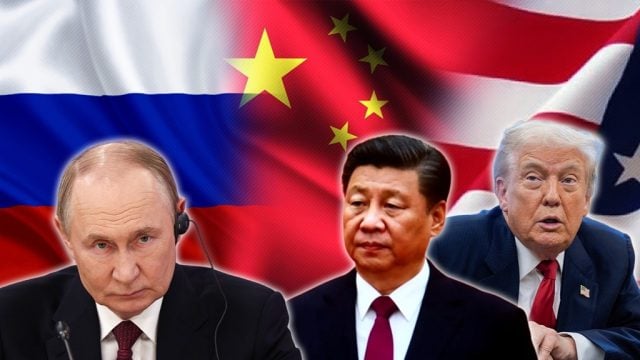
The highly anticipated first trilateral meeting among the leaders of China, the United States, and Russia is set for November 19, during the APEC summit in Shenzhen. This meeting will occur against a backdrop of military conflicts, economic tensions, and a growing rivalry over global order, alongside fears of a nuclear escalation by the U.S. and Israel against Iran. Will the gathering of Xi Jinping, Trump, and Putin in Shenzhen be as decisive as the Yalta Conference? The comparison to the 1945 conference is already being drawn, but underlying the image of these three leaders is a web of divergent interests and uncertainty about achieving historic agreements.
By Bruno Sommer
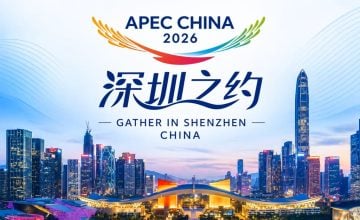
On Thursday, November 19, the Chinese city of Shenzhen may become the site of one of the most significant diplomatic meetings in recent years. Donald Trump, Xi Jinping, and Vladimir Putin are expected to gather at the 33rd APEC leaders’ summit, which will take place on November 18 and 19.
The White House confirmed the meeting on Friday the 13th, with the Kremlin following suit on Saturday the 14th. This would mark an unprecedented trilateral meeting among the heads of state of the three leading nuclear powers. While these leaders have held bilateral meetings on various occasions, they have never convened together in this format.
The timing is particularly sensitive. The war in Iran, the conflict between Russia and Ukraine, the lack of a current nuclear arms control framework between Washington and Moscow, and the competition for economic and technological influence create a context where any agreement among the three powers could have far-reaching international consequences.
However, the expectations are tempered by challenges in establishing a common agenda. Reports from Associated Press and Reuters suggest that no immediate agreements are anticipated, and the discussions may mainly focus on exploratory and symbolic dialogue.
The Shadow of Yalta: A New Dividing of the World?
The comparison with the Yalta Conference is no accident. In February 1945, with the imminent defeat of Nazi Germany, Franklin D. Roosevelt, Winston Churchill, and Josef Stalin met in Crimea to discuss the future of Europe and the post-war international order.
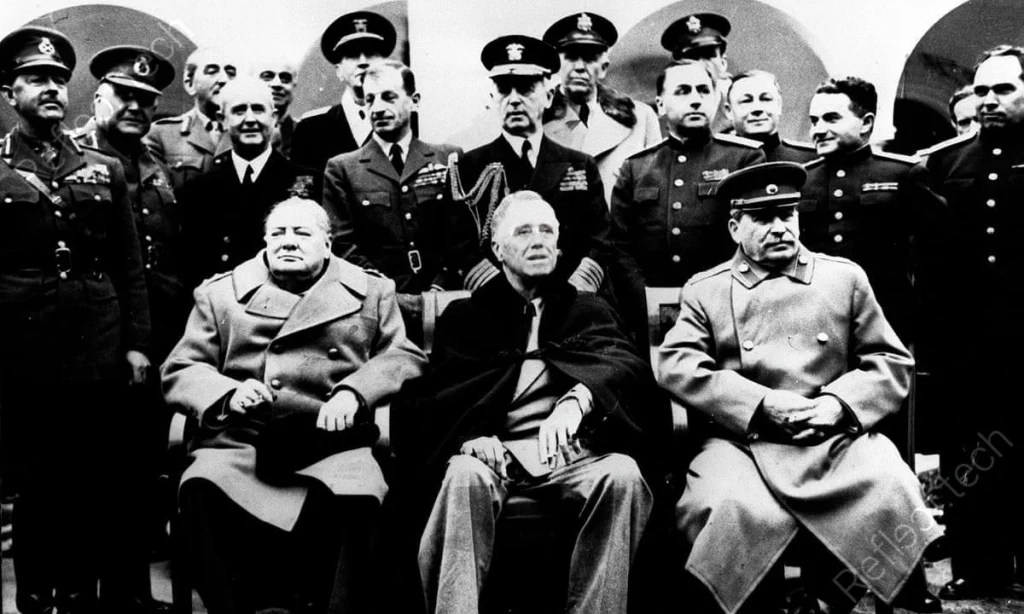
From February 4 to 11 of that year, the leaders of the United States, United Kingdom, and Soviet Union negotiated essential issues: the occupation and administration of Germany, the political future of Eastern Europe, the Soviet Union’s role in the war against Japan, and the structure of the future United Nations.
Yalta was a pivotal moment as it established the foundations for compromises that shaped the international architecture during the second half of the 20th century, reflecting the military balance of power present at that time. The Red Army had advanced into Eastern Europe, and Moscow had a decisive position in determining the region’s future.
However, the conference did not mean that the three allies shared a unified vision of the world. Disagreements about Poland, Eastern European governments, and guarantees of free elections quickly escalated into diplomatic conflicts. The wartime alliance deteriorated swiftly, with tensions leading to the Cold War evident just months later.
Thus, Yalta represented both a negotiation instance and a reflection of the power dynamics among major powers. Its agreements had lasting consequences but did not resolve the contradictions among the protagonists.
In Shenzhen, the circumstances are different. There is no ending world war, nor any military alliance among the three nations managing a shared victory. Instead, the United States, China, and Russia maintain relationships marked by competition, selective cooperation, and confrontation across various arenas.
The question remains whether they can find sufficient shared interests to establish rules for coexistence in an increasingly fragmented international system.
Three Leaders, Three Different Agendas
Although the meeting has been confirmed by Washington and Moscow, the priorities of each participant do not seem to fully align.
For Donald Trump, the gathering presents an opportunity to project international leadership and open negotiations on two pressing issues: nuclear arms control and the conflict with Iran.
The New START treaty, the last agreement that set limits on the strategic nuclear arsenals of the U.S. and Russia, expired in February 2026. Its expiration marked the first time in over half a century that the key bilateral arms control mechanism became obsolete.
Trump aims to promote a new negotiation framework that also includes China. However, the nuclear capabilities of the three countries vary significantly. According to estimates cited by Associated Press, both the U.S. and Russia have over 5,000 warheads each, while China possesses more than 600.
Beijing does not appear willing to accept limitations equivalent to those of Washington and Moscow while such a considerable gap in nuclear capabilities exists. For Xi Jinping, participating in disarmament negotiations under conditions that do not account for this asymmetry could restrict China’s strategic margin.
The second issue is Iran. The U.S. seeks to address the conflict and explore ways to de-escalate tensions. China has significant energy and commercial interests in the region, while Russia maintains a strategic partnership with Tehran.
The prolonged conflict affects energy markets, trade routes, and the stability of a region crucial for global hydrocarbon supply. Here, all three nations have differing motivations to prevent escalation, although that does not imply they share a common strategy.
On the other hand, Vladimir Putin has a central interest: to leverage the meeting to bolster Russia’s international standing and protect its interests in the war in Ukraine. Moscow has expressed interest in discussing the conflict, although Washington has indicated that it is not intended to be formally on the trilateral agenda.
For the Kremlin, sharing a table with the presidents of the U.S. and China also serves as acknowledgment of its position as an indispensable player in major international negotiations, despite Western sanctions and the diplomatic isolation promoted by numerous governments.
Xi Jinping arrives with a different stance. As the host, he has the chance to position China as a center of international diplomacy and demonstrate his ability to convene the other two major powers. However, he must also prevent the meeting from becoming a mechanism for pressure to accept compromises that do not align with Chinese interests.
China: The New Factor Not Present at Yalta
There is a fundamental difference between the 1945 conference and the upcoming meeting in Shenzhen: China’s international position.
At Yalta, China did not participate in negotiations among the three great powers, even though its territory had been the stage of a devastating war against Japan, and its role was crucial for the balance in Asia.
Eight decades later, China is an economic, technological, commercial, and military powerhouse that cannot be sidelined from any negotiation concerning international architecture.
Its presence substantially alters the geometry of power. Unlike the Soviet Union in 1945, China has deep insertion in the global economy, is a central player in industrial and technological supply chains, and maintains trade relations with countries across all continents.
Additionally, Beijing has advocated for building a more multipolar international order with greater participation from developing nations and a reduction of Western powers’ unilateral imposition of decisions.
The meeting also represents an opportunity for Xi to showcase his ability to engage with Washington and Moscow. However, a contradiction exists: China tries to position itself as a defender of multilateralism and free trade, while a meeting confined to three major powers can foster the impression that international futures are decided behind closed doors among the most powerful actors.
The APEC summit itself, which brings together 21 economies, could become overshadowed by the trilateral meeting.
An Agreement for a Multipolar World?
The possibility of Trump, Xi, and Putin reaching some form of understanding has sparked various interpretations regarding the future of the international system.
One perspective suggests that the three powers might recognize the need to establish coexistence mechanisms and limit the risks of direct confrontation. The lack of effective nuclear control agreements, instability in the Middle East, and the ongoing trade and technological tensions make some form of dialogue increasingly necessary.
Another reading cautions that negotiations among the three could aim to establish rules of regional influence without the participation of other powers or affected countries. This potential raises concerns among governments fearing their interests may be subordinated to agreements struck by the major capitals.
However, the notion of multipolarity does not automatically imply cooperation or balance. A system with multiple centers of power might provide greater autonomy to countries, but can also lead to disputes over spheres of influence, strategic resources, and military alliances.
The central issue will be determining whether any agreements that might emerge contribute to strengthening existing multilateral mechanisms or, conversely, consolidate a great power diplomacy that sidelines international organizations.
Shenzhen May Not Be Yalta, But It Could Mark a New Era
Expectations for the meeting must take its limits into account. Unlike in 1945, when the three leaders negotiated amid a global war and had the power to make immediate decisions regarding occupied territories and political structures, by 2026, the three nations face interests that are not necessarily compatible.
Moreover, there is no public shared agenda indicating a comprehensive agreement is on the horizon. Washington has prioritized nuclear control and the conflict with Iran, while Moscow seeks to keep avenues open for discussing its interests in Ukraine. In contrast, Beijing looks to avoid commitments that would restrict its strategic autonomy.
Associated Press reported that U.S. officials do not expect announcements of nuclear agreements. Reuters noted that preparatory negotiations had yet to define a common agenda and format, highlighting the gap between the political impact of the call and its concrete resolution possibilities.
Thus, the significance of Shenzhen may lie less in the immediate signing of a historic accord and more in the establishment of a direct dialogue channel among the three leading nuclear powers.
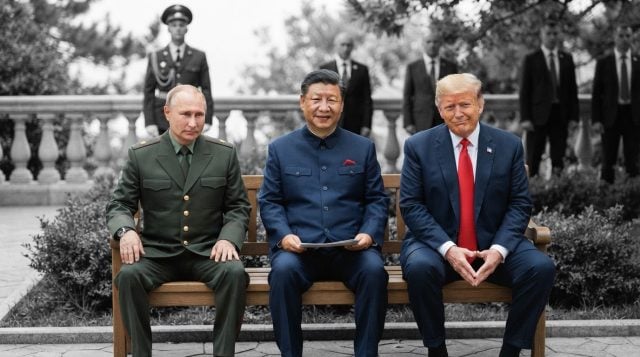
If the meeting facilitates the establishment of dialogue mechanisms, reduces confrontation risks, and lays the groundwork for future negotiations, it will yield a meaningful outcome. If it simply culminates in a display of power and a photo-op of the three leaders, its significance will be primarily symbolic.
Yalta was not a conference capable of erasing the contradictions among its protagonists. It was a moment when power dynamics translated into compromises that reshaped the post-war world but also left unresolved disputes that would eventually pit its protagonists against one another.
Shenzhen faces a different challenge: to find coexistence rules among powers that do not share a political project or a common vision of the international future.
The question is not only whether Trump, Xi, and Putin can replicate the historical significance of Roosevelt, Churchill, and Stalin. It is whether they are willing to recognize that none of the three powers can manage the planet’s destiny alone and that the primary conflicts of the 21st century are unlikely to be resolved without the involvement of the peoples and countries directly affected.
By Bruno Sommer
El Ciudadano
Obtén tu Pasaporte y apoya a El Ciudadano
Elimina la publicidad, accede a contenido exclusivo y sé parte de la comunidad.
Cancela en cualquier momento · Sin permanencia