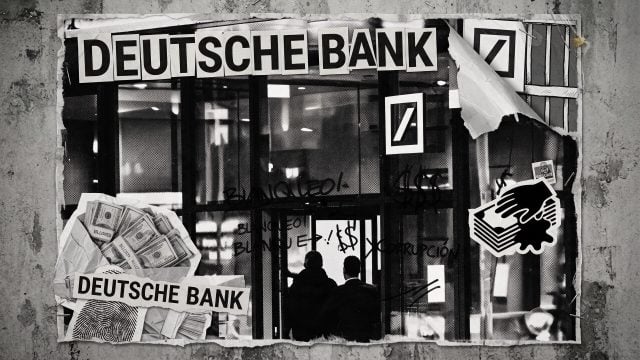
Original article: Deutsche Bank: la filtración ‘Inside Deutsche Bank’ expone cómo el negocio pesó más para proteger a pedófilos y blanqueo de capitales
Deutsche Bank Scandal: Inside Deutsche Bank Leak Reveals How Business Interests Protected Pedophiles and Money Laundering
The investigation titled ‘Inside Deutsche Bank’ unveils shocking details about the bank, revealing how it prioritized business interests over the safety of vulnerable victims and compliance regulations. A massive leak of internal documents from Deutsche Bank, analyzed by over 200 journalists worldwide, exposes the bank’s facilitation of high-risk transactions linked to notorious clients, including Jeffrey Epstein, Russian oligarchs, 1MDB financier Jho Low, and associates of the late Rifaat al-Assad. Alarmingly, warnings regarding potential money laundering and sanctions violations were often sidelined. The leaked files also implicate the bank’s Spanish subsidiary, which funded numerous projects in Angola, Cameroon, and the Dominican Republic—many of which are under investigation for corruption.
The Citizen
A Global Leak Driven by Two Whistleblowers
The investigation, known as ‘Inside Deutsche Bank’, stems from internal documents leaked by two whistleblowers whose identities remain confidential. The files were initially provided to Indian journalist Josy Joseph and South African journalist Khadija Sharife. To analyze and disseminate this data through more than 50 media outlets, the nonprofit entity Barracuda Media was established.
According to the whistleblower’s attorney, the documents were also submitted to the U.S. Department of Justice, the Financial Crimes Enforcement Network (FinCEN), and the UK’s HM Revenue and Customs. The documents reveal critical weaknesses within the bank’s operations related to combating financial crimes, enforcing sanctions, and internal auditing processes that determine whether high-risk clients are retained.
The records indicate that Deutsche Bank repeatedly ignored alerts regarding potential money laundering and sanctions violations. In efforts to appease powerful clients, the bank often disregarded its own protocols, allowing commercial considerations to overshadow regulatory compliance. Serious lapses were not detected until years after suspicious funds had already passed through its systems.
Epstein: 40 Accounts and Nearly $600 Million in Suspicious Transactions
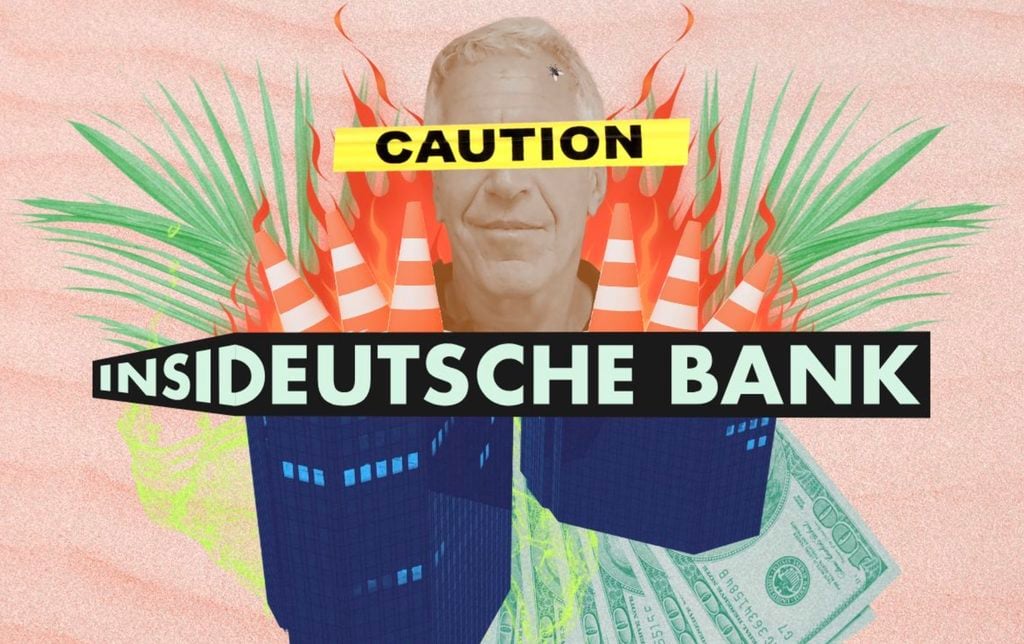
One of the most documented cases is that of Jeffrey Epstein. Deutsche Bank took Epstein on as a client in 2013, years after he was convicted of soliciting prostitution from a minor. The leak shows that the bank identified nearly $600 million in suspicious transactions associated with Epstein and his network, more than double what was previously known.
Internal documents cited in the investigation specify the exact figure at $582 million, spread across 21 suspicious activity reports (SARs) and approximately 3,000 transactions from October 2013 to May 2019. Epstein held over 40 accounts with the bank. Deutsche Bank hired private banker Paul Morris, previously with JPMorgan, who had Epstein as a client. The relationship continued until the bank began closing accounts in December 2018, with the last ones not being closed until after Epstein’s arrest in July 2019.
The leaked files also reveal sensitive financial information regarding extremely powerful individuals. The contents reference Trump and Epstein as notable clients who turned to Deutsche Bank when other banks refused them service. Trump did not respond to media inquiries.
Russian Oligarchs, Sanctions, and High-Risk Clients
The leak includes numerous details about oligarchs such as Oleg Deripaska and Roman Abramovich, both allies of Vladimir Putin. Deripaska did not respond to inquiries from the consortium of journalists. A legal representative for Abramovich stated that «it is not our client’s responsibility to comment on Deutsche Bank’s internal processes and decisions.»
Among the bank’s clients was a company whose ultimate beneficiary is a Saudi businessman appearing on the ‘Golden Chain’, a list of alleged financiers of Al-Qaeda. Deutsche Bank did not answer questions regarding this individual. Journalists identified him solely by his initials—the only reference to him in the bank’s files—and he did not respond to inquiries.
Rifaat al-Assad and Jho Low: Million-Dollar Payments Despite Alerts
As a correspondent bank, Deutsche Bank processed payments related to the late Syrian Vice President Rifaat al-Assad, known as ‘the Butcher of Hama’ for his role in the bloody repression of 1982 in that Syrian city. On this matter, the bank stated that the issue was «resolved in 2022, as made public.» In the Frankfurt Prosecutor’s investigation concerning two suspicious activity reports submitted by Deutsche Bank during its correspondent banking activities, the entity accepted a fine of €7.01 million. The resolution indicated that the SARs were filed late, having been due since 2017. The bank cooperated with the investigation.
In 2015, the bank continued to process multimillion-dollar transfers connected to Malaysian financier Jho Low, despite the proliferating news against him and his own suspicious activity reports issued by the bank. Low is a key figure in the ‘1MDB scandal’, where it is alleged that over $4.5 billion was embezzled from the Malaysian state investment fund 1Malaysia Development Berhad for laundering through international banks. The 1MDB fund has filed a lawsuit against Deutsche Bank’s Malaysian subsidiary for its alleged involvement in transferring part of those funds. No contact was made with Low.
The Spanish Footprint: Projects in Africa and America with State Support
In its Spanish headquarters, Deutsche Bank funded multiple projects in countries like Angola, Cameroon, and the Dominican Republic, many of which failed or are under investigation for corruption. The files highlight companies frequently mentioned in judicial summaries such as Defex, Mercasa, Eurofinsa, Elecnor, or Ibadesa. In most cases, according to the leaks, these projects received backing from the Spanish government.
This chapter connects the global narrative of the leak to the role of the Spanish subsidiary in financing high-risk operations, some of which are under judicial scrutiny for corruption.
The Bank’s Response and Unanswered Questions
Deutsche Bank has asserted that the matter related to Rifaat al-Assad was resolved in 2022 and that it cooperated with the Frankfurt Prosecutor’s office. Regarding Epstein, the bank publicly admitted that accepting him as a client in 2013 was a «mistake» and claimed to have strengthened its controls against financial crime. However, the leaked documents indicate that for years, internal alerts were handled with delays or outright overridden by business interests.
Inquiries about the Saudi businessman linked to the ‘Golden Chain’ went unanswered. Both Deripaska and Trump did not respond. No contact was made with Jho Low. Abramovich’s legal representative referred journalists to the statement that their client has no responsibility to comment on the bank’s internal processes.
Frequently Asked Questions
What is ‘Inside Deutsche Bank’?
It is a global journalistic investigation based on the largest leak of internal banking documents presented to the media. Over 200 journalists and more than 50 media outlets participated, coordinated through Barracuda Media.
What did the leak reveal about Epstein?
That Deutsche Bank accepted Epstein as a client in 2013, years after his conviction, and identified nearly $600 million in suspicious transactions related to him and his network, more than double what was previously known.
What is the leak’s connection to Spain?
The Spanish subsidiary financed projects in Angola, Cameroon, and the Dominican Republic, many of which failed or are under investigation for corruption, involving companies such as Defex, Mercasa, Eurofinsa, Elecnor, or Ibadesa, mostly with support from the Spanish government.
What does Deutsche Bank say?
The bank has stated that the issue regarding Rifaat al-Assad was resolved in 2022 with a €7.01 million fine, that it cooperated with the Frankfurt Prosecutor’s office, and that accepting Epstein was a mistake from which it has learned.
The Citizen
Obtén tu Pasaporte y apoya a El Ciudadano
Elimina la publicidad, accede a contenido exclusivo y sé parte de la comunidad.
Cancela en cualquier momento · Sin permanencia