Original article: «Enfrentar a un gobierno de ultraderecha»: CUT y Confech explican las razones de la movilización nacional del 18N
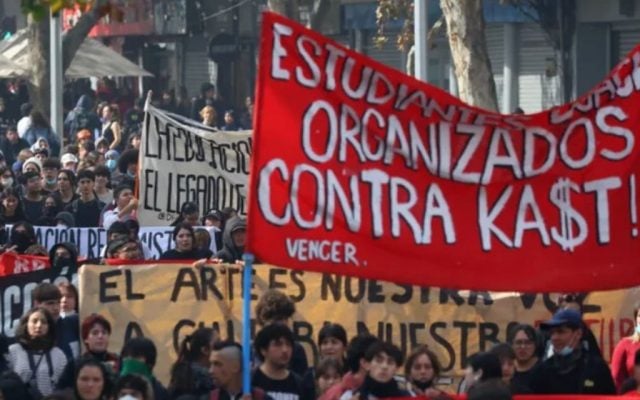
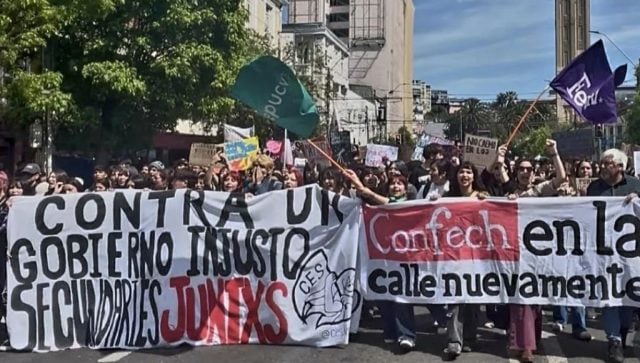
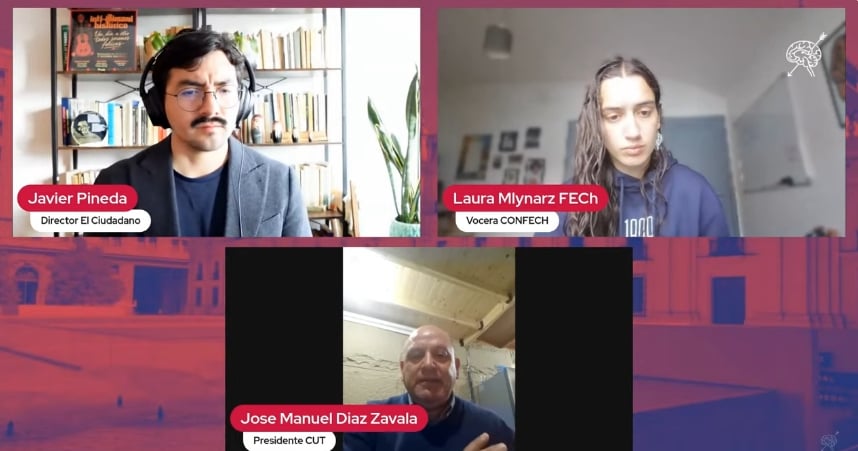
The goal of confronting a far-right government is what brings together the Common Front, a coalition that includes the Central Unitaria de Trabajadores (CUT), the Confederation of Chilean Students (Confech), high school students, and the National Coordinator of Residents. This was explained by the president of the Federation of Students of the University of Chile (FECh), Laura Mlynarz, and the president of CUT, José Manuel Díaz, during the program Sentido Común, hosted by the director of El Ciudadano, Javier Pinea Olcay. They detailed the reasons behind the national mobilization scheduled for November 18 and the agenda of protests that will extend into early December.
Díaz recounted that the Common Front began forming several months ago, with events like May Day—where they shared the stage with Confech and high school and university students—and a gathering for the anniversary of the CUT. «We will support all mobilizations. What we will be cautious about is not overshadowing those who initiate the call,» the union leader noted. He emphasized the aim of establishing «a common front today, to confront a far-right government like that of José Antonio Kast.
Reasons for the Mobilization: Budget Cuts
Laura Mlynarz, also the national spokesperson for Confech, clarified that the central focus of the mobilization on November 18 is the rejection of the cuts proposed in the 2027 Budget Law. «The cuts this government proposes are broad-based, affecting not just various ministerial portfolios, but they impact Chilean families across health care, public education, housing, and employment,” she stated.
In that regard, she detailed that last Wednesday’s mobilization had a strong student character and directly pointed to the Minister of Education, María Paz Arzola, who, as indicated by the leader, «has not shown up until now» and «does not understand that she is also responsible for addressing this budget issue within her portfolio.
She further questioned the government’s contradictions in educational matters: «How is it possible that they first take basic computers away from children, claiming they are unnecessary, only to miraculously restore them later?» She added criticisms regarding cuts to educational infrastructure, reductions in preschool hours, funding for state universities, and school meals.
Lack of Dialogue with the Educational Community
Critiques of Kast’s administration were a predominant theme in the discourse. Mlynarz pointed out the absence of dialogue with the educational community.
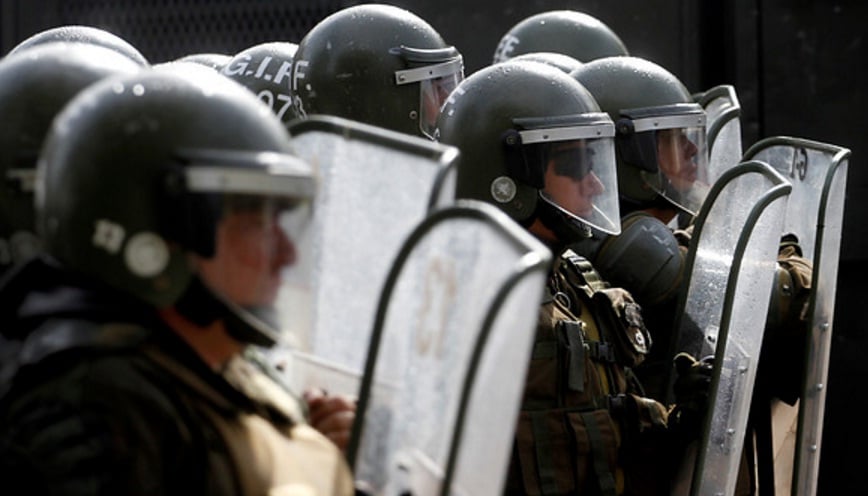
«This minister is not only absent in terms of engaging with the educational community; this minister does not speak about education. The communication with the students is handled by the presidential delegate, because all that matters to him is how to repress us in the streets and criminalize educational institutions.
«There is no Minister of Education today, where is the Minister of Education?» she emphasized.
Changes in the Labor Directorate and Employer Abuses
For his part, José Manuel Díaz criticized the labor policies of the government and the role of the Labor Directorate, accusing it of shifting its doctrine in ways that disadvantage workers.
«Their doctrine is to support the weakest link in the relationship, which are the workers, but today, with all the changes David Oddó has made, he has altered everything that Pablo Zenteno, the former director, achieved in four years,» he denounced.
«In four months, he changed all the rulings, and when rulings change, labor relations between employer and employee also change, but so too does the relationship between the union and the worker as the counterpart to the employer,» he specified.
«Oddó is making the Labor Directorate more susceptible to employer abuses,» he stated.
Demands of the Sectors and Objectives of the Mobilizations
The demands of the Common Front aim to halt the cuts and ensure social rights. Mlynarz summed up the message: «Not a penny less today for education,» while Díaz added: «In our demands, not a penny less for any state department.»
The union leader explained that the coalition seeks to «build strength with others» and «coordinate the territory,» through the Provincial Committees of Social Articulation (COMPA), which integrate university students, high schoolers, residents, and the union world nationally.
«We can march every day down the Alameda, but if we don’t coordinate the territory, our efforts here in Santiago will dissipate,» he maintained.
In labor matters, Díaz detailed the tensions in the public sector negotiations with the Ministries of Finance and Labor, where the government offered a 6.3% wage adjustment.
Mobilizations Until December
The president of the FECh emphasized the national and unified nature of the call: «Tomorrow we will meet at Héroes at 10:30 AM, and will march towards Baquedano, where we expect to culminate everything in the most central, massive, and collective manner possible.
She highlighted that the mobilization will be replicated in regions, «because it has a national character.»
«We hope everything goes as planned, we understand that we use the streets as a means of mobilization and expression, especially against a government that does not dialogue,» remarked the national spokesperson for Confech.
The schedule will continue with a national strike on November 24 called by the Teachers’ College; on the 25th with the march by the Chilean Network against Violence towards Women; on the 27th with the gathering of the Movement of Residents; on the 28th with the family march «No More AFP«; and the first week of December with the mobilization of the CUT in response to the public sector readjustment.
Unity and Defense of Rights
José Manuel Díaz concluded with a call to the citizenry: he noted that «all mobilizations are an expression to safeguard and maintain rights».
He warned that Kast’s government «is not improving but rather ideologically transforming sectors and here in the labor world, it shifts the responsibility to those who are working for the unemployed, claiming that rights are labor costs».
In this context, he urged strengthening the Common Front. «Let it remain for four years and root itself at the national level as a matter of defense,» he urged.
Laura Mlynarz insisted on unity and territorial work, stating that «in the face of a government that does not care about the precariousness of public education or the working families of this country, the only option left is to continue building public education, defending it, and fighting side by side with workers.»
You can watch the full interview below:
Obtén tu Pasaporte y apoya a El Ciudadano
Elimina la publicidad, accede a contenido exclusivo y sé parte de la comunidad.
Cancela en cualquier momento · Sin permanencia