Original article: Acuerdo con OpenAI abre dudas por datos, costos y soberanía digital: Lincolao puso la firma y ahora le exigen explicaciones
The agreement signed by Science Minister Ximena Lincolao with OpenAI to explore the use of artificial intelligence in Chile has sparked questions regarding data privacy, costs, and digital sovereignty, leading to demands for clarification from Congress.
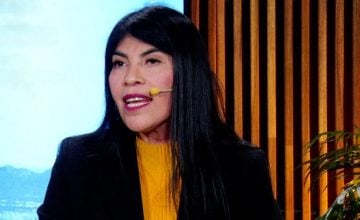
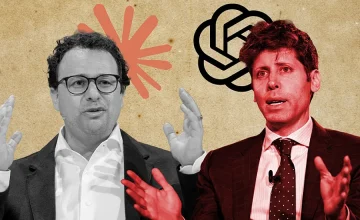
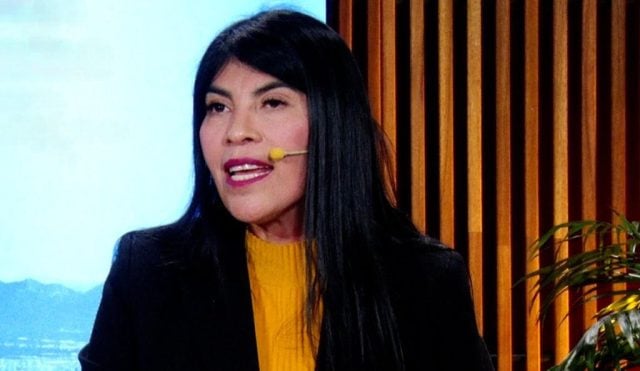
The document, disclosed by Bio Bío Chile, was signed on Monday in San Francisco between Lincolao and Sam Altman, the CEO of OpenAI.
This memorandum initiates the project “OpenAI for Chile”, part of the global initiative OpenAI for Countries. According to information provided by the ministry, the goal is to analyze AI applications that allow for the modernization of public administration, training and equipping its employees, and supporting technological entrepreneurship.
During the announcement, Lincolao declared that the implementation of these technologies would proceed “with clear controls and human oversight in each case”. Additionally, it was stated that safeguards would need to be established prior to the launch or expansion of these tools.
Among its stipulations, the document states that any public statement or press release regarding the pact will require prior written authorization from the other party, except in cases mandated by law. It also necessitates maintaining confidentiality of sensitive data exchanged during the collaboration, a requirement that will continue after the conclusion of the agreement.
Furthermore, the text does not constitute a contract award, does not set exclusivity, nor obligates the purchase of services. However, it allows for future paid contracts, the terms, fees, and security protocols of which must be negotiated separately.
“This is a collaborative agreement: a non-binding framework for exploring cooperation. It is not a purchase or contract award. Its signing does not incur costs for the State, nor does it imply exclusivity,” explained the Ministry of Science to Bio Bío Chile.
The ministry detailed that a working group will be established, consisting of representatives from the Ministry and OpenAI, which will meet monthly during its initial phase to assess objectives, training, strategies, and potential risks.
OpenAI Agreement and Risks for Chile’s Digital Sovereignty
The revelation of these details has raised alarms in Congress. Senator Diego Ibáñez (FA) requested the Ministry of Science to provide a complete copy of the memorandum, its attached documents, and any supporting administrative resolutions, while also appealing to the Comptroller to review its legality.
The senator’s concerns target the criteria for selecting OpenAI, the exploration of other options in the market, potential future expenses, and the management of state data: “Why was there no tender process? How does it affect the personal data of Chileans?” he asked when presenting his inquiries.
In a similar vein, Representative Jaime Araya (ind.-PPD) has approached the Comptroller to clarify whether the ministry has the legal authority to sign this agreement, whether it commits public funds, and how the privacy of citizens will be safeguarded.
“It is the Comptroller who must determine if this action falls within the minister’s powers, if the object is lawful, and if the method of access involving public resources is appropriate,” Araya stated.
Meanwhile, Representative José Montalva (PPD) sent a letter to the Ministry of Science inquiring whether OpenAI would have access to state data for training its algorithms, what the physical location for storing such data would be, and what would happen if the country chooses to switch to another technology firm.
“Will this incur any cost for the Chilean State regarding its digital sovereignty?” he questioned.
Additionally, Representative Gael Yeomans (FA) demanded transparency regarding the legal and technical supports of the agreement, as well as clarification on the process through which OpenAI was selected. She also criticized the company’s involvement in assessing state technological requirements before any potential tenders are conducted.
“Using artificial intelligence to better serve the public can be a step forward, and that is exactly why it must be implemented with clear guidelines, not with unconsulted agreements,” the legislator asserted.
Yeomans also requested clarification on whether this agreement is related to the $412 million allocated in the 2027 Budget to fund a plan for access to AI computational capacity.
Meanwhile, the president of the House Science Committee, Daniel Manouchehri (PS) emphasized the need for Minister Lincolao to inform about the implications of the agreement. “We have asked the minister to explain the agreement with OpenAI at the next Science Committee meeting, and she has committed to attend. We want to understand the implications and how data privacy and Chile’s technological independence will be protected,” he stated.
Data Protection and the AI Debate in Chile
This debate arises just as Congress approved a postponement of the new Personal Data Protection Law until October 15, 2027.
In this regard, Representative Daniela Serrano (PC), a member of the Science Committee, criticized the agreement being established amid the delay of the law and alongside the legislative debate on AI regulation.
“We are processing laws related to artificial intelligence, and I find it inconceivable that the government did not raise this, especially when proposing a delay to the enforcement of personal data regulations,” she commented.
The parliamentarian asserted that such alliances should have been discussed in advance with the Legislative Power and connected her concerns to the sovereignty of Chile.
“I believe this not only reflects on the competency of the minister but also on a political stance this government has regrettably taken by opening our sovereignty to the highest bidder,” she concluded.
Obtén tu Pasaporte y apoya a El Ciudadano
Elimina la publicidad, accede a contenido exclusivo y sé parte de la comunidad.
Cancela en cualquier momento · Sin permanencia