Original article: Los empresarios no le están creyendo a Kast: economista de Fundación Sol cuestiona sus medidas para reactivar la inversión
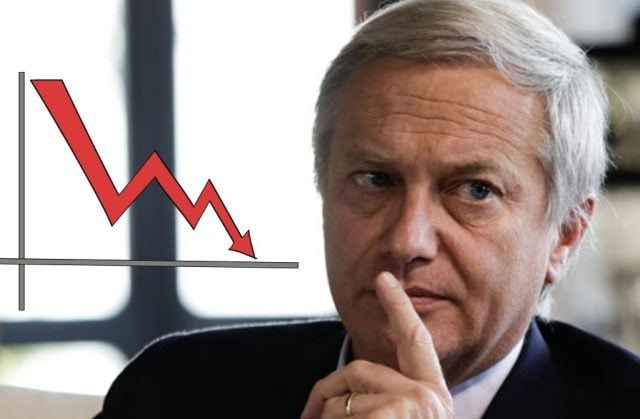
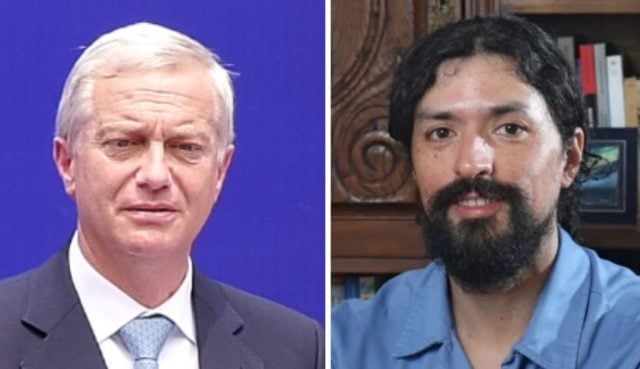
Fundación Sol researcher Gonzalo Durán warned that business leaders are not convinced by the measures implemented by José Antonio Kast’s government to revitalize the economy, claiming that the self-fulfilling prophecies of the president have contributed to the very decline he predicted.
In a conversation with the program Common Sense, hosted by The Citizen’s director, Javier Pinea Olcay, Durán, also a lecturer at the Social Work School of the Faculty of Social Sciences at the University of Chile, analyzed the findings of the National Accounts report for the third quarter released by the Central Bank.
«What needs to be clarified here is that the entire package, all the measures being promoted by this government, have apparently not been trusted by the business ecosystem. This is a deeper issue regarding the macroeconomic management being pursued by Kast’s administration,» Durán stated, highlighting what he termed an initial diagnostic error.
«He (Kast) arrived claiming that everything stemmed from an issue with the previous government, which had done everything wrong, that the country was bankrupt, the state was bankrupt, which then needed to be quickly rectified. Consequently, this began creating the prophecy he was announcing, which at that moment was not true; ultimately, due to his own actions, various reforms, and different statements, an economic contraction scenario ended up materializing—lowering growth expectations,» the economist explained.
According to Durán, this phenomenon directly impacts investors. «This also affects the mood, the so-called animal spirits of the entrepreneurs, making them think, ‘Well, perhaps this isn’t the right time to invest, to open a new branch, for instance, to hire people; maybe I should wait,’ which is the situation we find ourselves in,» he suggested.
«So, one can also associate how the policies, the business discourse, end up generating the crisis they themselves were predicting,» he emphasized.
Negative Figures: The Third Quarter Confirms the Decline
Regarding the Central Bank report, Durán explained that «if we consider the first nine months of the year and compare them with the first nine months of the previous year, we will see a 0.5% decline in the gross domestic product.» The most concerning figure, he noted, is from the last quarter: «a year-on-year decline of 1.1% when compared to the same quarter of the previous year, and a 1.8% seasonally adjusted decline compared to the previous quarter.»
Durán contrasted these figures with the forecasts presented by the government. «The projection from Finance Minister Jorge Quiroz was that the country should grow by 0.7% this year. If we do the math, to reach that 0.7%, we would need a year-on-year growth of 4% in the last quarter. And given the figures we’ve been seeing, this is quite unlikely.»
The analysts, he added, project «a year of negative figures around -0.5%, and undoubtedly, this impacts the financial well-being of all working families in our country.»
The Fuel Hike and the Reduction of Investment
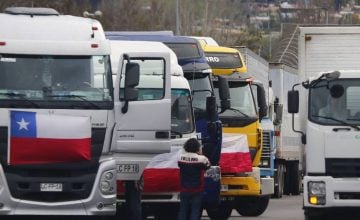
Among the internal factors explaining the deterioration, Durán identified the so-called «fuel hike,» which on one hand, «severely impacted the business supply chain in terms of transportation, but also affected internal consumption.»
He also noted the year-on-year decline in the copper industry of nearly 15%.
He emphasized another critical point: the sharp drop in investment.
«There is a year-on-year decline in investment of 6.5%. Machinery and equipment, which is very tangible, have dropped by 10.1%. Meanwhile, construction works have seen a 4.1% decline, marking three consecutive quarters of decline,» he explained on Common Sense.
Stagflation and Structural Unemployment
The academic warned that Chile is experiencing a complex moment. «In economics, we recognize this as entering stagflation— the combination of economic stagnation and inflation,» he stated.
Regarding unemployment, he criticized the official measurement as «super lax.»
«There are almost a million unemployed people actively searching for work, with a rate of 9.8% (…). When including discouraged workers and underemployment, the total unemployment rate, which Fundación Sol refers to as comprehensive unemployment, is currently around 15%.»
The economist and researcher also criticized the direction of the fiscal policy implemented by Kast’s administration.
«Instead of executing counter-cyclical economic policies, the government is implementing a budget that indicates all ministries must cut their expenditures by 3%.»
You can watch the full interview below:
Obtén tu Pasaporte y apoya a El Ciudadano
Elimina la publicidad, accede a contenido exclusivo y sé parte de la comunidad.
Cancela en cualquier momento · Sin permanencia