Original article: Grupo de Puebla: ¿Quién controla la inteligencia artificial? Expertos mundiales se reúnen en Argentina para debatir el futuro del poder y la democracia
Grupo de Puebla: Who Controls Artificial Intelligence? Global Experts Convene in Argentina to Discuss the Future of Power and Democracy
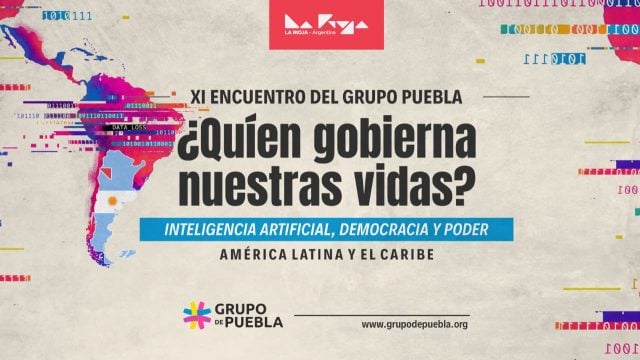
The XI International Meeting of the Grupo de Puebla: Who Controls Artificial Intelligence? Global experts will gather in La Rioja, Argentina from December 11 to 13 to discuss the future of power and democracy. A meeting of political leaders, academics, and specialists from Latin America, the Caribbean, and Europe.
The meeting aims to strengthen the alignment of progressive forces in response to the rise of far-right movements, nationalism, and the policies of U.S. President Donald Trump.
The Citizen
The Grupo de Puebla has announced its upcoming international gathering, this time in La Rioja, Argentina on December 11, 12, and 13, hosted by Governor Ricardo Quintela.
This event will bring together prominent international experts and political leaders to address one of the major challenges of the 21st century: who controls artificial intelligence and what power do states and democracies have to establish their regulations.
Under the question «Who governs our lives in the age of artificial intelligence?», the meeting will seek to place a debate on the political agenda of Latin America and the Caribbean that transcends technology and directly involves national sovereignty, the concentration of economic power, the future of work, and the protection of citizen rights.
According to the international group led by figures like Chilean Marco Enríquez-Ominami, the meeting aims to advance the construction of an international political response to Trump’s policies, the resurgence of nationalism, restrictive immigration policies, the weakening of multilateral organizations, and the growing prominence of radical right movements.
Three International Experts for a Border-Crossing Debate
Among the confirmed keynote speakers is French mathematician Cédric Villani, who won the prestigious Fields Medal in 2010, recognized as one of the highest honors in mathematics worldwide. A former French parliamentarian and author of an influential report on artificial intelligence commissioned by the French government, Villani will provide insights into the scientific, political, and social challenges posed by this technological transformation.
Also participating will be Argentine economist Cecilia Rikap, a researcher at University College London, known for her studies on the concentration of technological power, the functioning of large digital corporations, and the new economic dependencies created by artificial intelligence.
They will be joined by Lucía Bosoer, an Argentine researcher associated with the European University Institute, specializing in artificial intelligence, governance, and democracy, who will address the challenges faced by democratic institutions in light of the growing prominence of algorithmic systems.
Villani and Rikap will present via videoconference, linking the Latin American debate with some of the main academic and political discussions currently unfolding in Europe.
Artificial Intelligence: An Opportunity for Development or a New Form of Dependency?
Who decides which jobs will be replaced by automated systems? Who controls the data of millions of citizens? What power do governments retain against large tech platforms? Can Latin America develop its own artificial intelligence, or will it remain subordinate to the decisions of a small group of international corporations?
These are some of the questions that will shape the three days of discussions ahead.
The debate will tackle both the opportunities presented by artificial intelligence for enhancing productivity, modernizing public services, and promoting economic development, as well as the risks of deepening inequalities, concentrating wealth, and increasing technological dependence for Latin American and Caribbean countries.
One of the main goals will be to reflect on how to build a regional agenda that allows for the benefits of artificial intelligence to be harnessed without renouncing technological sovereignty, state autonomy, and democratic control over decisions that affect citizens.
Argentina as a Venue for an International Political Debate
The choice of Argentina as the venue for the XI International Meeting of the Grupo de Puebla will place the country at the center of a discussion of growing relevance in Latin America and the Caribbean.
Over three days, La Rioja will gather former presidents, political leaders, parliamentarians, academics, and international specialists to analyze the transformations that are redefining the relationships between technology, economy, and power.
The meeting will also facilitate discussions on the role Latin American governments should adopt in response to major tech conglomerates and the need to strengthen regional cooperation to face challenges that no country can resolve in isolation.
In the coming days, the Grupo de Puebla will progressively announce new confirmations of prominent Argentine political leaders, former presidents, and representatives from Latin America and the Caribbean, along with other international specialists who will participate in the program.
Three Days of Debate and Conclusions for Latin America and the Caribbean
The program will commence on Friday, December 11, with the arrival of international delegations.
On Saturday, December 12, the official opening and main sessions of political and academic debate will take place, focusing on artificial intelligence, democracy, technological sovereignty, and the new challenges of regional development.
Finally, on Sunday, December 13, the political conclusions of the meeting will be presented, followed by an international press conference where the main proposals arising from the discussions will be unveiled.
What is the Grupo de Puebla?
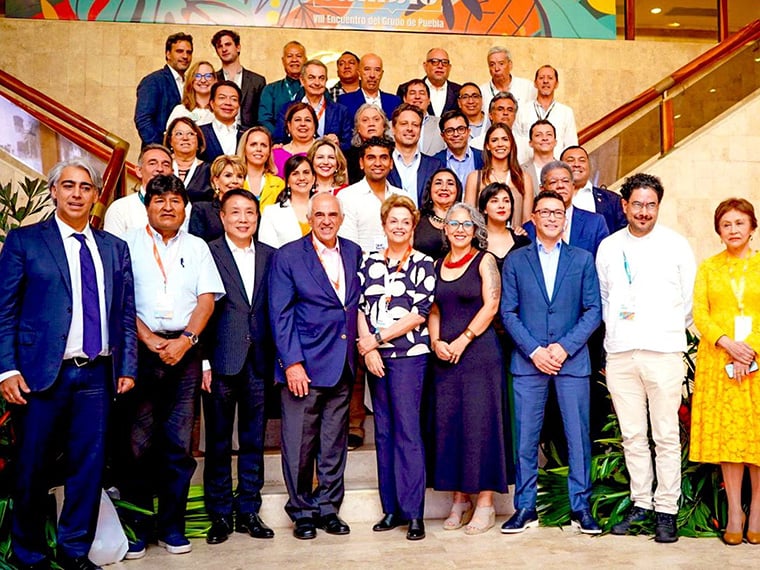
The Grupo de Puebla is an international political and academic forum that brings together leaders, former presidents, parliamentarians, intellectuals, and progressive political figures from Latin America, the Caribbean, and Europe.
It was founded on July 14, 2019, in Puebla, Mexico, with the aim of promoting Latin American integration, articulating political and economic proposals, and building a common agenda in the face of regional and global challenges.
Who Are Its Members?
Among its founders and key figures are:
- Luiz Inácio Lula da Silva.
- José Mujica.
- Rafael Correa.
- Alberto Fernández.
- Dilma Rousseff.
- Ernesto Samper.
- Marco Enríquez-Ominami.
- José Luis Rodríguez Zapatero.
Currently, the organization claims to consist of over 60 members from 18 countries.
What Are Its Main Objectives?
Its agenda revolves around five main pillars:
- Latin American Integration: strengthening political, economic, and diplomatic cooperation among countries in the region.
- Social Justice: promoting policies to reduce inequalities and expand rights.
- National Sovereignty: defending states’ autonomy against pressures from major powers and international organizations.
- Democracy and Human Rights: fostering citizen participation, democratic institutions, and the rule of law.
- New International Order: promoting multilateralism that gives greater prominence to Latin America in a multipolar global scenario.
Is It a Political Party or a Government Organization?
No. The Grupo de Puebla is not an international political party or a formal alliance of governments. It is a platform for political coordination and articulation whose members participate in a personal capacity.
It also does not have the authority to make binding decisions for states.
What Importance Does It Hold in International Politics?
The Grupo de Puebla constitutes one of the spaces for articulating Ibero-American progressivism. Its significance lies in gathering leaders who have held positions of power and aim to coordinate diagnoses, proposals, and political stances on regional and international issues.
Among its debates are the international financial architecture, relationships with China and the United States, regional integration, geopolitical conflicts, technological transformation, and the role of Latin America in the new world order.
The Citizen
Obtén tu Pasaporte y apoya a El Ciudadano
Elimina la publicidad, accede a contenido exclusivo y sé parte de la comunidad.
Cancela en cualquier momento · Sin permanencia